Om Chanting and Tibetan Singing Bowls at 432 Hz: The Primordial Syllable, Acoustic Alchemy, and Deep Meditative Trance
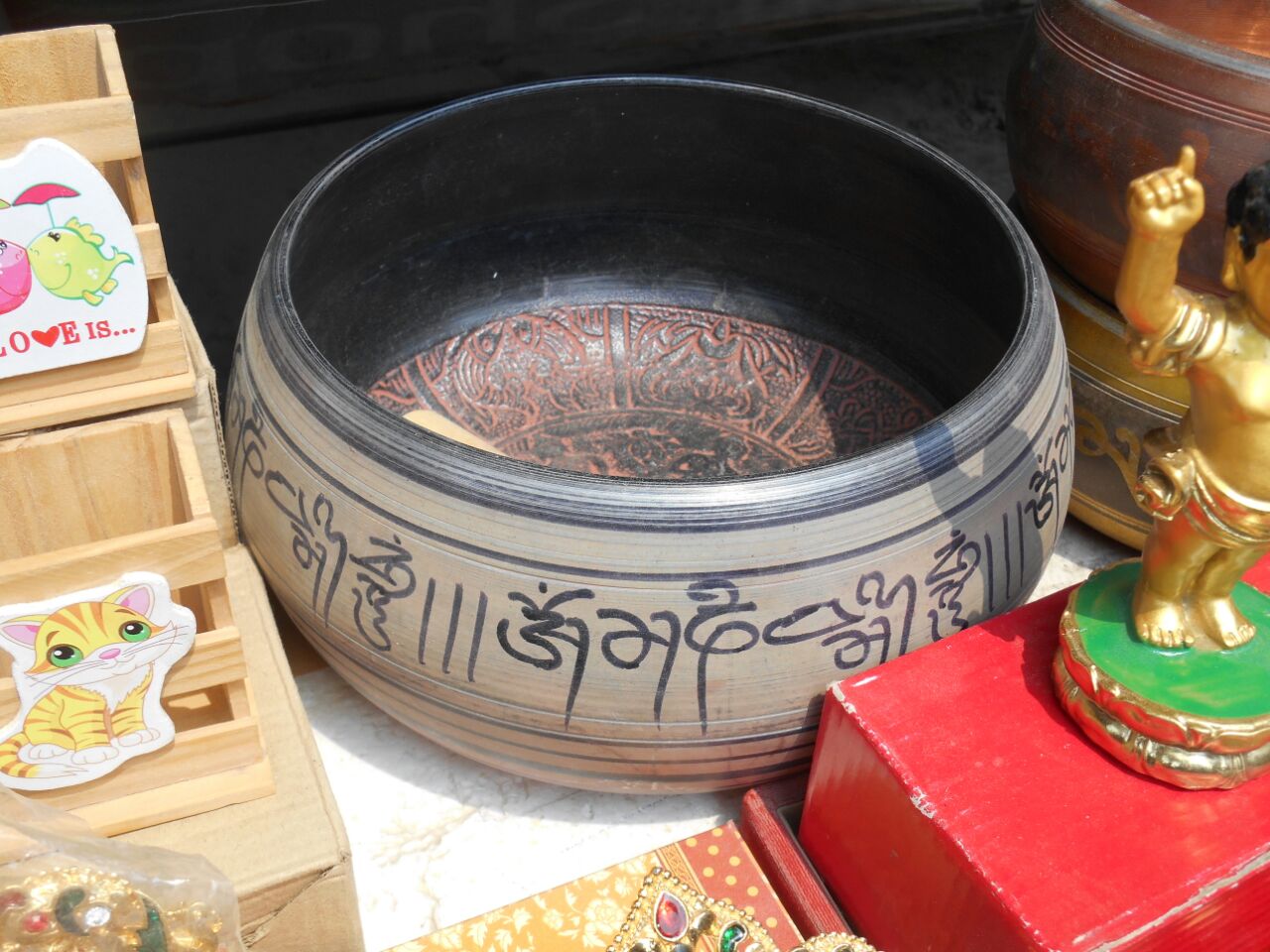 [Unavailable: ❌ https://upload.wikimedia.org/wikipedia/commons/1/17/Tibetan_singing_bowl.jpg ❌]
Before the formation of stars, before the consolidation of matter, and before the birth of the personal human mind, the ancient cosmologies of the East declare that there was only a boundless, unblemished stillness vibrating with a singular cosmic pulse: Nada Brahma, the universe as primordial sound. From the Vedic rishis who composed the Upanishads in the shadow of the Himalayas to the wandering lamas of the Tibetan plateau, sacred sound has never been considered a human invention, but the very breath through which reality manifests and dissolves. When the primordial syllable OM is intoned in concert with the pulsating overtone hum of Tibetan singing bowls tuned to the natural Pythagorean pitch of 432 Hz, an acoustic temple is erected in the listener's awareness, dissolving the boundaries of the mundane ego and returning the soul to its eternal source.
1. The Mandukya Revelation: The Four Quarters of the Syllable OM (A-U-M)
To pronounce or meditate upon the sacred syllable OM (often written as AUM) is to perform an act of metaphysical distillation. In the concise and profound Mandukya Upanishad, the entire panorama of human consciousness and universal manifestation is mapped onto the three phonetic elements of the syllable, culminating in the silent fourth:
- The Sound "A" (Vaishvanara): The waking state of physical consciousness. It represents outward-turned attention, sensory perception, and the manifest world of form. It resonates primarily in the lower abdomen and pelvic floor, anchoring the soul in the material realm.
- The Sound "U" (Taijasa): The dreaming state of mental consciousness. It represents the subtle inner world of imagination, memories, subconscious desires, and astral visions. It vibrates through the solar plexus and chest, illuminating the interior landscape.
- The Sound "M" (Prajna): The deep, dreamless sleep state. It represents the causal threshold of undifferentiated potential, where personal thought dissolves into unitive peace without dualistic division. It resonates in the throat and cranium, vibrating the crown of the skull.
- The Silence (Turiya): The unwritten, unpronounced pause that follows the cessation of the nasal "M". Turiya is not the mere absence of sound; it is the timeless, transcendent witness consciousness itself—unconditioned, uncreated, and ever-present.
When a seeker chants OM, they are not uttering a dogmatic prayer or a human concept. They are audibly reenacting the entire cycle of cosmic creation, preservation, and dissolution within the span of a single conscious breath.
2. Metallurgy of the Spirit: The Seven Sacred Metals of the Tibetan Bowl
Unlike modern industrially cast bells stamped from uniform metal sheets, genuine antique Tibetan singing bowls—crafted by Himalayan smiths and Bon-Buddhist practitioners—are living alchemical talismans. Each bowl is hand-hammered under the recitation of sacred mantras, forged from a celestial bronze alloy incorporating seven distinct metals corresponding to the seven traditional planetary spheres:
- Gold (The Sun): Radiates solar warmth, vitality, and spiritual sovereignty.
- Silver (The Moon): Attracts lunar receptivity, intuitive fluidity, and subconscious depth.
- Mercury (Mercury): Enhances intellectual conductivity, mental swiftness, and communication.
- Copper (Venus): Cultivates harmony, emotional beauty, and cardiac coherence.
- Iron (Mars): Instills spiritual strength, courageous endurance, and structural protection.
- Tin (Jupiter): Bestows expansive benevolence, philosophical wisdom, and royal grace.
- Lead (Saturn): Provides deep earthly grounding, ancestral memory, and the boundary of form.
When the rim of such a bowl is rubbed smoothly with a leather-wrapped wooden striker, the friction does not generate a single, flat tone. Instead, it awakens a rich, shimmering cascade of multiphonic overtones. These overtones pulse in subtle phase-interference patterns (known as acoustic beats), producing an ethereal, singing voice that seems to wander through the room without an identifiable physical point of origin. The bowl ceases to be a metal vessel; it becomes an acoustic chalice pouring forth the liquid geometry of the cosmos.
3. The 432 Hz Octave: Nature's Harmonic Constant and Biological Resonance
In contemporary commercial music, instruments are arbitrarily tuned to the international concert pitch of $A = 440 \text{ Hz}$, a standard instituted in the mid-twentieth century that produces an agitated, hyper-stimulating acoustic tension upon the nervous system. In stark contrast, classical esoteric traditions and the great composers of the past (such as Giuseppe Verdi) favored the natural Pythagorean tuning of $A = 432 \text{ Hz}$.
The frequency of 432 Hz possesses deep mathematical and cosmological harmonies:
* In sacred geometry, 432 is a harmonic constant tied to the Great Year of the Precession of the Equinoxes ($25,920 \text{ years} \div 60 = 432$).
* The diameter of the Sun is approximately $864,000 \text{ miles}$ ($432 \times 2,000$), while the radius of the Moon is roughly $1,080 \text{ miles}$ ($432 \div 4 \times 10$).
* Water molecules exposed to 432 Hz acoustic vibrations form perfectly symmetrical, hexagonal mandalas (as revealed in cymatic studies), whereas 440 Hz produces chaotic, fractured geometries.
Because the human body is composed of over seventy percent water, listening to 432 Hz sound waves acts as an acoustic bath of microscopic coherence. The visceral tension in the vascular walls relaxes, cellular membranes open to metabolic exchange, and the agitated rhythm of the pulse slows into gentle synchronization with the acoustic wave.
4. Neuro-Acoustics and Biofield Entrainment: The Transition to Theta Stillness
When the sustained vocal resonance of OM merges with the acoustic beats of the singing bowls, the cerebral cortex undergoes a profound process of rhythmic entrainment.
Under ordinary conditions, the adult human mind operates in high Beta frequencies (14 to 30 Hz)—a state characterized by hyper-vigilance, survival calculations, internal monologue, and continuous stress. When exposed to the complex overtones of the Tibetan bowls:
1. The brainwave patterns shift downward into the calm, reflective rhythm of Alpha (8 to 13 Hz) within minutes.
2. With continued immersion, the awareness descends into the mystical frontier of Theta (4 to 7 Hz)—the twilight state associated with lucid dreaming, spiritual visions, effortless creative synthesis, and profound emotional release.
3. The Default Mode Network (DMN), the neural circuit responsible for generating the anxious illusion of a separate, isolated ego, quiets down. The listener feels their bodily weight dissolving, replaced by an expansive sensation of hovering in oceanic warmth.
This is the ancient mystery of Laya Yoga—the yoga of dissolution through sound. The personal identity does not suffer annihilation; rather, it loosens its frantic grip upon rigid mental constructs, resting serenely in the luminous awareness that underlies all phenomena.
5. The Contemplative Rite: A Practical Protocol for Meditative Immersion
To receive the deepest blessings of this ancient acoustic transmission, approach the listening experience with the deliberate solemnity of an initiate entering a sacred grove:
- The Sanctified Space: Ensure your environment is quiet and free from abrupt technological alarms. Soften the lighting, or burn a stick of pure sandalwood or Tibetan juniper incense to engage the olfactory senses and purify the atmosphere.
- The Physical Vessel: You may sit upright in a classical cross-legged posture with the spine lengthened, or lie down in the corpse pose (Shavasana) upon a soft blanket, placing a light silk cloth over your eyes to withdraw external visual stimulation.
- Headphones of True Fidelity: Use high-quality over-ear headphones that faithfully reproduce the deep fundamental drone and the delicate high-frequency harmonics of the bowls.
- The Inner Breath: As the sound begins, breathe slowly and effortlessly through the nose. Allow each inhalation to draw the sound into your heart center, and allow each exhalation to release all muscular tension, emotional fatigue, and discursive planning.
- Joining the Chant: After ten minutes of receptive listening, gently join your voice with the recording. Inhale fully, and upon the exhalation, allow the syllable OM to vibrate softly in your throat. Feel the physical buzzing of the sound against the roof of your mouth, through your jaw, and into the center of your forehead. Do not force volume; seek resonance.
- The Golden Silence: When the sound eventually ceases, do not rush to open your eyes or return to worldly activities. Remain motionless for several minutes, contemplating the sublime stillness left behind in your consciousness.
6. Related Esoteric Inquiries in Our Living Archive
To further expand your understanding of sacred sound, subtle physiology, and higher meditative states, we recommend these companion treatises from our living library:
- The Physics and Mysticism of Sound: How Vibration Rewires the Brain and Body
- The Lost Frequencies: History and Origins of the Sacred Solfeggio Scale
- Love Signal 528 Hz: The Miracle Tone of the Solfeggio Scale and Cellular Resonation
- Chakra Realignment Therapy and Subtle Biofield Healing: Restoring the Sacred Octaves of the Seven Subtle Centers
7. Historical Audiovisual Record Preserved
In preservation of our blog's historical lineage from May 2020, the full one-hour immersive transmission of OM Chanting and Tibetan Singing Bowls at 432 Hz is maintained below:
Lux Esoterica.
2026.


Comments