The Mystery of the Carroll A. Deering: The Abandoned Ship off the Coast of North Carolina
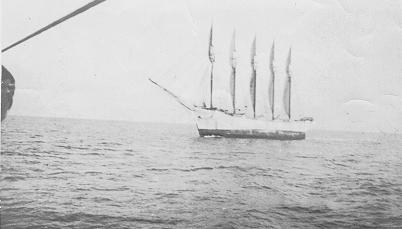
In January 1921, a large sailing ship was found stranded off the coast of North Carolina, and nobody on board could explain what had happened. The vessel was the Carroll A. Deering, a five-masted schooner, and its crew had vanished. The case has been studied, argued over and retold for more than a century. It remains one of the most enigmatic mysteries in the history of navigation.
This post follows the known events, the questions that remain open and the theories that have been proposed to explain them.
The Voyage
The Carroll A. Deering was a commercial vessel built in 1919. It had sailed from Barbados and was bound for Norfolk, Virginia. Its captain was William Merritt, and there were about ten other crew members on board. The ship was a large and modern sailing vessel for its time, built to carry cargo along the Atlantic coast.
The Stranding
The ship was discovered on January 31, 1921, on Diamond Shoals, a dangerous sandbar off the coast of North Carolina. It had run aground, and its sails were still set, which suggested that it had been moving under sail before it stopped. Those details made the scene look strange, because a ship in trouble usually reduces sail.
The Empty Ship
The strangest detail was the absence of the crew. Navigation documents and personal belongings were found on board, and there were no signs of a struggle or of a fire. The beds were unmade, and some supplies were missing, including the lifeboat and the compass. Captain Merritt and the crew were never found on the ship or near it.
Those details are repeated in most accounts, though some of them vary from one telling to another.
Theories and Speculation
Over the years, several explanations have been proposed. Some suggested a mutiny, in which the crew might have turned against the captain. Others pointed to smugglers, since the ship was in an area where illegal activity was possible. Some writers linked the case to the Prohibition era of the 1920s, when smuggling alcohol was common along the coast. None of these theories has been confirmed, and each has gaps.
Other writers have proposed storms, navigation errors or accidents that left no trace. Such explanations are plausible in general, but they do not explain the sails or the missing crew without a direct record.
Each explanation tries to fit the same facts, and each leaves some facts unexplained. This is typical of unsolved cases, where the lack of testimony matters more than any single clue.
Why It Remains Open
The case survives because the central facts are simple and hard to explain. A large ship was found in good order, its crew was gone, and no reliable witness described what happened. Without that testimony, the story depends on interpretation. The ocean is wide, and the records of the period are incomplete.
How to Read This Mystery
- Separate the documented facts from the details added in later retellings.
- Check dates, names and the number of crew in several accounts.
- Consider ordinary explanations before turning to extraordinary ones.
- Notice when a theory depends on details that cannot be verified.
- Remember that the people involved were real, and that their families were left without answers.
Closing
The Carroll A. Deering reminds us how much of the sea's history remains unknown. Its empty decks and set sails make a haunting image, and the questions it raises are still worth asking. Whether the answer is mutiny, smuggling, storm or something stranger, the sea has kept its secret. The story endures because the ship came back to port without the people who had sailed it.
Related Esoteric Inquiries
- The Mystery of the Baychimo: The Arctic Ghost Ship
- The Mystery of the Ourang Medan: The Death Ship in the Strait of Malacca
- The Carroll A. Deering: The Ghost Ship of Diamond Shoals and the Crew That Vanished at the Helm
Lux Esoterica.
2026.


Comments