Astral Projection: Navigating the Ethereal Plane Beyond the Flesh
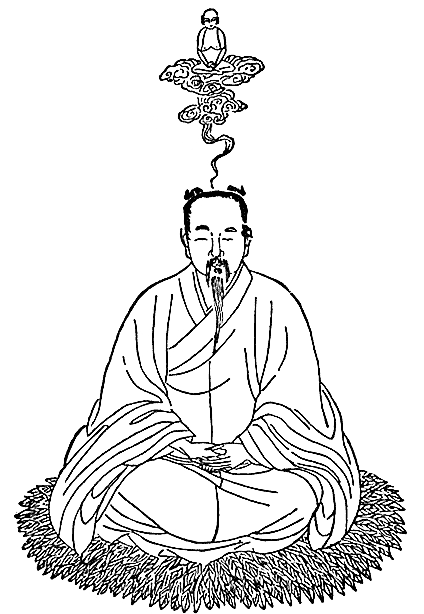
Many people have described a strange and vivid experience: the feeling of leaving their own body, floating above it and seeing it from outside. Esoteric traditions call this astral projection, the journey of a subtle body through a world beyond the physical. Psychologists and neuroscientists call it an out-of-body experience. For those who live it, it can be one of the most unforgettable moments of their lives.
The experience is real as an experience. What it means is a question that believers and scientists answer in very different ways.
An Ancient Idea
The belief that the soul can travel outside the body is very old. Shamans in many cultures were said to journey to other worlds while their bodies lay still. In ancient Egypt, the ba, often shown as a bird with a human head, could leave the tomb and return. Taoist texts, such as The Secret of the Golden Flower, describe the formation of a subtle body through meditation.
In the nineteenth century, Theosophy gave this idea its modern name. Theosophical writers described an astral body, made of finer matter, which could separate from the physical body during sleep or deep meditation and travel on the astral plane.
The Silver Cord
One of the most famous images of astral projection is the silver cord, a luminous thread said to connect the traveling astral body with the sleeping physical body. The phrase comes from the Book of Ecclesiastes, which speaks of the day when the silver cord is loosed, a poetic image of death.
In the twentieth century, authors such as Sylvan Muldoon and Hereward Carrington, in their book The Projection of the Astral Body, published in 1929, described the cord in detail. Many later practitioners reported seeing it. In this tradition, the cord cannot be broken while the body lives, which is meant to reassure the traveler.
What Practitioners Describe
Most methods of astral projection aim for a state between waking and sleeping, where the body is deeply relaxed and the mind remains alert. People who practice them often describe intense vibrations, a buzzing or roaring sound, a feeling of heaviness or floating, and sometimes a sense of falling or rising.
Many say that fear at this stage pulls them back into ordinary awareness. Teachers encourage calm acceptance of the sensations. Those who go further describe a world that responds to thought, where moving is as simple as wishing to be elsewhere.
Robert Monroe and the Modern Revival
The American businessman Robert Monroe brought new attention to these experiences with his book Journeys Out of the Body, published in 1971. He described his own spontaneous experiences and later founded an institute devoted to exploring altered states of consciousness through sound and guided exercises.
His work helped make the term out-of-body experience widely known and inspired many people to explore the subject.
What Science Says
Researchers have studied out-of-body experiences for decades. Many such experiences occur during the transition into or out of sleep, sometimes together with sleep paralysis, a state in which the mind wakes while the body remains unable to move. Vibrations, sounds and sensations of presence are common in this state.
In 2002, a team of neuroscientists reported that stimulating a specific area of the brain, near the junction of the temporal and parietal lobes, could produce the feeling of leaving the body. Such findings suggest that the brain plays a central role in creating our sense of being located inside the body.
So far, no controlled study has shown that a person can obtain verified information from a distant place while out of the body.
A Question of Meaning
For believers, astral projection is evidence that consciousness is more than the body and that death is a passage rather than an end. For many scientists, it is a fascinating window into how the brain constructs the self. Some people hold both views at once, valuing the experience without claiming certainty about its nature.
What is clear is that these experiences can be deeply meaningful, often reducing fear of death and inspiring a sense of wonder.
Practicing Safely
Anyone who wishes to explore these states should do so with care:
- Practice only when rested and in a safe, quiet place.
- If fear or panic arises, open your eyes and move a finger or toe to return.
- Do not practice when you are unwell, anxious or under the influence of substances.
- If unusual experiences become frequent or distressing, talk to a health professional.
Closing
Astral projection is one of the oldest and most fascinating ideas in the spiritual heritage of humanity. From the shaman's journey to the silver cord of Theosophy, from Robert Monroe's accounts to modern neuroscience, it invites us to ask who we really are.
Whether we see it as a voyage of the soul or a marvel of the mind, it opens a door to mystery, and reminds us that our sense of self is far more wondrous than it seems.
Related Esoteric Inquiries
- Astral Projection and Out-of-Body Experiences: Techniques, Science, and What It Means
- Astral Projection: The Complete Guide to Out-of-Body Experiences (2026)
- Astral Projection: The Soul's Ancient Journey Beyond the Body
Lux Esoterica.
2026.


Comments