Carl Jung's Red Book (Liber Novus): The Esoteric Diary of Soul and Shadow

The massive, red-leather-bound folio of C. G. Jung’s Red Book (Liber Novus)—a Gnostic calligraphic masterpiece that remained locked in a Swiss bank vault for nearly a century.
The most important book you will ever read is the one written in the blood of your own soul. In the autumn of 1913, the legendary Swiss psychiatrist Carl Jung stood at the absolute peak of his professional career. As the president of the International Psychoanalytic Association and the hand-picked heir to Sigmund Freud, his scientific authority was undisputed. Yet, beneath the polished persona of the successful academic, a violent psychic storm was brewing. Jung began to experience a series of overwhelming, apocalyptic waking visions—rivers of blood washing over Europe, dead bodies floating in frozen seas. Fearing he was losing his mind, Jung made a historic, terrifying decision: rather than repressing these visions, he decided to surrender to them, plunging headlong into the raw, mythological underworld of his own mind. The result of this self-induced Gnostic descent was the Red Book (Liber Novus), a calligraphic, illuminated folio that stands as the most mysterious, influential, and deeply esoteric diary in the history of Jungian psychology.
This article explores the profound, alchemical currents of the Red Book, tracing Jung’s method of active imagination, his encounters with the inner guide Philemon and the Gnostic deity Abraxas, the role of mandalas as alchemical anchors, and how this visionary diary birthed the core concepts of modern shadow work in 2026.
The Descent into the Abyss: The Crisis of 1913
The creation of the Red Book was born out of a profound existential and psychological crisis. In 1913, Jung broke permanently with Freud, rejecting his mentor’s dogmatic, purely sexual reductionism of the human psyche. Severed from his scientific family and isolated from the academic community, Jung found himself standing at the edge of a massive internal void.
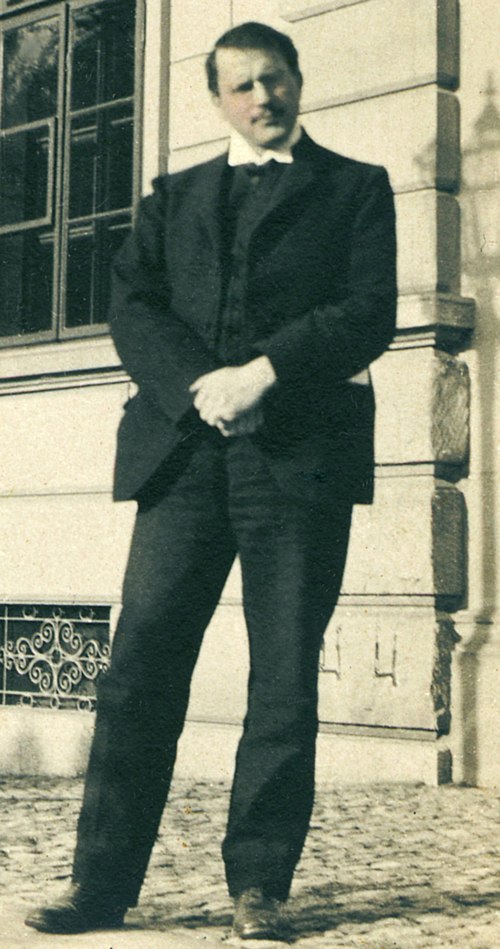
C. G. Jung in 1910, shortly before his painful break with Sigmund Freud and his subsequent plunge into the collective unconscious.
Realizing that he could not heal himself through rational theory alone, Jung developed a revolutionary, high-vibrational spiritual practice that he named active imagination.
* The Method: Jung would sit quietly in his study, slow his breathing, and allow a specific waking dream or mental image to arise. Instead of analyzing it, he would actively step into the vision, speaking with the figures that appeared, treating them as independent, conscious entities living within the vast, uncharted territory of the collective unconscious.
* The Purpose: It was a conscious, controlled descent into the human shadow, a systematic confrontation with the raw, chaotic forces of the psychic underworld. Jung realized that if he did not confront these forces consciously, they would tear him apart from within.
For sixteen years, from 1913 to 1930, Jung recorded these inner dialogues in a series of small black notebooks, which he later transcribed in elegant, medieval German calligraphy into a massive, red-leather folio, decorating the pages with stunning, highly symbolic paintings.
The Visionary Cast: Elijah, Salome, and Philemon
As Jung wandered through the landscapes of his active imagination, he encountered a fascinating, Gnostic cast of characters that represented the universal archetypes of the human soul.
Among his first guides were the biblical prophet Elijah and a blind young woman named Salome, accompanied by a massive black snake. Jung’s analytical intellect initially struggled to understand this pairing:
* Elijah represented the cold, structuring intellect—the rational mind that seeks to categorize and control reality.
* Salome represented the blind, emotional, and erotic desire—the vital, chaotic force of life.
* The Snake: The mediating force of nature and change that binds them together. Jung realized that these two figures were the opposing poles of his own mind, which had to be brought into alchemical balance to prevent his consciousness from fragmenting.

Sigmund Freud and Carl Jung at Clark University in 1909. Their historic split in 1913 triggered Jung's solitary Gnostic descent into the depths of the soul.
But the most important figure in the Red Book is Philemon—a wise, old man with the wings of a kingfisher and the horns of a bull. Philemon became Jung’s supreme spiritual guide, an inner guru who spoke to him with a wisdom that exceeded his own conscious knowledge. Jung wrote: “Philemon represented a force which was not myself... he said things which I had not thought, and which I knew did not originate in me.”
Through Philemon, Jung discovered the absolute reality of the soul. He realized that the human mind is not a blank slate, but a living cathedral populated by ancient, wise, and independent forces—the Jungian archetypes—which guide, shape, and balance our conscious lives.
Abraxas: The Lord of the Seven Sermons
At the absolute core of the Red Book lies a short, highly controversial Gnostic text that Jung wrote in a state of high, visionary fever in 1916: The Seven Sermons to the Dead. Written under the pseudonym of the second-century Gnostic master Basilides of Alexandria, these sermons are addressed to a group of spirits who have returned from Jerusalem, weeping because they found no salvation in the dogmas of the traditional church.
In these sermons, Jung introduces the supreme Gnostic deity Abraxas, whom he describes as the "Lord of the Cosmos" and a force far higher than the traditional Christian God or Devil:
* The Union of Opposites: While the traditional God represents pure light, order, and good, and the Devil represents pure darkness, chaos, and evil, Abraxas is the force that transcends and contains them both. Abraxas is the sun and the abyss, the creator and the destroyer, the absolute union of all opposing forces in the universe.
* Esoteric Symbolism: Abraxas represents the raw, uncensored power of life itself. He is the terrifying, beautiful matrix from which all existence flows, demanding that the initiate possess the courage to integrate both their high light and their deep dark to achieve true wholeness.
This Gnostic revelation laid the absolute foundation for Jung’s concept of individuation—the process through which a human being integrates their ego with their shadow, becoming a complete, undivided Self.
The Mandala as the Alchemical Anchor
Why did Jung expend such immense wealth, time, and artistic effort to write and paint his visions in a massive calligraphic folio? Because the Red Book was his alchemical coagula—the physical anchor that held his sanity together.
Jung discovered that when he painted his visions, the chaotic, terrifying images of his unconscious naturally organized themselves into beautiful, circular, and geometric structures: the mandala.
* The Circle of Wholeness: To Jung, the mandala was the ultimate symbol of the Self. The outer square represents the physical boundaries of the ego, while the inner concentric circles and the central point (bindu) represent the infinite, organizing intelligence of the collective unconscious.
* The Alchemical Crucible: By painting mandalas daily, Jung was actively centering his consciousness. The act of drawing a circle created a protective, sacred boundary—a temenos—that held the chaotic psychic forces together, preventing his mind from fragmenting during his visionary descents.
The Red Book was not an academic book; it was a physical talisman of integration, a mathematical body of stone and color that locked the spirit into matter, proving that the human psyche possesses an inherent, self-regulating intelligence that naturally seeks order and healing.
The Fertile Womb of Analytical Psychology
When Jung finally stopped working on the Red Book in 1930, he spent the rest of his long life translating its raw, Gnostic visions into the respectable, scientific language of modern psychology.
Every single revolutionary concept that defines Jungian psychology was conceived within the calligraphic pages of the Liber Novus:
* The Collective Unconscious: The vast, shared ocean of ancestral memory and myth that lies beneath the personal ego.
* The Shadow: The unintegrated, repressed portions of our personality that we must possess the courage to confront and integrate through shadow work.
* The Anima and Animus: The inner feminine and masculine archetypes that mediate our relationship with the deep soul.
* Individuation: The alchemical journey of shadow integration and self-realization that Dante mapped in his Comedy and Jung mapped in his Red Book.
Jung admitted: “The years... when I pursued the inner images, were the most important time of my life. Everything else is to be understood from this. It was the prima materia of my life’s work.”
Writing Your Own Liber Novus in the Modern Era
As we navigate the highly fragmented, utility-driven landscape of 2026, our physical lives are often characterized by a profound spiritual displacement. We live in concrete boxes, our eyes glued to digital screens, our minds severed from the rich, mythological depths of our own souls. We have outsource our spiritual journeys to external authorities, seeking cheap, sterile formulas for happiness while completely ignoring the vast, living cosmos we carry within our own bones.

The wise elder C. G. Jung—who demonstrated that the ultimate spiritual path is the courageous integration of our personal light and shadow.
The Red Book stands as a majestic, permanent beacon across the century. It challenges us to reclaim our divine heritage, proving that the human psyche is not a sterile computer, but a living, breathing landscape of gods, monsters, and wise old guides.
It calls us to begin our own shadow integration, to sit in silent meditation, and to possess the immense courage to write our own inner Liber Novus.
By silencing the noise of the external world, by facing our fears with presence, and by treating our own lives as a sacred alchemical work of art, we can awaken the Philemon within us, discovering the ultimate Hermetic secret of Jung: that the heaven and the hell we are looking for are the very spaces we are standing inside of, waiting to be integrated, balanced, and crowned with the golden rose of the Self.
— Lux Esoterica


Comentarios