Megalithic Sites: The Sacred Stones of the Ancient World
Between 10,000 and 1,500 BCE, human communities on every inhabited continent moved stones that, by any reasonable calculation, they should not have been able to move — and arranged them with a precision that, by any reasonable assessment, they should not have been able to achieve. The megalithic tradition is global, ancient, and stubbornly resistant to complete explanation. We know some of what was built, and where, and approximately when. We know much less about why — what motivated communities without metal tools, without writing, often without permanent settlements, to devote decades or centuries of collective labor to the alignment of massive stones with solar and lunar events, with the movements of specific stars, with the topography of landscapes understood as sacred. The megaliths do not explain themselves. They simply stand, patient as stone, waiting for questions that may be better than our answers.
 [Unavailable: ❌ https://upload.wikimedia.org/wikipedia/commons/thumb/d/d5/G%C3%B6bekli_Tepe%2C_Urfa.jpg/250px-G%C3%B6bekli_Tepe%2C_Urfa.jpg ❌]
Göbekli Tepe, southeastern Turkey (c. 9600 BCE) — the oldest known monumental architecture on Earth, predating Stonehenge by 6,000 years and the invention of agriculture; its T-shaped pillars carved with animals prove that organized religion preceded settled civilization
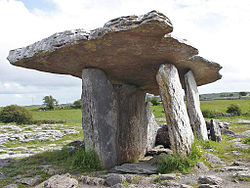 [Unavailable: ❌ https://upload.wikimedia.org/wikipedia/commons/thumb/7/75/Paulnabrone.jpg/250px-Paulnabrone.jpg ❌]
Poulnabrone Dolmen, County Clare, Ireland (c. 4200–3800 BCE) — a portal tomb whose capstone, weighing approximately 5 tons, was positioned to frame the setting sun at the winter solstice; the remains of at least 33 people were interred beneath it
 [Unavailable: ❌ https://upload.wikimedia.org/wikipedia/commons/thumb/4/4f/Example_of_a_northern-style_dolmen_at_Ganghwa_Island.jpg/250px-Example_of_a_northern-style_dolmen_at_Ganghwa_Island.jpg ❌]
Northern-style dolmen, Ganghwa Island, South Korea — Korea has the highest concentration of dolmens in the world (approximately 35,000), testifying to a megalithic culture that spread independently across East Asia as well as Europe
 [Unavailable: ❌ https://upload.wikimedia.org/wikipedia/commons/thumb/6/6f/Klekkende_H%C3%B8j_barrow.jpg/250px-Klekkende_H%C3%B8j_barrow.jpg ❌]
Klekkende Høj passage grave, Denmark (c. 3500 BCE) — the passage tomb oriented the dying light of the winter solstice directly into the burial chamber; the dead were placed in the path of the returning sun, in a cosmology where death and solar rebirth were structurally linked
 [Unavailable: ❌ https://upload.wikimedia.org/wikipedia/commons/thumb/6/6b/Zorats_Karer_aerial_view.jpg/250px-Zorats_Karer_aerial_view.jpg ❌]
Zorats Karer (Carahunge), Armenia (c. 5500 BCE) — sometimes called 'Armenian Stonehenge'; 223 standing stones, many with circular holes drilled through them aligned to specific star risings; one of the oldest astronomical monuments yet identified
 [Unavailable: ❌ https://upload.wikimedia.org/wikipedia/commons/thumb/3/3b/Tumulus_Saint-Michel_%282%29.jpg/250px-Tumulus_Saint-Michel_%282%29.jpg ❌]
Tumulus Saint-Michel, Carnac, Brittany (c. 4500 BCE) — the largest megalithic barrow in France, 125 meters long and 12 meters high, covering a burial chamber containing gold and jade artifacts; the Carnac landscape contains over 3,000 standing stones in parallel alignments
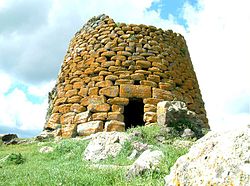 [Unavailable: ❌ https://upload.wikimedia.org/wikipedia/commons/thumb/c/ce/Nurage1rp.jpg/250px-Nurage1rp.jpg ❌]
Nuraghe, Sardinia (c. 1800–1600 BCE) — the nuraghes are tower structures unique to Sardinia, of which over 7,000 survive; their function (defensive, ceremonial, astronomical, or all three) remains debated; they represent a megalithic tradition that persisted into the Bronze Age
 [Unavailable: ❌ https://upload.wikimedia.org/wikipedia/commons/thumb/2/2b/Megalithic_grave_Harhoog_in_Keitum%2C_Sylt%2C_Germany.jpg/250px-Megalithic_grave_Harhoog_in_Keitum%2C_Sylt%2C_Germany.jpg ❌]
Megalithic grave Harhoog, Sylt, Germany (c. 3500 BCE) — transported from its original location in 1959 to prevent erosion damage; the act of moving it with modern machinery gave engineers a visceral appreciation of how extraordinary the original construction must have been
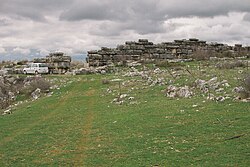 [Unavailable: ❌ https://upload.wikimedia.org/wikipedia/commons/thumb/a/a1/Daorson%2C_Bosnia_and_Herzegovina.jpg/250px-Daorson%2C_Bosnia_and_Herzegovina.jpg ❌]
Daorson cyclopean walls, Bosnia and Herzegovina (c. 1200 BCE) — the Cyclopean masonry technique (massive irregular blocks fitted without mortar) appears independently in Greece, Anatolia, and the Balkans; the Greeks attributed such walls to the mythological Cyclopes because no human method seemed adequate to explain them
 [Unavailable: ❌ https://upload.wikimedia.org/wikipedia/commons/thumb/6/6f/COLLECTIE_TROPENMUSEUM_Monolithen_in_Toraja_TMnr_10005152.jpg/250px-COLLECTIE_TROPENMUSEUM_Monolithen_in_Toraja_TMnr_10005152.jpg ❌]
Toraja monoliths, Sulawesi, Indonesia — megalithic traditions in Southeast Asia continued well into the historical period; the Toraja people erected large standing stones as part of elaborate death rituals that transformed the physical landscape into a map of the ancestral world
Related Esoteric Inquiries:
- The Whispering Stones of the North: Megalithic Secrets of Orkney and Shetland
- Stonehenge and the Sun Stone: The Silent Language of Ancient Observatories
- Ley Lines and Sacred Sites: The Earth's Hidden Energy Grid
Lux Esoterica.
2026.


Comments