Taoism: The Way That Cannot Be Named and the Art of Living in Harmony with the Cosmos
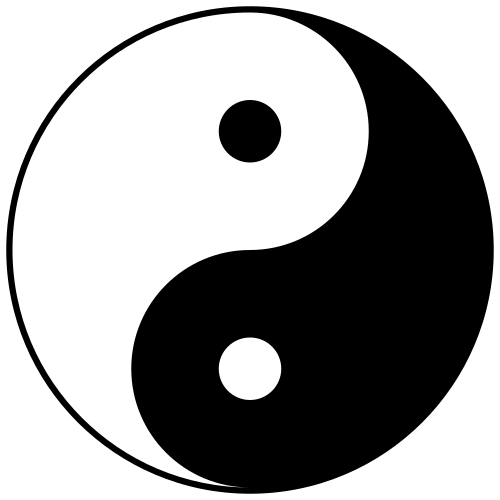
The taijitu — the symbol of yin and yang — perhaps the most elegant philosophical diagram ever created: two complementary forces, each containing the seed of the other, endlessly rotating within the circle of the Tao.
The first line of the most influential book in Chinese history is also one of the most profound opening statements in all of world philosophy: Tao ke tao, fei chang tao — "The Tao that can be named is not the eternal Tao."
In four short words of classical Chinese (and seven in translation), Lao Tzu established the central paradox of Taoism: the ultimate reality — the Tao, the Way, the Ground of all being — cannot be captured in concepts, described in propositions, or possessed by the mind that seeks it. Any definition of the Tao immediately excludes what it defines from what the Tao actually is. To say "the Tao is X" is to limit the unlimited, to freeze what flows, to silence what speaks in everything.
And yet the Tao Te Ching — the small, dense, cryptic book of 81 short chapters attributed to Lao Tzu (possibly a legendary figure, possibly a pseudonym for a collection of oral wisdom) — does nothing but talk about the Tao for 81 chapters. This is not a contradiction but the first lesson: the teaching points at what cannot be said, using the inadequacy of language as its primary pedagogy.
Taoism has been guiding people toward this ineffable reality for over 2,500 years — through philosophical writing, meditative practice, alchemical experiment, physical cultivation, and simply paying attention to water, to weather, to the way an empty bowl is useful precisely because it is empty. It is one of the most sophisticated and complete esoteric traditions in human history — and one of the most misunderstood in the West.
The Tao: The Unnamed Ground
The Tao (Dao in pinyin) is translated variously as "the Way," "the Path," "the Principle," or simply left untranslated. None of these translations is adequate, because the Tao is not a way in the sense of a method, not a principle in the sense of a rule, not a path in the sense of a direction to follow.
The Tao is the source and sustainer of all things — the underlying pattern from which heaven, earth, and the ten thousand things emerge, and to which they return. It is not a god (the Tao does not create by intention or will) but something more fundamental than any god: the condition of possibility for the existence of anything at all.
The Tao Te Ching describes it through negation: the Tao is empty yet inexhaustible; it is without action yet nothing is left undone; it is the mother of heaven and earth; it existed before creation; it is the origin that has no origin. These are not contradictions but attempts to indicate, through paradox, a reality that ordinary conceptual thought cannot reach.
The closest Western parallel is the Neoplatonic One of Plotinus — the ineffable source that transcends all predication, known only through direct mystical union rather than intellectual comprehension. The parallel was noticed by scholars in both directions: Jesuit missionaries to China in the 17th century recognized in the Tao something remarkably similar to the Christian concept of God; Chinese scholars encountering Neoplatonism found in the One a close approximation of the Tao.
But the Tao differs from the Neoplatonic One in one crucial respect: it is not transcendent, distant, or requiring ascent to approach. It is fully present in everything — in the rushing river, the knotted wood, the shape of a clay bowl. The bamboo bending in the wind is the Tao. The spider's web is the Tao. The moment of silence before a word is the Tao. It is not hidden — it is the most obvious thing in the world, overlooked only because the mind is too busy with its concepts to notice it.

Laozi (Lao Tzu) — the legendary sage credited with the composition of the Tao Te Ching, depicted in traditional Chinese painting as an elderly figure of serene wisdom. Whether historical or legendary, Laozi remains one of the most influential thinkers in world history.
Wu Wei: The Power of Non-Forcing
The most practically influential concept in Taoist philosophy is wu wei — literally "non-action" or "non-doing," but more precisely: action that does not force, contend, or oppose the natural flow of things.
Wu wei is not passivity or laziness. It is the action of the master craftsman who has so thoroughly internalized their skill that their work flows without effort — the cook of Zhuangzi's famous story, whose knife never dulls because it moves through the natural spaces between joints and muscles rather than forcing its way through bone. It is the action of water — which is the softest thing in the world and yet wears away the hardest stone, precisely because it does not contend.
The political application of wu wei, central to the Tao Te Ching, describes the ideal ruler as one who governs so lightly that the people believe they govern themselves. The therapeutic application describes the healer who removes obstacles rather than imposing remedies. The creative application describes the artist who follows the material — the sculptor who lets the form emerge from the stone, the calligrapher whose brush responds to the flow of inspiration rather than imposing a predetermined image.
At its deepest level, wu wei is the orientation of consciousness that has ceased to struggle against the present moment. Not acceptance as resignation, but participation as harmony — moving with the grain of reality rather than against it, which requires a more precise and subtle intelligence than forcing ever does.
Yin and Yang: The Dance of Complements
The taijitu — the black-and-white symbol of yin and yang — is the most widely recognized symbol in Chinese culture and perhaps the most philosophically sophisticated image of cosmic polarity ever created. In the West it is often reduced to a simple dualism of opposites, but this misses what makes it genuinely profound.
Yin and yang are not opposites in the Western sense — they are complementary poles of a single dynamic process. Yang is the active, bright, warm, expanding, male principle; yin is the receptive, dark, cool, contracting, female principle. Neither is superior; neither can exist without the other; each contains the seed of the other (the small circle within each half). And they are always in motion — not static opposites but a continuous flow, like day turning into night turning into day.
Every phenomenon in the universe is understood through the lens of yin-yang dynamics: health is the harmonious balance of yin and yang energies in the body; illness is their imbalance. Weather, seasons, relationships, political situations — all are analyzed through the lens of which force is dominant, how they are interacting, and where the natural flow of transition is heading.
The I Ching (Book of Changes) — the ancient Chinese oracle predating even the Tao Te Ching — is built entirely on yin-yang dynamics. Its 64 hexagrams represent every possible configuration of six yin or yang lines — and thus, in traditional Chinese understanding, every possible moment in the flow of cosmic time. To consult the I Ching is to determine which hexagram describes the current moment's yin-yang configuration, and from that to understand the forces at work and their likely direction of movement.
Zhuangzi and the Relativism of Perspectives
If Lao Tzu is the profound poet of the Tao, Zhuangzi (Chuang Tzu, c. 369–286 BCE) is its trickster philosopher — the master of paradox, parable, and the liberating power of absurdity.
Zhuangzi's central philosophical move is a radical relativism of perspectives: no single viewpoint has privileged access to reality, because every viewpoint is itself conditioned by the nature of the perceiver. His most famous parable is the Butterfly Dream: "Once I, Chuang Tzu, dreamt I was a butterfly... Now I am awake. I do not know whether I was then a man dreaming I was a butterfly, or whether I am now a butterfly dreaming I am a man."
This is not mere playfulness — it is a precise philosophical challenge to the assumption that the ordinary human perspective has any special claim on reality. From the perspective of the fish, the river is the world; from the perspective of the mushroom, a morning is a lifetime; from the perspective of the Tao, all of these are equally real and equally provisional.
Zhuangzi's response to this philosophical vertigo is not nihilism but liberation: if no perspective is absolute, then one can hold one's own perspective lightly, engage fully with the present situation without attachment to a fixed self-concept, and move through the world with the effortless adaptability of the Tao itself.

Penglai Pavilion in Shandong, China — a sacred Taoist site associated with the mythical islands of the immortals, where Taoist sages were believed to achieve immortality. The site exemplifies the Taoist aspiration to live in harmony with the natural landscape as an expression of the Tao.
Taoist Alchemy and the Immortality Traditions
While philosophical Taoism (Tao-chia) focused on the intellectual and contemplative dimensions of the Tao, religious Taoism (Tao-chiao) developed an elaborate system of practices aimed at a more literal goal: immortality — the extension of life, the transformation of the body, and ultimately the attainment of a deathless, spiritualized mode of existence.
Waidan (external alchemy) was the earlier tradition, practiced from roughly the 2nd century BCE to the 8th century CE: the search for a physical elixir of immortality (dan) through the manipulation of metals, minerals, and other substances in a laboratory context. Many Taoist adepts died of mercury and arsenic poisoning in pursuit of this goal — but the tradition also produced sophisticated knowledge of chemistry, pharmacology, and the transformation of matter.
Neidan (internal alchemy) developed from roughly the 8th century CE as a more sophisticated evolution — recognizing that the true laboratory was the human body, and that the elixir of immortality was not an external substance but the result of deliberately cultivating the body's vital energies. The internal alchemical process worked with three fundamental energies: Jing (vital essence, associated with sexual energy), Qi (vital breath or life force), and Shen (spirit or consciousness). Through specific breathing practices, meditations, visualizations, and physical exercises, the practitioner was said to refine these energies from grosser to subtler forms — ultimately transforming the physical body into a "golden body" capable of transcending death.
This internal alchemy is the esoteric foundation of Qigong, Tai Chi, and Traditional Chinese Medicine — all of which work with the circulation and cultivation of qi through the body's meridian system. The acupuncture points and channels of TCM are the internal alchemical landscape made practical and therapeutic.
The Three Jewels and the Ethics of the Tao
Against the perception of Taoism as pure mysticism or quietism, the Tao Te Ching articulates three foundational virtues — the Three Jewels (sanbao) — that ground Taoist ethics:
Compassion (ci): The natural response of the heart that has recognized its fundamental unity with all life. Not sentimental feeling but the practical orientation that refuses to harm what one fundamentally is.
Frugality (jian): Not mere thrift but the recognition that enough is enough — that the accumulation of more than one needs is a distortion of the natural flow of giving and receiving that sustains the cosmos.
Humility (bugan wei tianxia xian): The refusal to place oneself ahead of others — the recognition that the Tao flows through the lowest places, that water nourishes everything by descending, that the valley is fruitful precisely because it is receptive.
These three virtues are not impositions on the self from an external moral authority — they are the natural expressions of a consciousness that has aligned with the Tao. The sage does not practice compassion as a discipline; they are compassionate because they have recognized what they are. They do not force themselves to be humble; humility is simply accurate perception of one's place in the vast flow of the Tao.
Taoism and the Western Esoteric Tradition
The influence of Taoist ideas on Western esotericism, though less direct than that of Hermeticism or Kabbalah, has been significant — particularly in the 20th century as Eastern wisdom traditions became accessible to Western seekers.
Carl Jung explicitly recognized the parallels between Taoist concepts and his own understanding of the psyche: the yin-yang dynamic corresponds to his theory of psychological opposites and the coincidentia oppositorum (union of opposites) at the center of the individuation process. He wrote the foreword to the first Western translation of the Secret of the Golden Flower — a Taoist alchemical text on the cultivation of the light of consciousness — noting its remarkable correspondence with his patients' spontaneous imagery.
Alan Watts (1915–1973) popularized Taoist philosophy for Western audiences with extraordinary skill, arguing in works like The Way of Zen and Tao: The Watercourse Way that Taoism offered the West something it desperately needed: a framework for understanding reality as flow rather than mechanism, relationship rather than substance, and trust rather than control.
The contemporary mindfulness movement — however far removed from its Taoist origins — inherits the Taoist insight that the present moment, met with open, unforcing attention, is not empty but inexhaustibly rich. The Tao does not wait in some other realm for the prepared mind to reach it. It is here, in the breath, in the sound of rain, in the space between thoughts, in the gap before the next word.
— Lux Esoterica


Comentarios