The Picatrix (Ghayat al-Hakim): The Legendary Grimoire of Astrological Magic

An intricate astrological talisman diagram representing the capture and crystallization of planetary rays in material form—the ultimate goal of the Picatrix.
The stars do not merely shine; they speak, they breathe, and they govern. To the modern eye, the night sky is a silent expanse of burning gas and dead space, a cold vacuum mapped by telescopes and quantified by physics. But to the medieval mind, the heavens were a revolving cathedral of living, breathing divinity, pouring down invisible streams of celestial influence upon our sublunary realm. Among all the texts that sought to harness these heavenly rays, none achieved a more legendary, powerful, and forbidden reputation than the Picatrix—known originally in Arabic as the Ghayat al-Hakim (The Goal of the Wise). This massive medieval compilation of astrological magic and Hermetic philosophy represents the high-water mark of talismanic technology, a notorious manual that promised its readers nothing less than the power to channel the very forces of creation into physical matter.
This article explores the profound, esoteric currents of the Picatrix, tracing its birth in the vibrant intellectual crucible of Islamic Spain, its dramatic translation into Latin, its sophisticated Hermetic cosmology, the rigorous mathematics of its astrological elections, and its long, secretive influence on the minds that shaped Western occultism in 2026.
The Crucible of al-Andalus: Arabic Origins and European Translation
The story of the Picatrix begins not in a dark, Gothic dungeon, but in the sunlit, multilingual courts of tenth-century Muslim Spain—al-Andalus. Written in Arabic under the title Ghayat al-Hakim, the text is traditionally attributed to the brilliant Andalusian mathematician and astronomer Maslama al-Majriti, though modern scholarship suggests it was compiled by a group of anonymous Sufi-Hermetic scholars in the eleventh century. Al-Andalus was the undisputed intellectual heart of the Mediterranean, a place where Jewish, Christian, and Muslim scholars translated, debated, and expanded upon the lost sciences of antiquity.
The Ghayat al-Hakim was a monumental encyclopedia of ancient wisdom, synthesizing Babylonian stellar lore, Egyptian Hermeticism, Greek Neoplatonism, and Indian astrology into a single, cohesive system.

An Ottoman talismanic shirt covered in complex Quranic verses, numerical grids, and astrological alignments—a physical manifestation of protective talismanic technology rooted in Arabic magical traditions.
In the thirteenth century, the Christian king Alfonso X of Castile, known as "El Sabio" (The Wise), established a famous translation school in Toledo. Recognizing the immense scientific and philosophical value of the Arabic manuscripts, Alfonso ordered the Ghayat al-Hakim to be translated into Castilian, and subsequently into Latin. It was during this transition that the Arabic name Bughratis (an Arabic corruption of Hippocrates or a similar Greek name cited in the text) was translated as Picatrix, which became the title of the grimoire in the West.
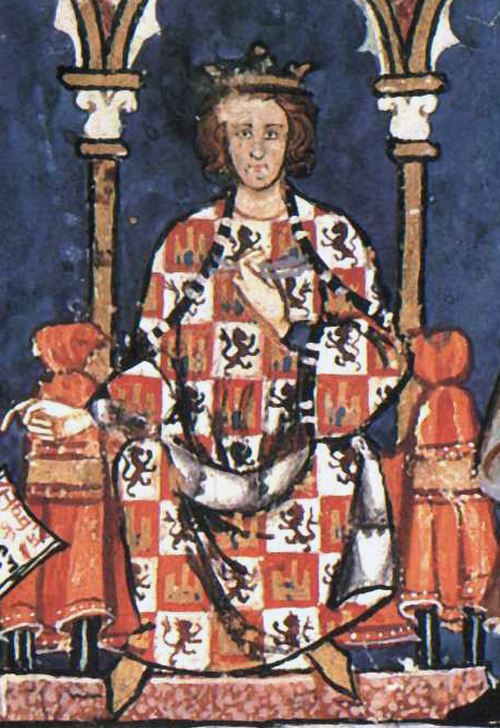
King Alfonso X of Castile 'The Wise' (depicted here in a medieval miniature from the Libro de los Juegos) was the key patron who brought the Picatrix to Europe, ordering its translation from the original Arabic into Castilian and Latin.
As it circulated in Latin manuscript form throughout the universities and courts of Europe, the Picatrix became both highly sought after and deeply feared. It was a text of intimidating complexity, requiring its practitioners to be master mathematicians, expert astronomers, and disciplined natural philosophers. To read the Picatrix was to step into a universe where science and magic were not enemies, but the two hands of a single, cosmic body.
The Cosmic Conduit: The Hermetic Cosmology of Stellar Rays
At the absolute core of the Picatrix lies a beautiful and coherent philosophy of nature, heavily drawn from Neoplatonism and Hermetic philosophy. The grimoire does not view magic as a violation of natural laws, but as the ultimate application of them.
The universe of the Picatrix is a living, singular organism, organized in a strict hierarchical structure. At the summit of this hierarchy is the One, the Divine Source, from which all life and form emanates. Below the source are the celestial spheres—the stars and the seven classical planets: Saturn, Jupiter, Mars, the Sun, Venus, Mercury, and the Moon. Each of these celestial bodies acts as a massive lens, focusing the raw, divine light of the source into specific, qualified energetic rays.

Hermes Trismegistus, the patron saint of Hermetic philosophy and magic, as depicted in a beautiful inlaid marble floor at Siena Cathedral. The Picatrix relies heavily on his cosmological vision of the macrocosm and microcosm.
These rays descend continuously into our sublunary, material world, imbuing all physical things—stones, plants, animals, and metals—with their specific cosmic signature. This is the classic Hermetic doctrine of As Above, So Below:
* Saturn governs lead, dark stones, old age, quietude, and the deep, silent structures of the earth.
* Jupiter governs tin, lapis lazuli, justice, abundance, and the expansive growth of life.
* Mars governs iron, martial courage, fire, and the cutting edge of change.
* The Sun governs gold, physical vitality, leadership, and the illuminating light of intellect.
* Venus governs copper, beauty, desire, harmony, and the binding force of love.
* Mercury governs mercury, writing, trade, intellectual agility, and swift communication.
* The Moon governs silver, water, memory, and the somatic cycles of the physical body.
The Picatrix teaches that the magician is not a sorcerer commanding devils, but a divine chemist. By understanding these celestial signatures (occult virtues), the magician can act as a conscious mediator, catching the descending rays of the planets and crystallizing them into concentrated, physical form—a talisman. A talisman is literally a battery of cosmic energy, a material object constructed from the correct metals, stones, and herbs, engraved with the correct symbols, at the exact moment when the corresponding planet is at its maximum strength.
The Rigorous Math of Astral Elections: Astrological Timing
In many modern schools of magic, ritual is performed whenever the practitioner feels inspired. The Picatrix rejects this casual approach with absolute severity. In the world of esoteric astrology, magic is nothing without mathematics. You cannot build a solar talisman on a Tuesday night during a void-of-course moon; to do so is to invite failure and energetic stagnation.
The grimoire demands that the practitioner master the complex science of astrological elections (katarche). The magician must calculate the precise astrological alignment—down to the exact hour and minute—when the planetary rays are at their peak and perfectly aligned to the specific goal:
* The Ascendant: The rising sign must be occupied by the planet of interest, or its planetary ruler must be in a strong, favorable house.
* Planetary Dignities: The planet must be in its home sign (dignity) or exaltation, and entirely free from the burning rays of the Sun (combustion) or the retrogrades that weaken its transmission.
* The Moon's Alignment: The Moon, as the final gateway through which all celestial influences pass before hitting the earth, must be in a favorable astrological mansion, forming a harmonious aspect (trine or sextile) to the elected planet.
For example, to construct a talisman of Jupiter for wisdom and abundance, the magician must wait until Jupiter is rising in Sagittarius or Pisces, unafflicted by Mars or Saturn, with the Moon growing in light and forming a perfect aspect to Jupiter. Using tools like astrolabes in the Middle Ages, or advanced software in 2026, the magician calculates these rare celestial alignments. The physical engraving of the talisman—whether on a sheet of pure tin or a ring of sapphire—must begin and end strictly within this fleeting celestial window. If the alignment shifts, the gateway closes, and the stone remains a mere stone.
The Three-Layered Structure: Philosophy, Math, and Ritual
The Picatrix is not merely a list of planetary recipes; it is structured as a complex, three-layered tapestry of magical technology:
1. Intellectual Philosophy: The theoretical foundation. The book is filled with long, dense passages explaining the nature of the soul, the hierarchical organization of the cosmos, and the philosophical justification for why matter is receptive to spirit. The author repeatedly warns that a magician who does not study philosophy is a mere charlatan.
2. Mathematical Astronomy: The practical calculation. This is the science of the astrolabe, the tracking of planetary movements, and the understanding of the twenty-eight Mansions of the Moon. Mathematics is the bridge that translates cosmic energy into physical time.
3. Ceremonial Ritual: The physical grounding. Once the philosophy is understood and the timing is calculated, the magician performs the physical work. This involves the selection of the correct planetary suffumigations (incense), the chanting of the secret planetary prayers, and the carving of the precise astrological sigils and characters onto the metal or stone matrix.
The text describes talismans for every conceivable human desire: protective talismans to guard a city, healing talismans to cure diseases, magnetic talismans to attract love or wealth, and even highly destructive talismans designed to bring ruin to enemies. Yet, throughout its pages, the author stresses that the highest form of talismanic magic is the refinement of the magician’s own intellect. By drawing down the stellar rays of the planets, the magician slowly aligns their own disordered personality with the perfect, mathematical harmony of the cosmos, performing the ultimate Hermetic alchemy.
The Forbidden Shadow: Legacy and Renaissance Influence
Despite its intimidating complexity and the regular threat of inquisitorial condemnation, the Picatrix exerted an enormous, hidden influence on the great minds of the European Renaissance.
When the legendary humanist Marsilio Ficino translated the Corpus Hermeticum and sought to reconcile Christian theology with Hermetic magic, he relied heavily on the planetary technologies of the Picatrix, though he took great care to hide his source to avoid charges of heresy. Later, the great German polymath Heinrich Cornelius Agrippa synthesized the Picatrix into his monumental Three Books of Occult Philosophy, which became the bible of Western ceremonial magic for centuries. The philosopher Giordano Bruno, who was burned at the stake in Rome, spent his entire life developing complex mnemonic systems and magical grids that were deeply rooted in the talismanic logic of the Picatrix.
To the medieval church, the Picatrix was a dangerous grimoire of demonic conjuration. But to these Renaissance thinkers, it was a precious, highly scientific manual that mapped the invisible energy grids of the cosmos. It was the missing link between the physical and the spiritual, proving that the human mind, by using mathematics and conscious intent, could actively participate in the ongoing creation of the universe.
The True Talisman of the Soul
As we navigate the hyper-accelerated, purely materialistic landscape of 2026, the Picatrix stands as a majestic, demanding sentinel from the ancient world. It challenges our flat, utility-driven view of reality, calling us back to a universe that is alive, interconnected, and deeply sacred.
The deep secret of the Ghayat al-Hakim is that the physical talisman—the engraved stone or the ring of metal—is only an external mirror. The ultimate crucible of this magical work is the human soul.
Our thoughts, our desires, and our habits are the actual matrices through which we capture the forces of reality. When we live in chaotic distraction, we construct a chaotic, unaligned life. But when we silence the lower noise, study the deep patterns of the cosmos, and consciously elect the moments of our actions, we transform our own consciousness into a sacred, shining talisman—a radiant conduit of the Divine Light that elevates everything it touches.
— Lux Esoterica


Comentarios