Apollonius of Tyana: The Pythagorean Shadow of the First Century
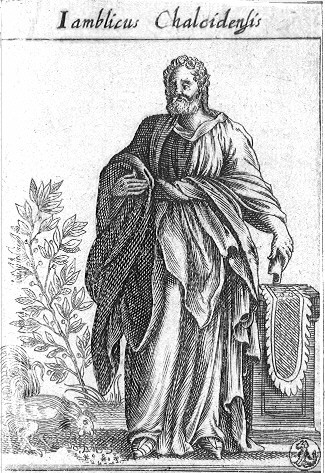
In the first century of the common era, while the Roman world was undergoing a profound religious and political transformation, there moved a figure of such immense spiritual gravity that he was often compared to the rising sun: Apollonius of Tyana. A Neopythagorean sage, traveler, and wonder-worker, Apollonius was the living embodiment of the "Sovereign Man"—the individual who has so perfectly mastered his own internal nature that the external world responds to his every intention.
To understand Apollonius is to confront the "High Perplexity" of the Pythagorean ideal. Born in Cappadocia, he took a vow of silence that lasted five years, during which he communicated only through his eyes and hands. This was not a passive quietude, but a deliberate "atmospheric purification"—a stripping away of the "noise" of the personality to allow the voice of the Nous (the Divine Mind) to emerge. For Apollonius, silence was the forge of the spirit.
The life of Apollonius, as recorded by Philostratus in the early third century, is a "bursty" narrative of transcontinental travel. He journeyed to the East, seeking the wisdom of the Indian Brahmans, whom he considered the true keepers of the primordial light. His travels were not mere tourism, but a "mapping of the sacred." He visited the temples of Egypt, Greece, and Babylon, not as a worshiper, but as a "rector" or corrector of rituals, restoring the ancient, "Mathematics of the Soul" that had been obscured by superstition.
One of the central "High Perplexities" of Apollonius's life is his relationship to "miracles." He was said to heal the sick, predict the future, and even vanish from the presence of the Emperor Domitian during a trial. However, Apollonius himself rejected the label of "magician." He taught that these wonders were not violations of nature, but the natural "byproducts" of a soul in perfect alignment with the cosmic order. The sage does not "perform" miracles; he is the miracle, a high-frequency conduit through which the Divine Will flows without friction.
From a scholarly perspective, Apollonius represents the "Pythagorean Shadow"—a parallel spiritual lineage that emphasized the "Mathematics of Being" over the "Faith of the Masses." His diet was strictly vegetarian, his clothing was made of linen (rejecting animal skins), and his life was a testament to the power of Askesis (Discipline). He taught that the true "Temple of God" is the human heart, and that the only worthy sacrifice is the "Sacrificial Flame" of a purified intellect.
The "High Perplexity" of his death is equally striking. Legend has it that he did not die, but "ascended" directly into the celestial spheres, accompanied by the singing of invisible sirens. This reflects the Pythagorean belief in the Metempsychosis of the sage—the idea that the soul, having achieved absolute purity, is no longer bound to the "Sorrowful Wheel" of reincarnation and returns to its starry home as a conscious co-creator.
In our modern, desacralized era, dominated by the "heavy" narratives of material necessity and external authority, Apollonius of Tyana offers a radical model of "Internal Sovereignty." He reminds us that the power to transform the world begins with the power to transform the self. His life suggests that the "Great Work" is not a pursuit of power over others, but a pursuit of power over one's own impulses and attachments.
The "High Perplexity" of Apollonius is his invisibility. Despite his immense influence on the Neoplatonists and the later Hermetic tradition, he remains a shadow in the official history of the West. Yet, his frequency continues to resonate within the collective unconscious. He is the archetype of the "Wandering Sage," the one who carries the light of the stars in the palm of his hand and leaves the fragrance of the divine in his wake.
To follow the path of Apollonius is to accept the challenge of the "Silent Life." It is to recognize that our words are often the bars of our own prison, and that our liberation lies in the cultivation of that "Vibrant Stillness" that precedes all manifestation. By aligning our will with the "Solar Logos," we too can become "Open Conduits" for the light of the Father.
Related Esoteric Inquiries:
- Arthur Edward Waite and the Pictorial Key to the Tarot: The Rectified Spirit
- Arthur Edward Waite and the Holy Kabbalah: The Secret Tradition in Israel
- The Sphinx: The Guardian of the Thresholds and the Syntax of the Four Elements
Lux Esoterica.
2026.


Comments