Basil Valentine and the Twelve Keys
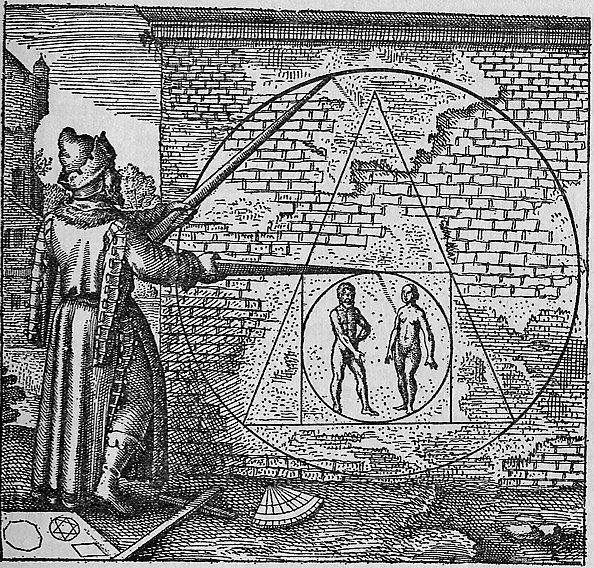
According to the old story, a Benedictine monk named Basil Valentine lived in the monastery of St. Peter in Erfurt in the fifteenth century. He was a master of the Art, and when he died he hid his writings behind a pillar of the church.
The pillar cracked open one day during a storm, and the manuscripts were found. It is a wonderful tale, with only one problem: there is no evidence that Basil Valentine ever existed. Yet the books that carry his name became some of the most beloved in the history of alchemy, and among them is a short work of twelve riddling images known as the Twelve Keys.
A Monk Who May Never Have Lived
No record from Erfurt mentions a monk by this name. The name itself is peculiar: Basilius means "kingly" and Valentinus means "strong" or "healthy," as if the author chose a title and not a surname. The works appeared in print around 1599 and later, in the hands of a German salt-works official and alchemical writer named Johann Tholde, who said he had found the manuscripts. Many historians believe that Tholde himself wrote them, or edited them heavily, in the years around 1600.
This does not make the books worthless. It means that they belong to the world of the late sixteenth century, when Paracelsus had made chemical medicine a subject of fierce interest. They are not relics of the Middle Ages, as the legend suggests.
The Books
The best-known works under the name of Basil Valentine are the Triumphal Chariot of Antimony (1604), the Last Will and Testament, and the Twelve Keys. Antimony, a gray, brittle element found in a mineral called stibnite, is the star of the collection. The author claims that it can purify gold and heal many diseases.
An English translation of the Twelve Keys appeared in the seventeenth century, and the work reached many readers in Arthur Edward Waite's edition of the Hermetic Museum in 1893. It is a short text, but the images that go with it have been admired for four centuries.
The Twelve Keys
The book is built as a series of twelve sections, each called a "key," with a picture and a text in veiled language. The pictures are allegories: kings, dragons, wolves, birds, a man with a scythe, a woman at a fountain. The texts use these images to describe stages of a process that, on the surface, is the making of the Philosopher's Stone.
The author is quite open about his secrecy. He warns that the keys are written for the sons of the Art, and that those who seek only gold and cannot understand the figures will fail. He ends the work with a prayer-like admonition to use the knowledge with fear of God and charity to the poor.
This was a common attitude among writers of this literature, who thought of the Work as a gift that could be misused.
The Wolf That Devours the King
A central image in the book is that of the gray wolf. Antimony was nicknamed the "wolf of the metals" because it was known to dissolve all metals but gold. When molten gold was treated with antimony, the impurities were taken up, and the pure metal remained.
The alchemist saw in this a picture of a king, gold, being devoured by a wolf and then reborn in a purer form.
In the spiritual reading that arose later, the king is the soul and the wolf is the trial that strips away what is false. This is a symbolic interpretation, and it is not the only one. The books themselves speak of the laboratory and the furnace, and historians of chemistry take these words at face value.
The two readings can live side by side: the same image can describe a metal in a crucible and a person in a crisis.
Reading Alchemy Today
It is wise not to treat the Twelve Keys as a modern manual of the soul, nor as an exact recipe. The text is intentionally obscure, and it mixes true chemical observation with metaphor and tradition. Some of the claims attributed to Valentine, such as the discovery of certain acids, belong to the legend of his name more than to firm records.
For the modern reader, the best use of the book may be as a piece of art and history. The pictures show how seriously early modern people took the idea of change: that lead could become gold, that a sick body could be mended and that a human being could be made whole.
A Safety Note
The substances in these books are dangerous. Antimony compounds are toxic, and so are the mercury and arsenic salts that appear throughout the alchemical literature. Some alchemists were poisoned by their own experiments, and medicines made from antimony caused deaths in early modern Europe. Do not try to prepare or take any of the remedies described in these texts.
Closing
The monk behind the pillar was probably never born, and the keys he held open no doors in a monastery. Yet the story survives because it speaks to a hope that people have never lost: that behind the riddle there is an order, and that patience, humility and care can set it free.
The old books say that only the humble will read the keys. That may be the one claim in them that is easy to test.
Related Esoteric Inquiries
- The Splendor Solis: The 22 Plates of the Alchemical Sun
- Basil Valentine and the Triumphal Chariot of Antimony
- Paracelsus and the Tincture of the Philosophers: The Alchemy of Deification
Lux Esoterica.
2026.


Comments