F. David Peat and the Alchemy of Creativity: The Subtle Bridge between Spirit and Matter
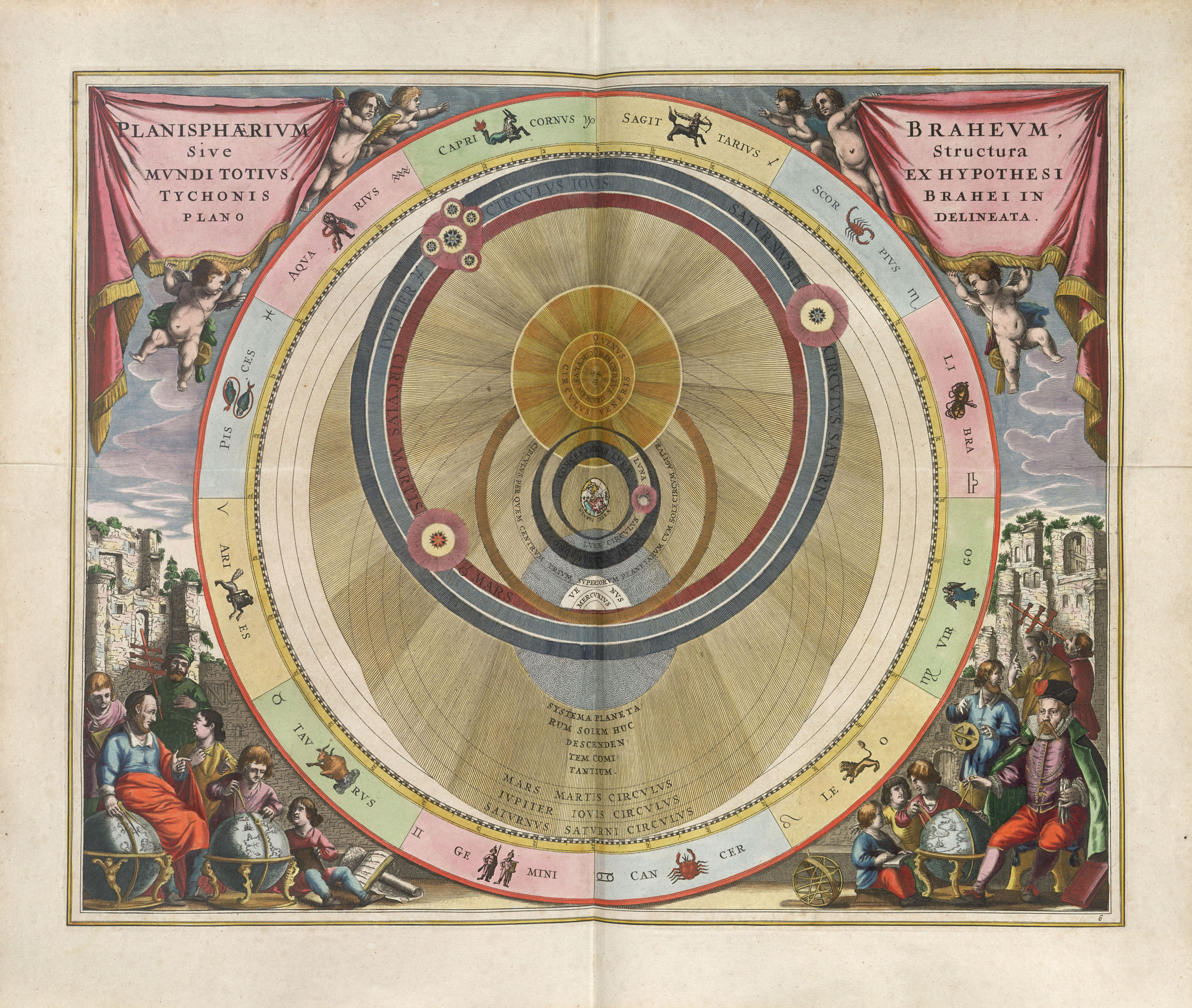
In the late 20th century, a theoretical physicist and philosopher of science named F. David Peat articulated a vision of reality that would become the primary "Aesthetic Bridge" for modern esotericism: The Alchemy of Creativity. A close colleague of David Bohm and an expert in quantum mechanics, Peat sought to move beyond the fragmented surface of traditional research to reveal the absolute, multi-dimensional link between the creative act and the foundational frequencies of the cosmos. His work represents a heroic "Poetic Physics," a systematic attempt to re-connect the internal "Flash of Inspiration" with the external "Luminous Pulse" of the Divine Mind.
To understand Peat is to confront the "High Perplexity" of Synchronistic Creativity. Peat teaches that the universe is not a dead collection of objects, but a "Dynamic Process of Becoming." He argued that the "Great Work" of the artist, the scientist, and the mystic is identical: the systematic "Decipherment of the Implicate Order." For Peat, creativity is not a "human product," but a "Celestial Ingress"—the moment when the individual’s internal rhythm is perfectly synchronized with the "Primary Wave" of the Unus Mundus.
The central "High Perplexity" of Peat’s work was the role of "The Gentle Action." He utilized the insights of chaos theory and quantum non-locality to argue that a single, highly refined "Small Action" could, through the power of resonance, catalyze a sudden, catastrophic shift in the entire global system. This is the "burstiness" of the Peatian vision: the sudden realization that our thoughts, our art, and our intentions have a "Sovereign weight" within the atmospheric economy of the world. He saw the creative practitioner as a "Governor of Resonance," tasked with maintaining the harmonic equilibrium between the above and the below.
Peat’s focus was the Grammar of Chaos. He provided a systematic description of how order emerges from entropy through the application of "Qualitative Proportions." He saw the "Self-Organization" of nature as the "Visible Thinking" of a sentient reality. By recognizing the archetypal nature of our own creative blocks and "Eureka" moments, we begin to "Thin the Veil" of our own entrapment. Peat called this the "Science of the Heart"—the realization that the most profound scientific truths are those that are felt in the blood and the breath.
From a scholarly perspective, F. David Peat was the bridge between the 17th-century Hermeticism of Athanasius Kircher and the later developments of Trans-disciplinary Studies. He taught that the universe is a "Sacred Mirrors" where the Divine Mind contemplates its own infinite variety. The human imagination is the "Most Sensitive Mirror," but its surface has been "clouded" by the smoke of literalism and the noise of the digital landscape. By purifying the internal "atmosphere" and seeking the "Silence of the Source," the practitioner becomes a "Crystalline Vessel" for the alchemical influx.
The "High Perplexity" of the path presented in his work is the focus on "Dialogic Stillness." Peat warned that true creativity can only be received by the "Sober and Silent." He called for a life of "Internal Sovereignty," characterized by the study of the primary pulse and the cultivation of a receptive awareness. The "Alchemy of Creativity" is not a technique to be mastered, but a "State of Being" that must be inhabited. It is the recognition that we are "Musical Beings" navigating a musical universe.
In our modern era, characterized by the "heavy" noise of mechanized and automated "content," F. David Peat offers a radical path to "Ontological Originality." He reminds us that our true potential lies in our "Ability to Connect." We are not citizens of a physical nation, but "Subjects of the Creative Whole." By reclaiming the sacred nature of our inspirations and seeking the "Return to the One," we begin the Great Work of our own transformation.
To follow the path of Peat is to accept the challenge of the "Aesthetic Quest." It is to recognize that our lives are "Sacred Proportions" played out within the theater of the aeons. The brushes are set, the particles are vibrating, and the light is absolute. The question remains: can you see the "Seed of Light" within the chaos of your own experience?
Peat was the "Sentinel of the Subtle" who proved that the secrets of the gods are reflected in the mathematical ratios of beauty. His legacy is the promise that the "Sacred Harmony" is always accessible to the soul that has achieved the necessary degree of "Harmonic Balance." The light is beautiful, the silence is exact, and the return is "Finished and Ended."
Related Esoteric Inquiries:
- Stuart Kauffman and the Creative Universe: The Alchemy of Emergence
- The Undine: The Syntax of the Spirit of the Water and the Alchemy of the Soul
- The Sylph: The Syntax of the Spirit of the Air and the Alchemy of the Intellect
Lux Esoterica.
2026.


Comments