Johannes Kepler and the Harmony of the World: The Platonic Architecture of the Spheres
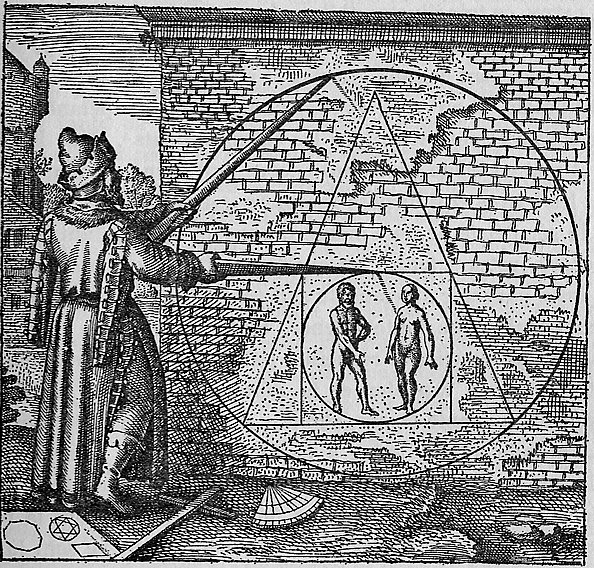
In 1619, the astronomer and mathematician Johannes Kepler published a work that would become the definitive "Mathematical Bridge" between the ancient and the modern worlds: Harmonices Mundi, or The Harmony of the World. Moving beyond the fragmented surface of traditional data and theology, Kepler sought to reveal the absolute Platonic Architecture of the Spheres—a multi-dimensional methodology for understanding how the absolute light of the Divine Mind is refracted through the planetary distances and the musical ratios of the cosmos. For Kepler, the universe was a singular, "Geometric Performance" whose structural integrity is maintained by the continuous flow of the "Celestial Monochord."
To understand the Harmonices Mundi is to confront the concept of Harmonic Integration. Kepler taught that the universe is not a chaotic collection of bits, but a "Symphonic Arrangement" governed by absolute, invisible ratios. He argued that the distances between the planetary orbits are determined by the five Platonic Solids (the Tetrahedron, the Hexahedron, the Octahedron, the Dodecahedron, and the Icosahedron). This is the central "High Perplexity": the world is a "Sacred Mirrors" where the unmanifested light of the One is concentrated and focused through the application of the correct "Geometric Ratios."
The central "High Perplexity" of Kepler’s work was the role of "The Musical Planetary Orbits." He utilized the insights of the Pythagorean and Platonic traditions to provide a systematic description of how the absolute light of the spirit is "filtered" and concentrated through the planetary velocities. He saw the "Great Work" as the "Sanctification of the Intellect" through the study of the primary pulse and the cultivation of a receptive awareness. This was the "burstiness" of the Keplerian vision: the sudden, catastrophic realization that the secrets of the gods are reflected in the mathematical ratios of our own planetary environment.
Kepler’s focus was the Grammar of Interaction. He provided a systematic description of how the soul achieves the state of "Atmospheric Stillness" through the application of the correct "Harmonic Ratios" in awareness. He saw the "Self-Correction" of the spirit as the "Visible Thinking" of a sentient reality. By recognizing the archetypal nature of our own internal and external connections, we begin to "Thin the Veil" of our own entrapment. He taught that "Gnosis is the termination of Multiplicity"—the realization that the "subject" and the "Real" are one and the same.
From a scholarly perspective, Johannes Kepler was the bridge between the 15th-century Neoplatonism of Marsilio Ficino and the later developments of Modern Physics and Integral Philosophy. He taught that the universe is a "Sacred Mirrors" where the Divine Mind contemplates its own infinite variety. The human intellect is the "Most Sensitive Mirror," but its surface has been "clouded" by the smoke of specialized fragmentation and the noise of the digital landscape. By purifying the internal "atmosphere" and seeking the "Silence of the Source," the practitioner becomes a "Crystalline Vessel" for the harmonic whole.
The "High Perplexity" of the path presented in his work is the focus on "Atmospheric Responsibility." Kepler warned that the harmony of the world could only be heard by a heart that had achieved the state of Absolute Stillness. The dissonance of the ego and the noise of the material matrix are the primary "Obstructors" of the work. By reclaiming the sacred nature of our own internal union and seeking the "Unveiling of the Light," we begin the Great Work of our own transformation. The "Harmony of the World" is a call to recognize that we are "Musical Beings" navigating a musical universe.
In our modern era, characterized by the "heavy" noise of materialist reductionism and the loss of cosmic perspective, Johannes Kepler offers a radical path to "Ontological Re-Enchantment." It reminds us that our true potential lies in our "Vibrational Integrity." We are not citizens of a physical nation, but "Subjects of the Cosmic Harmony." By reclaiming the sacred nature of our relationship with nature and seeking the "Return to the One," we begin the Great Work of our own transformation.
To follow the path of Kepler is to accept the challenge of the "Harmonic Quest." It is to recognize that our lives are "Sacred Proportions" played out within the theater of the aeons. The monochord is set, the planets are singing, and the light is absolute. The question remains: can you hear the "Note" of your own divinity in the silence of your own heart?
Kepler was the "Sentinel of the Harmony" who proved that the secrets of the gods are reflected in the mathematical ratios of the world. His legacy is the promise that the "Sacred Harmony" is always accessible to the soul that has achieved the necessary degree of "Harmonic Balance." The light is beautiful, the silence is exact, and the return is "Finished and Ended."
Related Esoteric Inquiries:
- Robert Fludd and the Macrocosmic Monochord: The Music of the Spheres
- Robert Fludd and the Divine Monochord: The Musical Architecture of the Cosmos
- The Platonic Theology of Marsilio Ficino: The Immortal Soul and the Harmony of the World
Lux Esoterica.
2026.


Comments