Papus and the Tarot of the Bohemians
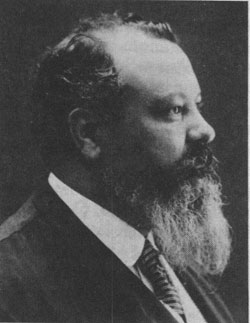
In 1889, a young Parisian doctor published a book with a bold subtitle: The Oldest Book in the World. The book was Le Tarot des Bohémiens, "The Tarot of the Bohemians," and its author called himself Papus. He claimed that the deck of playing cards used by fortune-tellers hid an ancient code of wisdom, carried out of Egypt by wandering Gypsies and kept alive in the pictures.
It is a splendid story. Almost none of it is history. But the book was influential, and it shaped how many people still see the Tarot today.
The Man Behind the Name
"Papus" was the pen name of Gérard Encausse (1865 to 1916). He was born in Spain, in A Coruña, and raised in Paris, where he trained as a doctor. He took the name from a spirit in an old Latin text, in which it means something like "physician."
Papus was a tireless organizer. He wrote dozens of books, ran lodges, edited magazines and became one of the most visible figures of the French occult revival.
He helped found the Kabbalistic Order of the Rose-Cross with Stanislas de Guaita in 1888, and he was a leading figure in the Martinist Order, a Christian mystical society. During the First World War he served as a military doctor, and he died in 1916.
What the Tarot Really Is
Historians trace the Tarot to northern Italy in the fifteenth century, where noble families had decks painted by hand for a card game called tarocchi. Besides the usual four suits, the decks had a set of picture cards, the trumps, with images such as the Pope, the Lovers, Death and the World.
There is no sign of any Egyptian origin, and no sign that the cards were used for telling fortunes until much later.
The Egyptian story began in 1781, when the French scholar Antoine Court de Gébelin claimed that the Tarot was a lost book of the Egyptian god Thoth. He had no evidence, and, since hieroglyphs could not yet be read, nobody could contradict him. Soon after, a card-reader known as Etteilla began to sell Tarot as a divination tool, and the idea took root.
Lévi and the Hebrew Letters
The next step came from Éliphas Lévi, a French occultist of the mid-nineteenth century. He proposed that the twenty-two trump cards matched the twenty-two letters of the Hebrew alphabet, and that the Tarot was therefore a pictorial form of Kabbalah. This was also an invention of his own, but it was a stylish one, and it passed to Papus.
Papus built on Lévi and Court de Gébelin. He argued that the Tarot was the oldest book in the world, written in images because the priests of Egypt wanted to save their wisdom from destruction. According to him, the Gypsies, whom the French called Bohemians, had carried it to Europe without knowing what they held.
The Four Suits and the Name of God
Papus gave the suits a Kabbalistic meaning. The four letters of the Hebrew name of God, written YHVH, were matched with the four suits: Wands, Cups, Swords and Coins. The trumps were set against the Hebrew letters, and he gave numbers and meanings to each. In his system the Fool was the unnumbered card, placed near the end of the series.
The images in the book came from a deck designed by Oswald Wirth, a Swiss artist and friend of Guaita, who drew the cards in 1889 to match Lévi's and Papus's ideas. The Tarot of Papus was therefore not an ancient thing recovered, but a new thing, drawn with ancient costumes.
Why It Matters Anyway
None of this makes the work worthless. Papus gave the Tarot a framework that later occultists would borrow, change or argue against. The Rider-Waite deck of 1909 belongs to that long conversation. Many readers, whatever they believe about its past, find the Tarot a useful way to think about their own situation. A card is a prompt. A spread is a conversation with oneself.
A word of care: the cards can be a pleasant tool for reflection, but they cannot predict the future, and they are not a substitute for medical, legal or financial advice. Anyone who feels unwell or anxious should ask a professional, not the deck.
Closing
Papus tells a good story about the oldest book in the world, and it is not true. The Tarot began as a game, and the mystery was added by people who loved it. That does not make the pictures less strange or less rich.
It only means that the wisdom in them is the wisdom we bring to them, and the old story, even if it fails as history, still works as an invitation to look closely.
Related Esoteric Inquiries
- Papus and the Absolute Key to Occult Science: The Kabbalistic Synthesis
- Manly P. Hall and the Secret Teachings of All Ages: The Rosicrucian Section
- Eliphas Levi and the Pillar of Severity: The Ritual of High Magic
Lux Esoterica.
2026.


Comments