Paracelsus and the Coelum Philosophorum
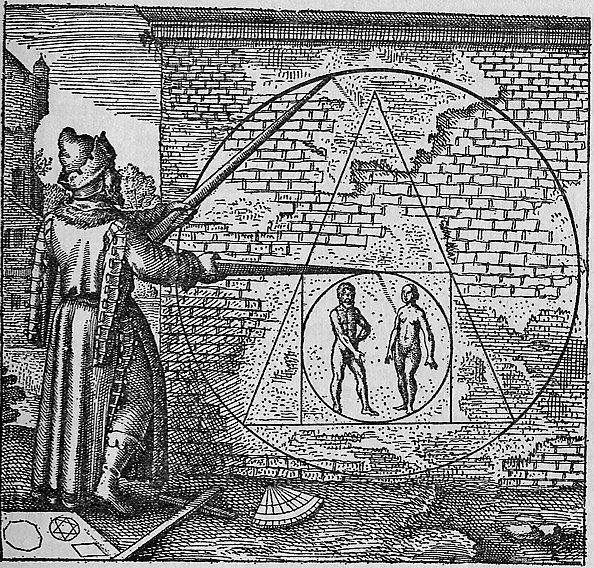
The book is called Coelum Philosophorum, "The Heaven of the Philosophers," and it is often linked to the name of Paracelsus. It is easy to see why. The title is grand, the subject is the hidden powers of nature, and Paracelsus was the best-known alchemist of the age in which the book appeared.
But the author was not Paracelsus. It was a different man, a physician from southern Germany, and the two writers saw the world in related but separate ways. Sorting out who wrote what is a small detective story, and it leads to the idea behind both: that there is a heaven hidden inside earthly things.
Who Wrote the Book
The Coelum Philosophorum seu de secretis naturae was published at Freiburg in 1525 by Philipp Ulstad, a physician and teacher of medicine of noble family. It is a practical book on distillation, the art of heating a substance and collecting its vapors.
It draws on earlier authorities, among them Arnald of Villanova, Ramon Llull, Albertus Magnus and the Franciscan John of Rupescissa. It was reprinted often and translated, and it helped to spread the idea that spirits and "quintessences" could be drawn from plants, wine and minerals.
The "heaven" of the title refers to the fifth essence, the quintessence, that the old authors believed could be separated from the four elements. It was thought to be pure and incorruptible, like the substance of the sky.
The Real Paracelsus
Paracelsus was born as Theophrastus von Hohenheim around 1493 in Einsiedeln, Switzerland, and died in Salzburg in 1541. He was a wandering physician who rejected much of the old medicine of Galen and Avicenna. In 1527, when he was appointed city physician at Basel, he reportedly burned a copy of Avicenna's textbook in a public bonfire, which made him many enemies. He lectured in German instead of Latin, and he insisted that doctors learn from nature and from patients.
His chief ideas are well known. He argued that all things are made of three principles, salt, sulfur and mercury, which stand for body, soul and spirit. He believed in a close link between the human being, the "little world," and the great world of the heavens.
And he said, in a famous line, that the dose makes the poison: the same substance can heal or kill depending on how much is given.
Planets and Metals
The matching of metals to planets is far older than either author. Ancient astrologers linked seven metals to the seven planets visible to the eye: gold to the Sun, silver to the Moon, quicksilver to Mercury, copper to Venus, iron to Mars, tin to Jupiter and lead to Saturn. The pairs appeared in medieval and Renaissance books, and alchemists used the planet signs as shorthand for the metals.
For the alchemist, the pairing was more than a code. The metals were thought to grow slowly in the earth under the influence of the stars, and the art of the laboratory was to hurry that growth along. This is the picture behind many alchemical books, including those of the Paracelsians.
A planet's "influence" was imagined as a slow, quiet pressure, like warmth reaching a seed. Modern chemistry and astronomy show no such link, so these pairings belong to the history of ideas, not to science.
Why the Names Get Mixed
Paracelsus did not write a book called Coelum Philosophorum. But his followers, who turned his chemistry into a medical movement in the later sixteenth century, took over the language of quintessence, distillation and heavenly virtue. Printers and collectors then bundled many alchemical texts under his name.
Catalogues of the time sometimes tagged Ulstad's book as Paracelsian because it matched the interests of the movement. That is probably how the link entered popular memory.
This is a good reminder to check an author's name before taking a book's claims at face value. In the world of alchemy, titles and names were borrowed constantly.
A Word of Care
The substances in these books, including mercury, lead, antimony and arsenic, are poisonous. Paracelsus himself used such materials in medicine, but he knew the danger, and his rule about dose should be read as a warning. Nothing in this old literature should be tried at home.
Closing
The idea behind the Heaven of the Philosophers is simple and lasting: the sky is not only far above us. Something of it lies hidden in a herb, a metal or a drop of wine, and the art is to bring it out.
Ulstad wrote it as a practical manual, and Paracelsus made it a philosophy of medicine. Together they remind us how much of the old world's imagination was about finding the sky in the ground.
Related Esoteric Inquiries
- Paracelsus and the Archidoxis of Magic: The Secret Laws of Nature
- Paracelsus and the Tincture of the Philosophers: The Alchemy of Deification
- Paracelsus and the Archeus of Nature: The Internal Alchemist
Lux Esoterica.
2026.


Comments