The 7 Wonders: 6 - The Colossus of Rhodes and the Solar Bridge
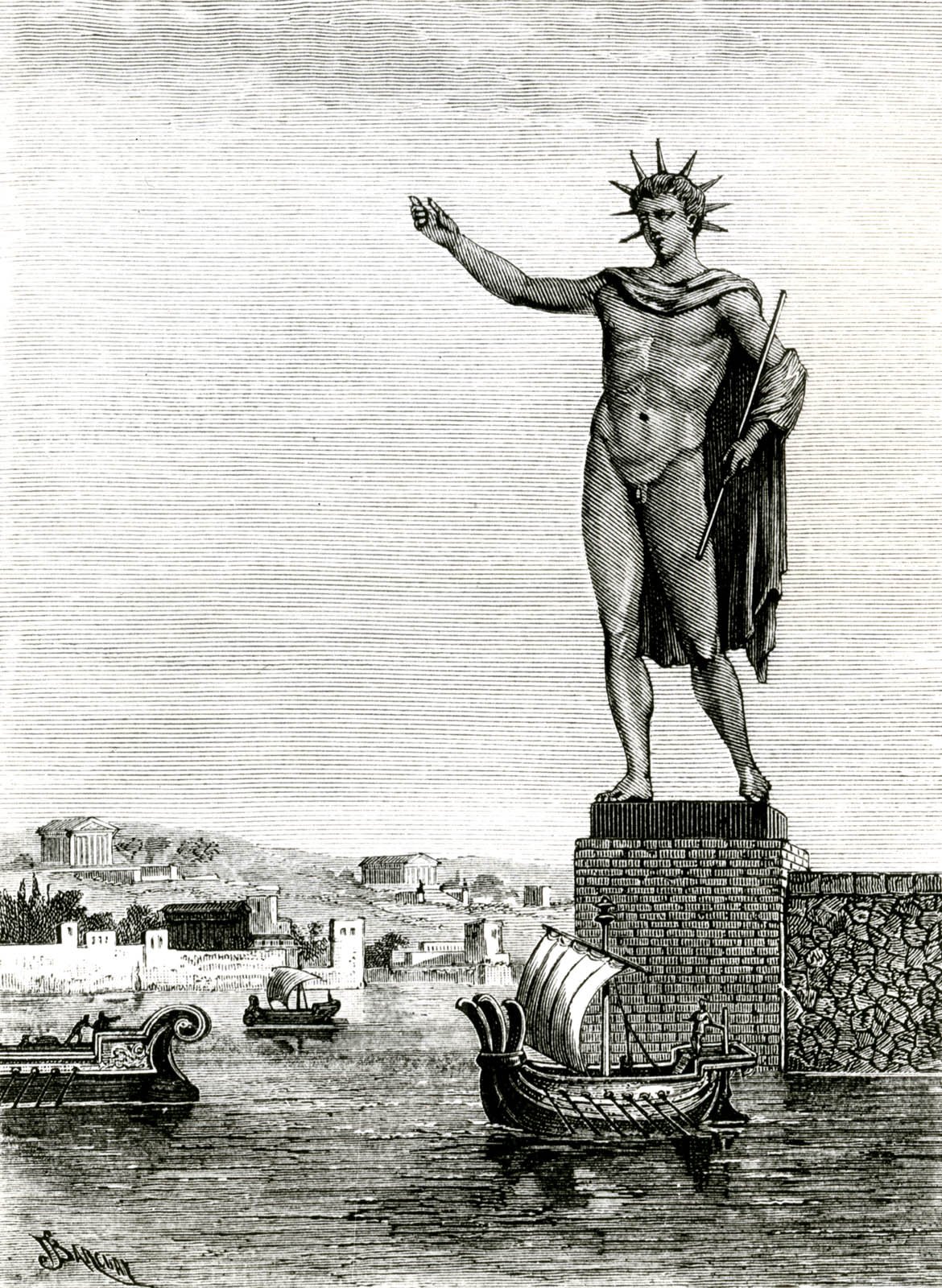
Among the seven wonders of the ancient world, the Colossus of Rhodes is the one that most clearly speaks to light. It was a giant bronze statue of Helios, the Greek god of the sun, built on the Aegean island of Rhodes.
Ancient writers describe it as a figure of great height, with a crown of rays and a torch raised high. Most scholars believe it was made around 290 to 280 BCE by the sculptor Chares of Lindos, and that it was toppled by an earthquake about half a century later. Its ruins were eventually removed and sold, and no trace of the statue remains today.
Many people imagine the Colossus with its legs wide apart, standing across the harbor. That image became popular in later centuries, but most modern historians think it is wrong. The statue probably stood near the harbor entrance on a base, not straddling the water. The true figure is still impressive, and the legend of the giant over the sea continues to inspire writers and artists.
A Statue Made of Victory
The Rhodians built the Colossus after they survived a long siege by Demetrius Poliorcetes, a general who had tried to take the island. The bronze was made partly from the war machines left behind by the enemy, according to ancient accounts.
A monument of this kind was a sign of pride, a way to show that the city had defended itself and that its god protected it. The sun, in this sense, was a symbol of freedom and of the city's strength.
This origin story gives the statue a deeper meaning. It was not only an image of a god. It was a memory of a city that refused to be conquered and that turned the marks of war into a shining sign of survival.
The Solar Figure
In esoteric writing, the Colossus is often read as a picture of the solar person: a human being who has learned to hold the light of the sun within. The torch in the hand becomes a sign of awareness, a flame that lights the way for others.
The sun in ancient thought was linked to clarity, to vitality and to the center of the world. Those who worked with solar symbols often sought balance between their own inner light and the duties of their community.
The bronze itself has its own symbolism. Alchemical and astrological traditions later linked copper with Venus and tin with Jupiter. Some writers see the alloy as a union of warmth and generosity with steady authority. These links are later interpretations, not facts from the ancient builders, and they should be read as symbols rather than as proof.
Holding the Torch in Dark Times
A beacon is useful only when it stays lit. In stormy periods, many people feel lost and look for a clear point of reference. The image of the Colossus invites us to stand firm and hold a steady light. This does not mean that we must control others or claim to know all the answers. It means that we can keep a calm center in the middle of confusion.
Practical steps can help. Start the day with a few quiet breaths. Decide what matters most in the next hours. Keep promises that are small but real. A steady life, lived with care, can be a light for those who see it.
Projection and Responsibility
Some esoteric teachers speak of projection in a positive sense: the ability to radiate inner calm and purpose into the surroundings. A person who is grounded and clear can help a group stay focused, encourage a friend or bring a sense of order to a difficult room. The aim is not to dominate, but to offer warmth without losing one's balance.
The same image also carries a warning. A torch can guide, but it can also blind if it is held too close or pointed in the wrong direction. Good projection is measured. It respects the freedom of others and does not demand that everyone walk the same road.
The Fall and the Lesson
The Colossus did not last forever. An earthquake brought it down, and the bronze lay on the ground for centuries. This fall is an important part of its meaning. No monument, however grand, escapes the cycles of time. The lesson is humility. Even the greatest light must rest, and even the proudest statue returns to the earth.
For the seeker, this reminder can be freeing. We do not have to be perfect or eternal to be useful. We only need to shine honestly for as long as we are able, and then let others carry the flame.
Closing
The Colossus of Rhodes stands in memory as a symbol of the sun, victory and the human wish to carry light. Historians have corrected some of the legends about its place and form, but its story still teaches a timeless lesson.
Hold your torch steadily, look toward the open sea and remember that the true wonder is not the bronze itself, but the courage to keep a flame alive when the waves rise.
Related Esoteric Inquiries
- The 7 Wonders: 3 - The Statue of Zeus and the Sovereign Will
- Gold: The Solar Perfection and the Symbolism of Sovereignty
- The 7 Wonders: 7 - The Lighthouse of Alexandria and the Eye of Wisdom
Lux Esoterica.
2026.


Comments