The Alchemical Hermetism of Gerhard Dorn: Speculative Alchemy, the Unio Mentalis, and the Paracelsian Synthesis
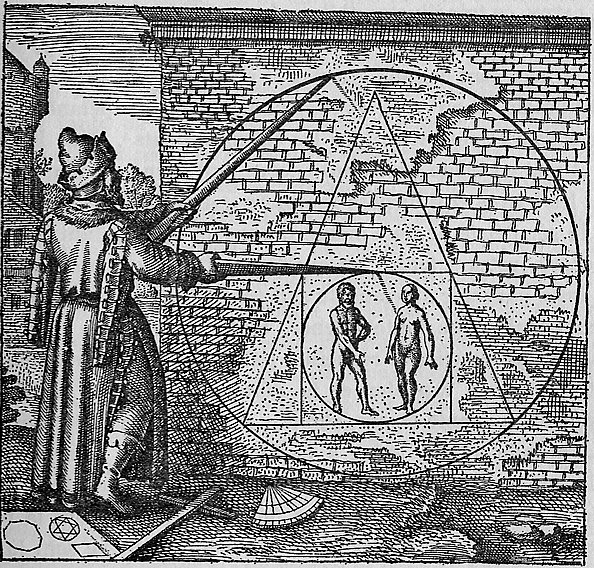
The Philosopher of the Paracelsian Dawn
In the late sixteenth century, as the scientific revolution began to reshape the European intellectual landscape, the laboratory of the alchemist remained a primary space for the exploration of both matter and spirit. Among the most brilliant defenders and interpreters of this transitional science was Gerhard Dorn, a Belgian physician, translator, and philosopher. Dorn was a devoted disciple of Philippus Aureolus Theophrastus Bombastus von Hohenheim, known to history as Paracelsus. While many of his contemporaries viewed Paracelsus primarily as a reformer of medicine and a pioneer of chemical pharmacology, Dorn recognized that the Paracelsian system was in truth a profound, speculative Hermetism that utilized the language of chemistry to map the spiritual regeneration of humanity.
Operating primarily in Basel and Frankfurt, Dorn undertook the monumental task of translating Paracelsus's German writings into Latin, making them accessible to the wider European republic of letters. In his own original treatises, such as the Clavis Totius Philosophiae Chymisticae ("Key to the Entire Chymical Philosophy") and the Physica Trismegisti ("Physics of Trismegistus"), Dorn constructed a comprehensive alchemical philosophy that unified the physical laboratory with the internal transformation of the soul. He was among the first to articulate a clear distinction between the laboratory worker who merely sought the mechanical transmutation of metals—whom he dismissed as a "vulgar blower"—and the true philosopher who understood that the work of the furnace was a physical mirror of a spiritual liturgy. For Dorn, alchemy was the key to restoring the primary harmony between the microcosm of the human being and the macrocosm of the universe, a harmony that had been shattered by the cosmic fall of humanity.
The Three Stages of the Alchemical Conjunction
The metaphysical core of Dorn's philosophy is his detailed description of the Conjunction (coniunctio), the process of unification that leads to the creation of the philosopher's stone. While earlier alchemists had described the conjunction primarily as the union of sulfur and mercury in the crucible, Dorn elevated this process into a three-stage spiritual itinerary that would later become a primary source of inspiration for the modern analytical psychology of Carl Gustav Jung.
The first stage of this itinerary is the Unio Mentalis (the mental union). According to Dorn, the human being in their ordinary, unrefined state is characterized by a profound division between the mind (animus), the soul (anima), and the physical body (corpus). The first task of the alchemist is to separate the mind and the soul from the gross, material influences of the physical body. This is the alchemical separatio, a process of intellectual and spiritual purification where the seeker learns to govern their physical passions and sensory illusions through the power of the intellect. The mind and the soul are united in a state of self-knowledge and philosophical detachment, creating the unio mentalis. However, this state is incomplete; it is a cold, intellectual abstraction that remains separated from the physical reality of the world. The seeker cannot remain in the clouds of contemplation; they must return to the earth to complete the work of integration.
The Return to the Body and the Cosmic Union
The second stage of Dorn's conjunction is the unification of the unio mentalis with the physical body. Having achieved a state of intellectual and spiritual integration, the alchemist must descend back into the crucible of the physical form, bringing the refined light of the mind to bear upon the material elements of their existence.
This is a far more difficult and dangerous operation than the initial separation. It requires the transmutation of the physical body itself, making it a fitting vessel to contain the integrated soul. Dorn writes that the soul must "vivify" the body, spiritualizing the physical elements so that the entire human being—body, soul, and spirit—becomes a single, undivided unity. In laboratory terms, this corresponds to the process of fixation, where the volatile spirit is bound to the solid, material substance, creating a stable compound that cannot be dissolved by any external force. The human being who has achieved this second conjunction has transcended the dualism of spirit and matter, experiencing the physical body not as a prison, but as the temple of the divine light.
The third and final stage of the conjunction is the union of the integrated human being with the Mundus Archetypus (the archetypal world). This is the cosmic dimension of the alchemical work, where the individual, having achieved internal harmony, is united with the primary source of all life. At this level, the alchemist ceases to exist as a separate, isolated ego, becoming a conscious participant in the divine mind that sustains the cosmos. This is the creation of the true Philosopher's Stone, which is not a physical rock that turns lead into gold, but a state of deified consciousness that possesses the power to heal the diseases of the material world and restore the primary order of the creation.
The Spagyric Art and the Extraction of the Virtues
In addition to his speculative metaphysics, Dorn was a practical master of the Spagyric Art, the branch of alchemical medicine that sought to prepare remedies from plants and minerals through the processes of separation and recombination. The term spagyria, derived from the Greek words spao (to tear open) and ageiro (to bind together), encapsulates the fundamental alchemical methodology of solve et coagula.
Dorn taught that every physical substance in the material world contains a hidden, spiritual virtue—a quintessence or arcana—implanted within it by the creator at the beginning of time. However, in the physical state, this virtue is bound and obscured by the impure, chaotic elements of the substance's material envelope. The task of the spagyric physician is to release this virtue through the work of the laboratory. This is achieved by first dissolving the substance, separating the pure, volatile spirit from the dense, earthy impurities, and then recombining the purified elements through distillation and crystallization. The resulting medicine is not a simple mixture of chemical ingredients, but a concentrated, spiritualized substance that acts directly upon the spiritual archetype of the patient's disease. Dorn's medical practice was built on the conviction that physical diseases are merely the manifest symptoms of a deeper, spiritual disharmony; by administering a spagyric remedy, the physician was introducing a purified, cosmic force into the patient's system, restoring the primary balance of their nature.
The Physics of Hermes Trismegistus
Dorn's philosophical ambition culminated in his attempt to construct a complete alchemical physics that would replace the dominant Aristotelian scholasticism of the universities. In his treatise Physica Trismegisti, Dorn argued that the physical laws of the universe could not be understood apart from the spiritual principles revealed in the Hermetic corpus.
Dorn asserted that the material world is not a collection of passive, inert objects governed by mechanical forces, but a living, animate organism permeated by a single, cosmic spirit—the Anima Mundi (the soul of the world). This cosmic soul, which acts as the mediator between the divine mind of the creator and the physical elements of the earth, is the source of all movement, life, and generation. The physical elements (earth, water, air, and fire) are the instruments through which the anima mundi expresses its creative will. Dorn's physics was built on the study of the correspondences and signatures that connect the different parts of the creation. The planets in the heavens, the metals in the earth, and the organs in the human body are all bound together by invisible chains of spiritual sympathy. By understanding these correspondences, the alchemist could manipulate the physical elements not by brute force, but by working in harmony with the natural currents of the cosmic soul, translating the celestial energies of the stars into active, healing forces on the earth.
Legacy and the Jungian Integration
Gerhard Dorn's synthesis of Paracelsian alchemy and Hermetic philosophy represents one of the highest achievements of the speculative alchemical tradition. Although the rise of modern mechanical science in the seventeenth century would marginalize his physics and medicine, his philosophical insights remained a permanent source of inspiration for the Western esoteric underground.
In the twentieth century, Dorn's work experienced a dramatic revival through the psychological investigations of Carl Gustav Jung. In his monumental study Mysterium Coniunctionis, Jung utilized Dorn's three stages of the conjunction to construct a psychological model of the process of individuation—the integration of the conscious and unconscious mind. Jung recognized that Dorn's alchemical operations were not merely chemical procedures, but profound projections of the transformation of the human psyche. The unio mentalis, the return to the body, and the union with the mundus archetypus are psychological realities that map the journey of the individual from state of fragmentation to one of wholeness and cosmic integration. Dorn's legacy is a testament to the enduring power of the alchemical vision: a reminder that the search for knowledge is not a cold exploitation of the physical world, but a sacred, transformative art that demands the purification of the mind and the body in order to reflect the eternal light of the creation.
Related Esoteric Inquiries:
- The Alchemical Hermetism of Gerhard Penot: The Green Lion, the Spagyric Remedies, and the Defense of Paracelsian Medicine
- Gerhard Dorn and the Speculative Alchemy: The Union of the Three Worlds
- The Alchemical Hermetism of Martin Ruland the Elder: The Lexicon Alchemiae, the Secret Terminology, and the Spagyric Dictionary
Lux Esoterica.
2026.


Comments