The Book of the 24 Philosophers: The Paradoxical Definitions of God
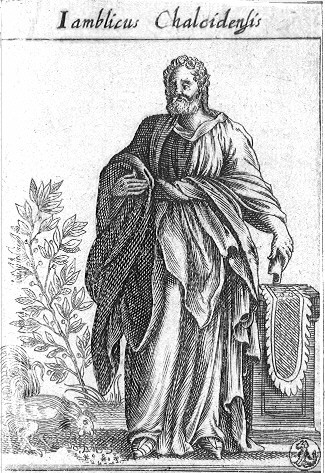
In the late 12th century, a mysterious and brief Latin text began to circulate in the intellectual circles of Europe: the Liber XXIV philosophorum, or The Book of the 24 Philosophers. Structured as a record of a legendary gathering of sages who were asked to define the nature of God, the text provides twenty-four short, aphoristic definitions that together form one of the most profound and challenging "Apophatic" documents in Western esotericism.
To understand the Book of the 24 Philosophers is to confront the "High Perplexity" of Ontological Paradox. The definitions do not describe a personal deity or a creator god in the conventional sense. Instead, they present the Divine as a "Limitless Field" of absolute potentiality. The first and most famous definition states: "God is an infinite sphere whose center is everywhere and whose circumference is nowhere." This single sentence would haunt the imaginations of mystics and philosophers for centuries, from Nicholas of Cusa to Giordano Bruno and beyond.
The "burstiness" of the text lies in its concentrated, "Lightning-like" insights. Each definition is a "vibrational strike" against the limitations of the rational intellect. God is defined as "the light that is not seen," "the silence that speaks," and "the monad that begets monads." These are not dry, logical propositions, but "Theurgical Seeds" designed to be planted in the heart of the student. By contemplating these paradoxes, the mind is forcibly expanded until it reaches the state of Learned Ignorance.
The central "High Perplexity" of the definitions is their focus on Absolute Unity. God is described as the "Source of all numbers" who remains outside of number. He is the "Point" that precedes all geometry. This vision reflects the deep influence of the Neoplatonic tradition, particularly the works of Proclus and the Pseudo-Dionysius. The Book of the 24 Philosophers maps a universe that is a continuous "Hierarchy of Reflection," where every creature is a partial and "contracted" mirror of the infinite sphere.
From a scholarly perspective, the Liber XXIV philosophorum is a masterpiece of "Synthesis." It combines the rigor of Aristotelian categories with the mystical intensity of Hermeticism. It reveals that the "Great Work" of the medieval philosopher was the systematic deconstruction of the ego’s desire for conceptual certainty. The definitions act as a "Spiritual Solvent," dissolving the "Fixed Forms" of religious dogma to reveal the "Luminous Fluidity" of the Absolute.
The "High Perplexity" of the path presented in the text is the role of "Intellectual Ecstasy." The 24 philosophers suggest that the "True Definition" of God is only found in the moment the mind stops defining. God is the "Non-Other" (Non-Aliud) who is found in the "Absolute Stillness" of the purified intellect. To know the center of the sphere, one must first become the center.
In our modern era, characterized by the "heavy" narratives of material quantification and the noise of the digital landscape, the Book of the 24 Philosophers offers a radical path to "Conceptual Sovereignty." It reminds us that reality is always larger than our maps. The "Infinite Sphere" is a call to recognize that the center of the universe is not "out there," but within the very core of our own awareness. We are the "contracted centers" of the infinite light.
To read the definitions is to engage in a process of "Ontological Recalibration." They do not give us "information"; they give us the "Aperture to the Source." They teach us that the task of the seeker is to become a "Crystalline Vessel" for the unmanifest light. The center is waiting, the circumference is expanding, and the silence is speaking. The question remains: can you inhabit the paradox?
The 24 philosophers are silent, the definitions are set, and the sphere is turning. The Liber XXIV philosophorum remains the "Syntax of the Infinite," a manual for the soul that wishes to lose itself in the absolute light of the Monad.
Lux Esoterica.
2026.


Comentarios