The Gnostic Apelles: The Galactic Demiurge, the Prophetess Philumena, and the Single Principle
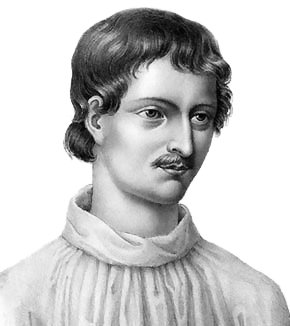
The Disciple who Transcended the Master
In the mid-second century, as the early Christian movement was struggling to define its theological boundaries, the city of Rome became a crucible for diverse cosmological speculations. Among the most influential teachers in the capital was Marcion of Sinope, whose radical rejection of the Old Testament creator God in favor of the benevolent Father of Jesus had shaken the Mediterranean world. However, within Marcion's own circle, a brilliant disciple named Apelles arose who would modify his master's dualism to create a highly original, monistic system of Gnosticism. Apelles was not content to simply repeat Marcion's doctrines; instead, he sought to reconcile the division between the creator and the supreme god by introducing a single, primary principle from which all existence emanated.
Apelles's life was marked by intellectual independence and a deep reliance on visionary experience. After a period of study in Rome, he traveled to Alexandria, Egypt, where he absorbed the rich Hermetic, Neoplatonic, and Gnostic currents of that intellectual capital. Upon his return to Rome, he established his own school, which attracted a large following. His teachings were preserved primarily in his lost works, the Syllogisms (a treatise designed to prove the untruth of the Mosaic scriptures) and the Revelations (a collection of prophecies dictated by his spiritual partner, the prophetess Philumena). Unlike the heresiologists who sought to depict him as a simple heretic driven by personal ambition, Apelles was a serious philosopher who grappled with the problem of evil, the nature of creation, and the descent of the soul, offering a solution that bridged the gap between Gnostic dualism and the emerging orthodox monotheism.
The Single Principle and the Creation of the Demiurge
The core theological innovation of Apelles was his rejection of Marcion's doctrine of two co-eternal principles (the good God and the just Creator). Apelles asserted that there is only one supreme, unbegotten God, a single primary principle characterized by absolute goodness, light, and unity.
According to Apelles, this supreme God did not create the material universe directly. Instead, the father brought forth a lower spiritual power, a luminous angel who would act as the creator of the cosmos. This angel, whom Apelles identifies as the Demiurge, was not evil or malicious, but simply inferior in power and wisdom to the supreme father. Driven by a desire to manifest the beauty of the higher realms in physical form, the Demiurge created the material universe. However, because the Demiurge did not possess the infinite wisdom of the father, the creation was flawed from the beginning. The material world was characterized by instability, division, and decay—not because the creator was malicious, but because the physical elements could not perfectly reflect the spiritual archetypes. This distinction is crucial: Apelles removed the moral condemnation of the creator that was central to Marcionism, replacing it with a cosmology of hierarchical emanation where the defects of the world are seen as the result of a cosmic limitation rather than a malevolent intent.
Philumena: The Prophetess and the Revelations
No analysis of Apelles's system is possible without acknowledging the central role played by the prophetess Philumena, a young woman who was regarded by Apelles as a genuine channel of divine revelation. Philumena was subject to ecstatic visions, during which she claimed to receive instructions from a spiritual being who appeared to her in the form of a young boy.
Apelles acted as the scribe for these visions, recording them in a multi-volume work titled the Revelations (Phaneroseis). Philumena's prophecies provided the mythological and cosmological details that supported Apelles's philosophical framework. In one of the surviving fragments, she describes how the soul, during its descent from the celestial heights, is clothed in successive layers of material energy by the planetary rulers. She also claimed to have seen the spiritual body of Christ, asserting that it was not a mere illusion (as the docetic Gnostics believed) nor a physical body of earthly flesh, but a body composed of cosmic elements gathered from the stars and the atmosphere during his descent to the earth. Apelles's partnership with Philumena demonstrates the high status of women and the importance of active, charismatic revelation in the early Gnostic communities, where authority was based on direct spiritual experience rather than apostolic succession or institutional office.
The Sidereal Body of Christ
The christology of Apelles represents one of the most unique contributions to early Christian theology, known as the doctrine of the Sidereal Body. Apelles sought to find a middle path between the docetism of Marcion (who taught that Christ only appeared to have a body) and the materialism of the orthodox (who asserted that Christ was born of a virgin with a physical body of human flesh).
Apelles taught that when the savior descended from the supreme heights of the spiritual world to the sublunary sphere, he passed through the celestial regions governed by the planetary angels. In each region, Christ gathered a portion of the cosmic elements—the subtle ether, the stellar fire, and the atmospheric moisture—weaving them into a cosmic, sidereal body. This body was real and tangible, allowing him to be seen, touched, and to suffer on the cross; however, it was not made of corruptible, earthly matter. It was a celestial garment, a manifestation of the macrocosmic elements. Apelles asserted that during the ascension, as Christ returned to the supreme father, he returned these elements to the planetary spheres from which he had gathered them: the stellar fire to the stars, the ether to the heavens, and the moisture to the air. Christ ascended to the father in a state of pure spirit, having dismantled his cosmic body. This doctrine represents a sophisticated attempt to explain the incarnation using the terminology of second-century cosmology, presenting Christ as a cosmic mediator who participates in both the spiritual and planetary domains.
The Rejection of the Mosaic Law
Despite his modification of Marcion's theology, Apelles remained in agreement with his master regarding the rejection of the Old Testament scriptures. In his treatise Syllogisms, Apelles analyzed the books of Moses, attempting to demonstrate that they contained contradictions, historical errors, and unworthy representations of the divinity.
Apelles argued that the law of the Jews could not have been given by the supreme, good God, nor even by the luminous Demiurge. Instead, he asserted that the Old Testament was inspired by a variety of lower, conflicting spirits—some belonging to the planetary angels, others to terrestrial demons, and some to the chief adversary, Satan himself. These spirits used the prophets to promote their own laws and to keep humanity in a state of spiritual blindness. Apelles advised his followers to ignore the scriptures of the law, focusing instead on the teachings of Christ and the inner guidance of the spirit. He taught that salvation did not depend on the observance of moral rules or ritual laws, but on the simple, active faith in the savior and the preservation of the inner spark of light. Irenaeus and Tertullian recorded that in his old age, Apelles became more tolerant, asserting that anyone who believed in the crucified Christ and lived a good life would be saved, regardless of their theological opinions.
Legacy and the Dissolution of the Apellian Sect
The school of Apelles survived for several generations after his death, establishing communities in Italy, Egypt, and Asia Minor. However, as the orthodox church consolidated its power in the third and fourth centuries, the Apellian writings were systematically destroyed, and his followers were absorbed by other movements or forced into silence.
The legacy of Apelles remains a significant chapter in the history of Western esotericism. His attempt to reconcile monism with Gnostic cosmology, his reliance on female prophecy, and his unique doctrine of the sidereal body represent a high point of theological creativity in the second century. The concept of a cosmic body composed of stellar elements would reappear in the Renaissance magic of Marsilio Ficino and the astronomical mysticism of Giordano Bruno, who likewise viewed the human soul as a stellar traveler destined to weave its own garments from the light of the stars. Apelles reminds us that the search for the divine light has always been an independent path, a quest to find the single, eternal principle that underlies the diverse and shifting patterns of the material cosmos.
Related Esoteric Inquiries:
- The Gnostic Marcion of Sinope: The Rejection of the Demiurge, the Alien God, and the Dualistic Testament
- The Gnostic Marcion: The Demiurge, the Alien God, and the Radical Dualism of the Early Christian Heresy
- The Gnostic Cerinthus: The Separation of Christ and Jesus, the Demiurgic Creation, and the Early Judeo-Christian Heresy
Lux Esoterica.
2026.


Comments