The Munich Manual of Demonic Magic (CLM 849): Fifteenth-Century Necromancy, Psychological Illusions, and the Rites of the Astral Mirror
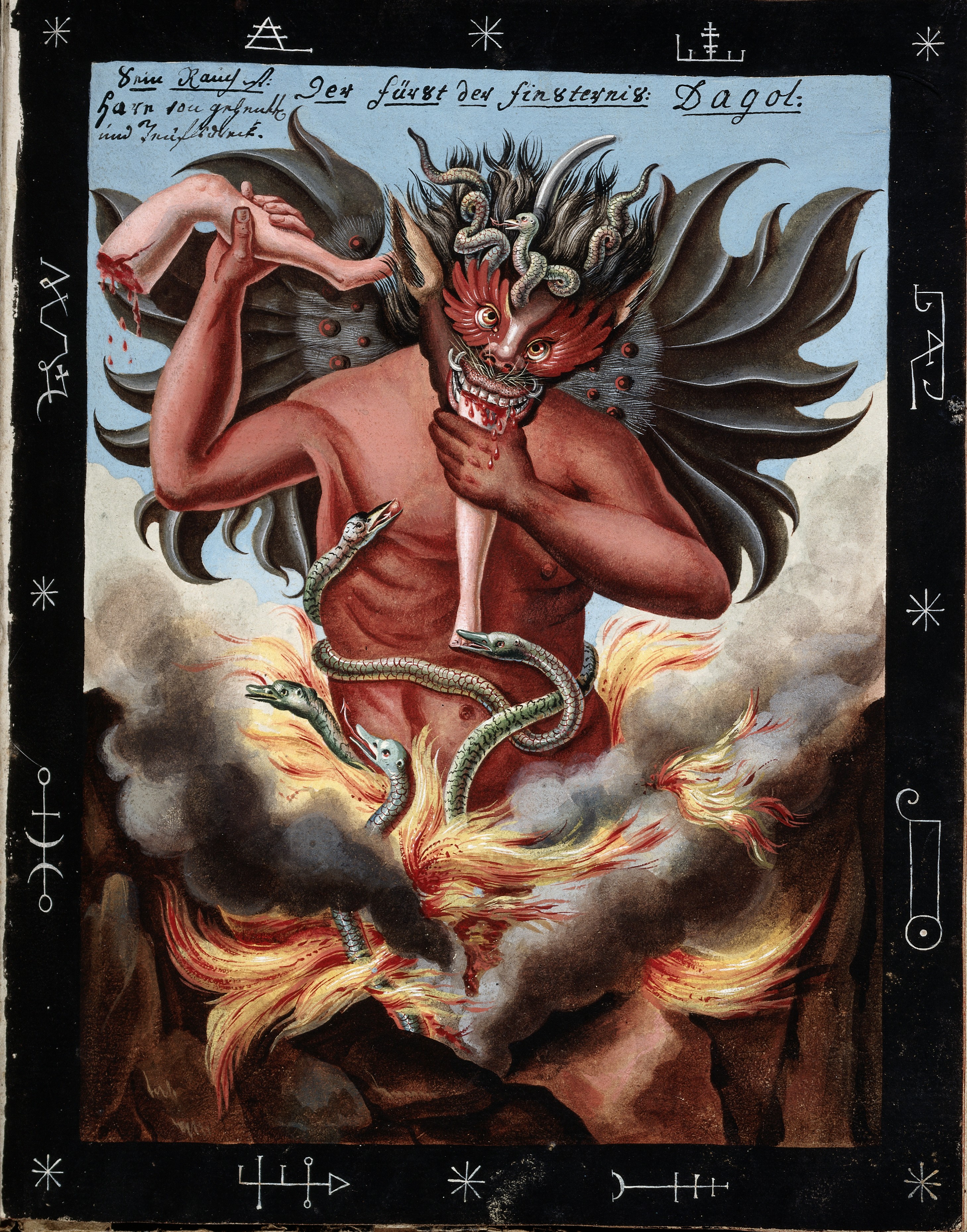
The Necromancer's Notebook of CLM 849
In the archives of the Bavarian State Library in Munich, preserved under the shelfmark CLM 849 (Codex Latinus Monacensis 849), lies one of the most remarkable and disturbing documents of late medieval European esotericism. Dating to the fifteenth century, the manuscript has no formal title, but is known to scholars as the Munich Manual of Demonic Magic. Discovered and transcribed in the late twentieth century by the historian Richard Kieckhefer, this Latin notebook represents a direct, unedited record of the practice of necromancy—the conjuration of demonic spirits—compiled by a member of the clergy. The physical manuscript is written in a hurried, private gothic cursive hand, filled with abbreviations and corrections, indicating that it was not meant for public distribution but was the personal reference book of a practicing magician.
Unlike the standard, polished grimoires that claimed to have been written by legendary kings like Solomon or ancient prophets like Enoch, CLM 849 is a working notebook, a personal grimoire filled with marginal notes, abbreviations, and experimental formulas. The compiler was almost certainly a cleric, a monk, or a university-educated scholar who had access to formal theological training, ecclesiastical Latin, and the specialized resources of a library. The grimoire represents a transgressive subversion of Christian ritual, utilizing the language, structures, and authority of the church to command the spirits of the abyss in the service of personal, earthly ends. For the historian of magic, the Munich Manual is an invaluable artifact. It strips away the legendary veneers of the grimoire tradition, revealing the actual, practical methods of late medieval conjuration. It shows how the tools of Latin literacy and theological categorization were used to construct a complex system of ritual technology designed to operate upon the subtle forces of the cosmos.
The Three Categories of Magic: Illusion, Control, and Divination
The rituals outlined in the Munich Manual are classified by Richard Kieckhefer into three main categories, reflecting the practical demands of the medieval necromancer. The first category is illusionist magic (illusiones), designed to deceive the senses of the observers. These spells promise to make castles appear out of thin air, to turn day into night, to make horses appear to have wings, or to make the magician invisible to the eyes of others. One specific spell details the creation of a magical ring of invisibility, which requires the engraving of specific sigils on a bronze band during the planetary hour of Saturn. These spells did not claim to perform physical transmutation, but rather to manipulate the perception of the observers, creating vivid, shared hallucinations through the agency of the spirits.
The second category is psychological magic (animi), designed to influence the minds and wills of others. These spells promise to gain the favor of kings and lords, to compel a woman to love the magician, to induce madness in an enemy, or to cause a target to lose their sleep until they comply with the magician's will. This psychological focus is deeply significant, demonstrating an early understanding of the vulnerability of the human will to external, energetic influences. The magician uses the spirits as intermediaries to project a specific intent into the mind of the target, altering their emotional and intellectual state.
The third category is divinatory magic (divinationes), designed to uncover hidden information. These spells are used to find buried treasure, to identify thieves, to detect secret plots, or to foresee future events. The divinatory operations frequently involve catoptromancy—divination by mirror—or the use of crystal balls and polished stones. The magician invokes the spirits to project the desired information onto the reflective surface of the mirror, utilizing it as a screen through which the invisible secrets of the world are made visible to the human eye.
The Rites of the Astral Mirror: Scrying and Catoptromancy
The divinatory rites of the Munich Manual are characterized by their sophisticated use of reflective surfaces. The text contains several detailed operations for the construction and consecration of the "magical mirror of art." The mirror must be made of polished steel, copper, or glass, and its reverse side must be inscribed with specific sigils, pentacles, and the secret names of the spirits associated with vision and information, such as Satan, Lvcifer, and Flegathon. The consecration process is elaborate, requiring the mirror to be bathed in holy water, censed with mastic and frankincense, and exposed to the light of the full moon for three consecutive nights.
The ritual of catoptromancy is described as a highly formal, contemplative process. The magician must undergo a period of fasting and prayer, ensuring that their own mind is calm and free from the distractions of daily life. The mirror is placed upon a clean table, flanked by consecrated candles and incense, and the magician recites the conjurations to summon the spirits of the mirror. Crucially, the text notes that the magician does not always look into the mirror themselves; instead, they often employ a young, innocent child as a medium or scryer. The purity of the child's mind was believed to make them more receptive to the subtle, visual projections of the spirits, allowing them to describe the visions that appeared on the surface of the mirror while the magician recorded the information. This use of the mirror as a ritual interface is a key feature of late medieval magic. The mirror acted as a protective boundary, a filter that translated the formless, destabilizing presence of the spirits into a structured, visual language that could be understood by the human intellect. By looking upon the reflection rather than the entity itself, the magician protected their sanity from the overwhelming energy of the spiritual realms.
Clerical Necromancy: The Subculture of the Transgressive Monks
The social origin of CLM 849 highlights a fascinating and paradoxical aspect of medieval religious life: the existence of a "clerical underworld." During the late Middle Ages, the expansion of universities and monasteries produced a large population of young men who were literate in Latin, trained in logic and theology, but held only minor orders or lacked permanent employment. This floating population of clerks, monks, and students formed a distinct subculture that was uniquely positioned to practice magic. These individuals were familiar with the church's official rituals, such as the Rituale Romanum or the Missal, and used them as structural templates for their conjurations.
These transgressive monks did not see their magic as a rejection of their faith, but rather as an extension of their clerical authority. They used the same Latin formulas, the same structure of prayers, and the same concepts of spiritual hierarchy that they used in the liturgy to command the spirits of the abyss. The necromancer acted as an exorcist, utilizing the names of God and the authority of the Church to force the spirits to obey. This clerical necromancy was a dangerous game, constantly balancing on the edge of heresy, but it was sustained by the belief that the educated scholar possessed a divine right to rule over the lower orders of creation. The Munich Manual is a direct product of this clerical subculture. It shows how the tools of the medieval scriptorium—the ink, the parchment, the Latin grammar, and the library—were turned toward the exploration of the forbidden regions of the spirit world, demonstrating that the boundary between the sacred and the profane was highly fluid in the medieval mind.
Esoteric Synthesis: Psychological Illusion and the Shadow of the Will
From a Hermetic and psychological perspective, the Munich Manual represents a practical study in the power of projection. The illusions, the emotional compulsions, and the divinatory visions described in the text are all operations of the human will, directed and amplified through the medium of the ritual. The demons invoked by the necromancer are the personifications of the passive, chaotic aspects of the astral light—the medium through which all physical manifestation is shaped.
By drawing the sigils, reciting the Latin formulas, and utilizing the protective boundary of the magic circle, the magician attempts to steer this astral medium, projecting their own desires and intent onto the physical plane. The illusions they create are temporary fixations of this light, demonstrating the malleability of the material world to the focused human mind, reflecting the Neoplatonic concept of theurgy where physical tokens align the soul with cosmic forces. However, the Munich Manual also stands as a warning. By seeking to manipulate the wills of others and conquer the material world through coercion, the necromancer binds their own consciousness to the heavy, chaotic regions of the abyss. The power they gain is a shadow, a temporary illusion that must eventually dissolve, leaving the operator to face the spiritual consequences of their transgressive work in the laboratory of their own soul.
Lux Esoterica.
2026.


Comentarios