The Sefer Yetzirah and the 3 Mother Letters: Fire, Water, Air
Say the letter mem aloud and your lips close in a hum. Say shin and the breath hisses through the teeth. Say alef, and there is almost nothing: an opening of the throat, a breath that has not yet become a sound.
The author of the Sefer Yetzirah, the "Book of Formation," noticed this. He called these three letters the "mothers" of the Hebrew alphabet and said that they stand for water, fire and air. In a book that tries to explain how the world was built from letters and numbers, they are the first foundation.
The Setting
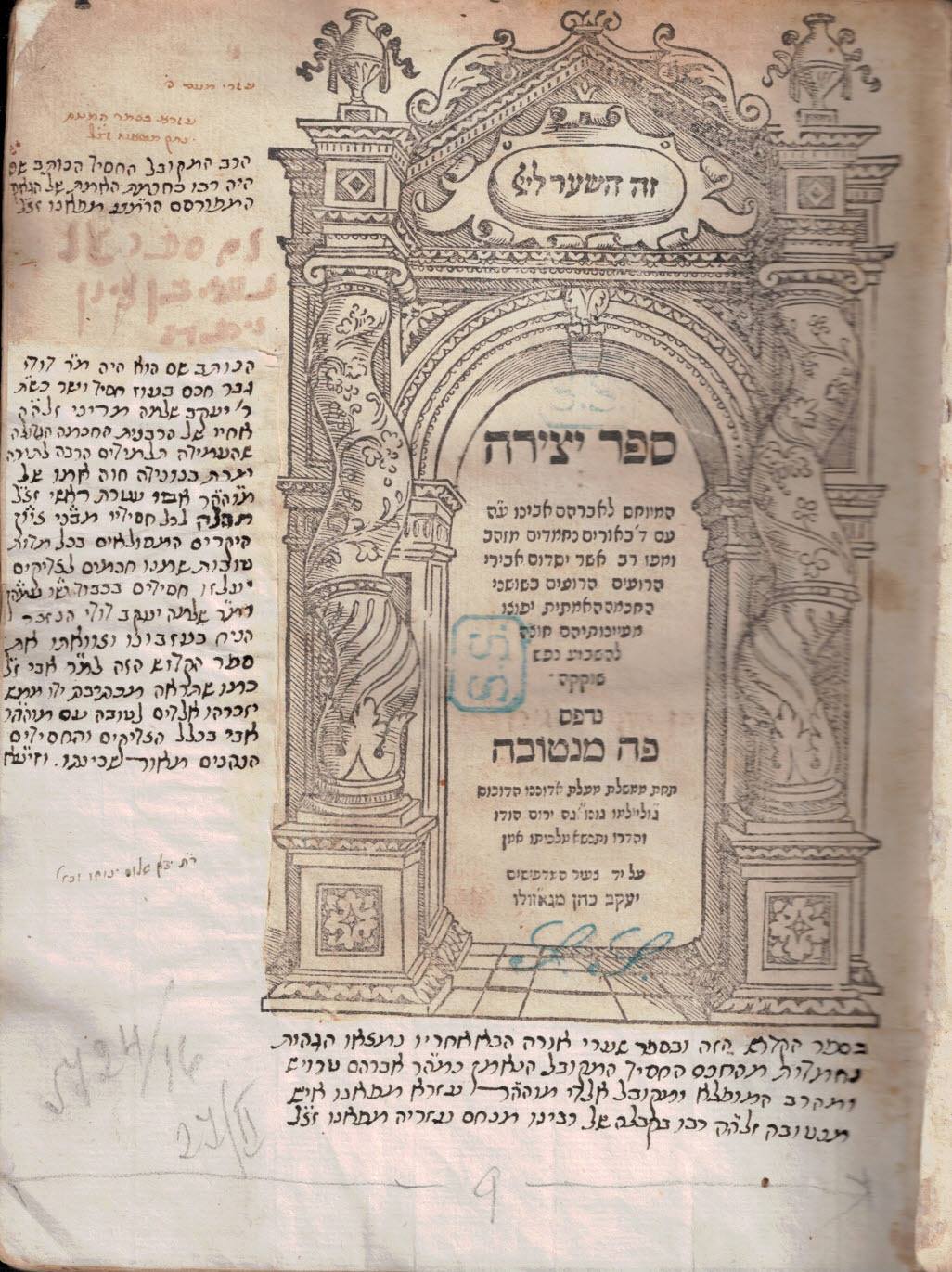
The Sefer Yetzirah is a short, terse text of Jewish mysticism, probably written between the first and the sixth centuries, though nobody knows exactly when. It survives in several versions that differ in wording. Its main claim is that God created the world through thirty-two paths of wisdom: ten numbers called sefirot and twenty-two letters.
The letters are sorted into three groups. The seven "double" letters and the twelve "simple" letters have their own roles, which can be read elsewhere. The text is brief enough to read in an hour, and yet it has attracted commentaries for more than a thousand years, from Saadia Gaon in the tenth century to the Kabbalists of Safed. The three mothers come first, and they are alef, mem and shin.
Water, Fire and Air
The book assigns each mother an element. Mem is water. Shin is fire. Alef is air, or breath. The reasoning is partly in the sounds. Mem, formed with closed lips, is described as "mute," like the silent depths of water. Shin is a hiss, like fire's crackle. Alef, which in Hebrew has no sound of its own, is breath.
The text speaks of a balance between the two extremes. In one passage, mem hums, shin hisses, and alef is the breath of air that decides between them, like the tongue of a scale. Water and fire are opposites, one cooling and one burning, and air stands between them and mediates.
A World Made of Three
From this scheme the book draws a series of parallels. It says that the heavens were created from fire, the earth from water, and the air between them from breath. In the year, fire matches the hot season, water the cold season, and air the temperate one.
In the human body, it assigns the head to fire, the belly to water and the chest to air. The details of these assignments vary between manuscripts, and scholars who edit the text do not always agree.
The pattern is a way of seeing the world in threes. Heaven, earth and the space between; summer, winter and the mild seasons; head, belly and chest. It looks for a hidden order and finds it in the shape of the alphabet.
Why Three Elements?
Readers who know Greek philosophy may expect four elements, earth, water, air and fire. The Sefer Yetzirah has only three, and it makes earth a product of water. This may reflect a different tradition, or the author's wish for a triad, or both. Scholars have debated whether the book was influenced by Greek, Hellenistic or Persian ideas. It is hard to say, because the book gives no sources.
Later Kabbalists added to the picture. Some writers tied the mothers to the three upper sefirot, or to the three "pillars" of the sefirotic tree. Such readings belong to later Kabbalah and not to the Sefer Yetzirah itself.
Letters as Tools
The book speaks of God "carving," "hewing" and "combining" the letters, and says that with them he made all that exists. It does not explain a technique clearly, which is part of why the book has been read in so many different ways, and later mystics tried to work out what it meant.
Some imagined that by combining letters in meditation, one could approach the power of creation. The text's own method is left unclear.
A Word of Care
Practices based on letter combinations and long recitation, found in some later Jewish and non-Jewish traditions, can be demanding. Traditional teachers advised that they be learned under guidance, and any practice that brings distress, dizziness or confusion should be dropped. A doctor should be consulted if symptoms persist.
Closing
Three letters, three elements: a hum, a hiss and a breath. The Sefer Yetzirah builds a small universe from them, balanced between a cold pole and a hot one with a breath between. Whether one reads it as cosmology, as poetry or as a puzzle for the mind, it begins from a plain observation about how we speak, and it invites us to listen to the letters as the first teachers.
Related Esoteric Inquiries
- The Sefer Yetzirah and the 12 Elemental Letters: The Zodiac
- The Sefer Yetzirah and the 7 Double Letters: The Planetary Governors
- The Sefer Yetzirah and the 22 Letters: The Foundation of Reality
Lux Esoterica.
2026.


Comments