Kaspar Hauser: The Boy Who Came From Nowhere and Died With a Secret
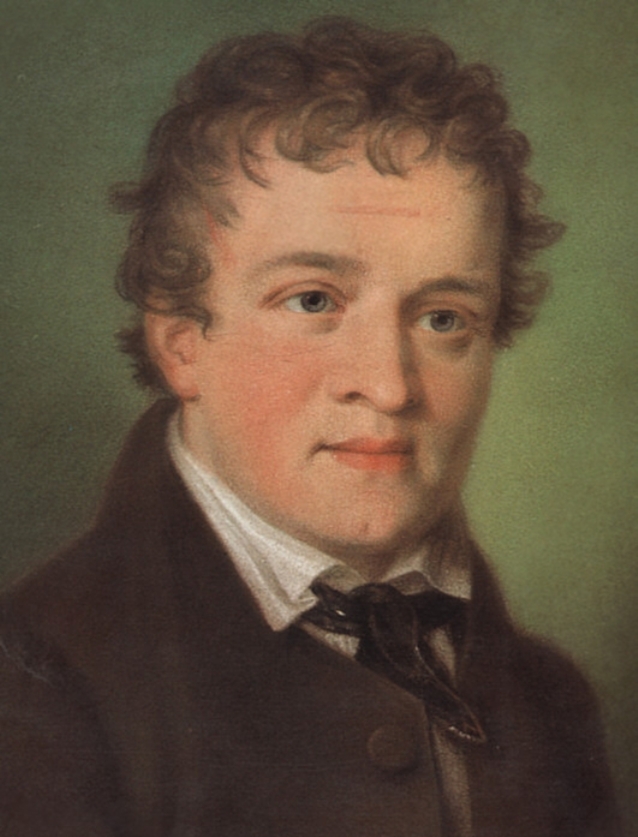
On Whit Monday, the twenty-sixth of May 1828, a strange figure appeared in the streets of Nuremberg. He was a teenage boy, perhaps sixteen, dressed in ill-fitting country clothes, and he walked with the unsteady, buckling gait of someone who had rarely stood upright. He could barely speak. When people approached him he wept, or held out a letter, or repeated a handful of memorized phrases like a doll wound with a single key. He seemed to have dropped into the world fully formed and yet entirely unmade, a young man with the helplessness of an infant. Nobody knew who he was. Nobody, in the end, ever truly would.
A Letter and a Name
The boy carried two letters, both apparently from the same hand though pretending to be from two different people. One claimed to be from a poor laborer who had taken in the child as a baby in 1812 and raised him in secret, never letting him out of the house, and now sent him to Nuremberg to become a soldier as his late father had been. The other, posing as the boy's mother, gave his birth date as the thirtieth of April 1812 and his father's name. The letters contradicted themselves and reeked of forgery, but they gave the authorities a place to start.
The boy could write only two words, which he traced over and over: a name, Kaspar Hauser. Asked almost anything, he answered with the phrase he had been drilled to say — that he wanted to be a cavalryman like his father. Beyond that there was almost nothing. He knew no coins, no fire, no ordinary objects. Bright light hurt his eyes. He recoiled from meat and beer and would take only bread and water, as though these were the only things his body had ever known. To the people of Nuremberg it seemed they were looking at a human being who had been kept, somehow, entirely apart from human life.
The Story of the Dungeon
As Kaspar slowly learned to speak, a story emerged from him, and it was a terrible one. For as long as he could remember, he said, he had lived alone in a small, dark cell, so low he could not stand. He had never seen the face of the man who kept him. He slept on straw, and when he woke there was always bread and water beside him; he believed the water was sometimes drugged, for he would wake having been washed and changed without waking during the act. He had two wooden horses to play with and a wooden dog, and that was the whole of his world. Only near the end of his captivity, he said, did the unseen man teach him to write his name and to stand and walk, before dressing him and leading him, half-collapsing, into the streets of a city he had never imagined.
Whether this account was literally true has been argued ever since. But something about Kaspar's condition lent it awful plausibility. Physicians and scholars who examined him were struck by his physical strangeness — the soft, undeveloped soles of his feet, his extraordinary sensitivity to light and sound and metal, his childlike incomprehension of the ordinary world. Here, it seemed, was a living experiment in total isolation, a boy raised outside of society altogether, and the intellectuals of Europe descended on Nuremberg to study him.
The Ward of the Learned
Kaspar was taken up first by a schoolmaster named Georg Friedrich Daumer, who taught him language, drawing, and riding, and recorded his rapid, uneven progress. But the figure whose name is forever bound to Kaspar's is Anselm von Feuerbach, a distinguished jurist and president of the Bavarian court of appeals. Feuerbach became convinced that the boy was no ordinary foundling. He came to believe that Kaspar was a prince — specifically the hereditary prince of the House of Baden, born in 1812, supposedly dead in infancy but in truth stolen from his cradle and swapped for a dying baby, then hidden away for years so that a rival branch of the family could inherit the throne.
It is a theory worthy of a Gothic novel, and for two centuries it has been the most romantic explanation of the mystery: that Kaspar Hauser was a lost royal heir, deliberately erased from the world to clear a path to a crown. Later scientific tests on relics said to bear his blood have been contradictory — one round of DNA analysis seemed to rule out the Baden connection, a later round seemed to leave it open again — and so even here the case refuses to resolve. What can be said is that powerful people took Kaspar seriously enough to protect him, and, some believed, that powerful people took him seriously enough to want him dead.
Two Attacks and a Snowy Garden
For Kaspar did not live in peace. In October 1829, little more than a year after his appearance, he was found bleeding in the cellar of Daumer's house with a wound to his forehead, claiming a hooded man had attacked him — the same man, he believed, who had kept him prisoner. In 1830 a pistol went off in his room and he was found injured, though this incident was murkier and some suspected he had staged it. His guardians moved him for safety, eventually placing him in the town of Ansbach under the eye of a strict English nobleman, Lord Stanhope, who had taken an interest in him, and a stern schoolmaster who increasingly doubted his truthfulness.
Then came the winter of 1833. On the fourteenth of December, Kaspar staggered home with a deep stab wound in his chest. He said a stranger had lured him to the palace garden with the promise of revealing the secret of his origins, and had stabbed him there and fled, leaving behind a small folded note. The note, written in mirror-image script, offered a taunting half-riddle from the supposed killer, giving his own initials and describing where he had come from — but it was itself so suspicious, and so oddly worded, that investigators wondered whether Kaspar had written it himself. Three days later, on the seventeenth of December 1833, Kaspar Hauser died of the wound. He was perhaps twenty-one years old, and he took whatever he truly knew into the ground with him.
Impostor or Victim
Ever since, the world has been divided into two camps, and the division cannot be settled. To one camp, Kaspar Hauser was exactly what Feuerbach believed: a wronged innocent, a child robbed of his name and his birthright, kept in darkness and finally silenced by the very people who feared what his existence proved. To the other, he was a gifted, damaged impostor — a runaway or a fantasist who invented the dungeon, staged his own attacks to keep the attention and sympathy of his powerful protectors, and finally miscalculated with a self-inflicted wound that went too deep. The stab that killed him could, in this reading, have been meant only to renew the drama and to deepen the legend of his royal blood.
Both stories fit the strange scatter of the evidence, and neither closes it. The forged letters, the drilled phrases, the undeveloped body, the contradicting blood tests, the mirror-writing note, the shadowy attacker no one else ever saw — each detail can be read as proof of a monstrous crime or as the fabric of an elaborate deception. What is beyond doubt is that a young man appeared out of nowhere, gripped the imagination of a continent, and died with his origin unproven. His gravestone at Ansbach reads, in Latin, that here lies Kaspar Hauser, an enigma of his time, whose birth was unknown and whose death was mysterious.
An Esoteric Reading
To the eye trained in the old symbolic sciences, Kaspar Hauser is less a legal puzzle than a living emblem, and the emblem is that of the soul itself descending into the world. The mystics of many traditions have described the incarnating spirit in almost exactly the terms the people of Nuremberg used for the boy: a being of light thrust suddenly into a cramped and darkened cell, the body; wounded by the harsh brightness of the material sun after the gentle dimness from which it came; unable at first to speak, to stand, or to name the things around it; carrying within it a lost memory of a home it can no longer describe. The Gnostics called this the forgetting, the drowsiness that falls upon the spark when it enters flesh. Kaspar's dungeon is every soul's amnesia, and his stumbling emergence into the daylight of Nuremberg is the trauma of birth itself, rendered visible and slowed down for all to watch.
Consider, too, the shape of his ordeal. He is a hidden king, stripped of his true name, exiled from his rightful throne, kept in ignorance of his own royal nature by an enemy who profits from his forgetting. This is the master parable of the western mysteries — the divine heir who has fallen asleep in a beggar's rags and must be awakened to remember what he is. In the great alchemical and Gnostic hymns the prince is sent down into a foreign land, forgets his lineage, is roused by a message from home, and reclaims the robe of light that was always his. Kaspar received the message — the tantalizing promise, twice, that his origin would at last be revealed to him — and each time the messenger's hand held a blade instead of a crown. The awakening that should have restored him became the wound that killed him.
And this may be the deepest thing the case has to teach. What destroyed Kaspar Hauser was not the dungeon but the lure of the secret. Twice he was drawn into shadow by the promise of finally learning who he was, and the second time it cost him his life. The mystics would nod grimly at this, for they know that the appetite to seize one's hidden origin by force, to have the mystery handed over whole and at once, is precisely the appetite that gets the seeker killed. Kaspar remains an enigma of his time, as his gravestone says, because he was never allowed to become anything else — a name written over and over by a hand that had been taught nothing more, a light that came from nowhere, blazed briefly in the eyes of a watching Europe, and went out with its one true secret still unspoken.
Related Esoteric Inquiries:
- The Tarim Mummies: The Fair-Haired Dead of the Desert Who Came From Nowhere
- The Princes in the Tower: The Two Boy-Kings Who Went Into the Fortress and Were Never Seen Again
- The Vanishing of Amelia Earhart: The Aviator Who Flew Into the Blue and Was Never Found
Lux Esoterica.
2026.


Comments