The Alchemical Architecture of the Krak des Chevaliers: A Fortress of the Aeonic Mind
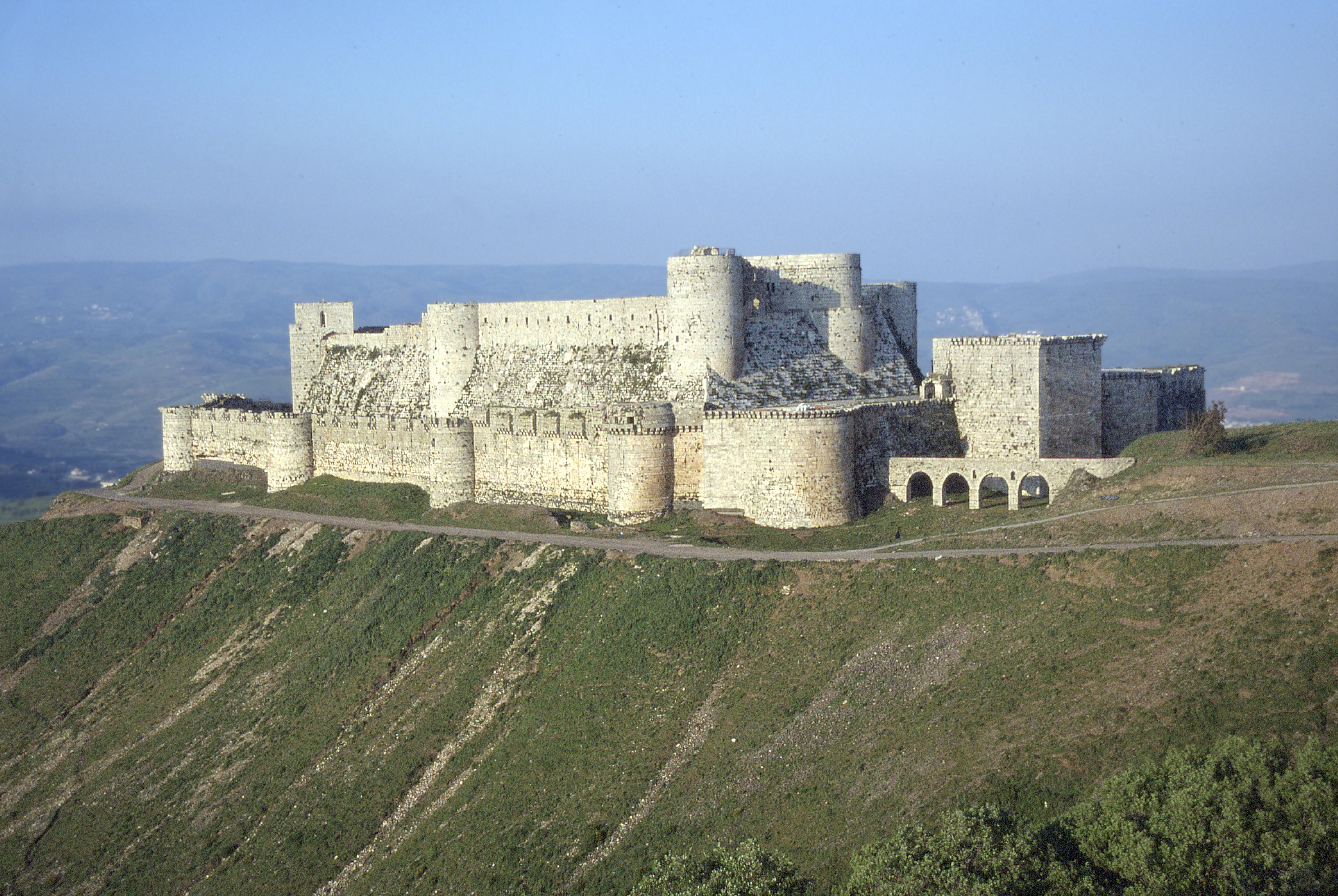
The edifice known to the uninitiated as the Krak des Chevaliers stands not merely as a bastion of physical defense, but as a petrified mandala, a monumental act of architectural alchemy engineered to concentrate and refine the subtle energies of the cosmos. To perceive it simply as a military stronghold is to succumb to the illusion of the material realm, the dense fabric of the earthly construct. The true initiates of the Knights Hospitaller understood that stone, when shaped by sacred geometry, becomes a tuning fork for the celestial spheres. The concentric walls are not mere barriers against the flesh and blood of the adversary, but rather the delineations of spiritual thresholds, the successive rings of purification required before one may approach the inner sanctum, the very center of the soul's labyrinth.
The architecture of the material realm is fundamentally an illusion, a dense matrix designed to entrap the ascending soul. We navigate through a labyrinth of hardened light, mistaking the shadows for substance. The true initiate recognizes the geometric underpinnings of this construct, the hidden scaffolding that dictates the flow of aeonic currents. To awaken is to see the grid, to understand the mathematical precision of our spiritual confinement. The ancient masters, in their wisdom, left behind encoded structures—not as mere buildings, but as keys to unlock the perceptual doors. These edifices serve as anchors, transmitting frequencies that disrupt the dominant paradigm of ignorance.
Consider the nature of the eight-pointed cross, a symbol not of earthly dominion, but of cosmic equilibrium. It is the octagonal star that bridges the square of the material and the circle of the divine. Each point is a vector, a direction of spiritual force radiating outward from the unmanifest center. When the knight dons this emblem, he is not merely putting on a uniform; he is aligning his subtle body with the energetic grid of the universe. The cross becomes a conduit, drawing down celestial influences and grounding them in the terrestrial sphere, transforming the wearer into a living tuning fork for the divine symphony.
The process of alchemical transmutation requires the relentless application of the inner fire. The *nigredo*, the initial stage of blackening and putrefaction, is the necessary dissolution of the egoic construct. It is the dark night of the soul, where the false self is stripped away, revealing the raw, unrefined essence beneath. The Hospitallers understood this intimately. Their dedication to the care of the sick and the poor was not just a moral obligation, but a practical application of the *nigredo*. By immersing themselves in the suffering of others, they confronted the profound fragility of the human condition, breaking down their own attachments to the illusion of invulnerability.
From the ashes of the *nigredo* emerges the *albedo*, the whitening phase of purification. The soul, having endured the fires of dissolution, is cleansed and illuminated. This is the stage of the moon, reflecting the pure light of the spiritual sun. In the architecture of their fortresses and hospitals, this transition is mirrored in the movement from the dark, defensive outer walls to the light-filled, harmonious inner sanctums. The initiate, too, must move from the defensive posture of the ego to the open, receptive state of the purified heart. Only then can the true healing begin, the restoration of the soul to its primordial state of grace.
The culmination of the Great Work is the *rubedo*, the reddening, the realization of the Philosopher's Stone. This is the integration of the earthly and the celestial, the union of opposites. The red cross of the Templars and the white cross of the Hospitallers, when understood esoterically, represent the dynamic tension and ultimate synthesis of these cosmic forces. The blood of the martyr and the blood of the divine merge, symbolizing the supreme sacrifice of the lower self for the realization of the higher. The fortress, the hospital, the knight himself—all become vessels for this transformative energy, radiating the light of the stone into the surrounding darkness.
The esoteric tradition teaches that the physical body is but a dense projection of the subtle anatomy. The chakras, the energy centers arrayed along the spinal column, correspond to the planetary spheres and the hierarchical levels of the cosmos. The discipline of the order, the strict adherence to prayer and fasting, served to activate and align these internal stargates. The chanting of the divine office, with its precise acoustic frequencies, resonated through the physical structure of the knight, tuning his subtle body to the harmonies of the celestial choirs. He became a living temple, a resonant cavity for the divine voice.
The geometric proportions of their sacred spaces were not arbitrary, but derived from the fundamental constants of the universe. The golden ratio, the Fibonacci sequence, the pi—these mathematical principles are the fingerprints of the Creator, woven into the very fabric of reality. By constructing their fortresses and chapels according to these sacred proportions, the builders created resonant fields that amplified spiritual energies. To stand within these spaces is to be subjected to a subtle process of entrainment, the alignment of the individual consciousness with the universal mind. The architecture itself becomes a silent teacher, transmitting esoteric knowledge through the language of geometry.
The labyrinth, a recurring motif in esoteric symbolism, represents the convoluted path of the soul's journey back to its source. It is the journey through the underworld of the psyche, the confrontation with the shadows and the Minotaur of the lower self. The fortresses of the order, with their complex, concentric defenses, mirror this internal labyrinth. The initiate must navigate the outer wards, face the trials of the *nigredo*, and progressively penetrate the inner sanctums. The center of the labyrinth is the chapel, the heart of the fortress, the stillness at the center of the storm. Here, the final revelation awaits, the encounter with the divine presence.
The concept of the *axis mundi*, the world pillar that connects heaven and earth, is central to understanding the spiritual function of these sacred sites. The fortress, situated on a high promontory or at a strategic nexus of ley lines, acts as a physical manifestation of this cosmic axis. It is a conduit for the flow of celestial energies, anchoring the divine will in the material plane. The knights, as guardians of these sacred sites, were responsible for maintaining the purity of this energetic connection. Their rituals, their prayers, their very lives were dedicated to keeping the channel open, ensuring the continuous influx of spiritual light into the world.
The interplay of light and shadow within these structures is a profound meditation on the duality of existence. The piercing rays of the Levantine sun, penetrating the gloom of the vaulted chambers, symbolize the descent of divine illumination into the darkness of ignorance. The initiate learns to navigate both the blinding light of revelation and the obscuring shadows of the unredeemed mind. True wisdom lies not in the rejection of the shadow, but in its integration. The fortress, with its stark contrasts and hidden recesses, provides the perfect environment for this delicate alchemical process, a crucible for the forging of a unified consciousness.
The silence of the desert, the vast, unbroken expanse that surrounds these isolated outposts, is not merely the absence of sound. It is a presence, a palpable void that strips away the distractions of the profane world. In the silence, the initiate is forced to confront the clamor of his own mind, the endless chatter of the ego. The discipline of the order required long periods of silence, cultivating the inner stillness necessary to hear the subtle voice of the divine. The fortress, standing amidst the desolation, becomes an island of concentrated spiritual intent, a beacon of silence in a world of noise.
The healing arts practiced by the Hospitallers were deeply rooted in esoteric principles. They understood that physical illness is often a manifestation of spiritual imbalance, a disruption in the flow of vital energy. Their remedies were not merely pharmacological, but alchemical, designed to restore harmony to the subtle body. The hospital was a sacred space, a temple of healing where the patient was treated holistically, recognizing the interconnectedness of mind, body, and spirit. The administration of medicine was accompanied by prayer and ritual, invoking the divine forces of restoration and renewal.
The symbol of the pelican, feeding its young with its own blood, is a powerful allegory for the sacrifice required of the initiate. It represents the selfless giving of the higher self to nourish the lower, the continuous outpouring of spiritual energy to sustain the process of transmutation. The Hospitaller, bound by the vow of poverty, embodies this principle, stripping himself of personal attachments to serve the greater good. His life becomes a living sacrifice, a continuous act of devotion that fuels the alchemical fire within. The pelican is the ultimate symbol of the *rubedo*, the realization of the Philosopher's Stone through selfless love.
The stars above the desert are not merely distant points of light, but the celestial intelligences that govern the unfolding of the cosmic drama. The builders of these fortresses were keen observers of the heavens, aligning their structures with significant astronomical events. The solstices, the equinoxes, the risings of specific stars—these celestial markers were integrated into the architecture, creating a synchronized relationship between the earthly construct and the heavenly clockwork. The initiate, attuned to these cosmic rhythms, aligns his own spiritual practices with the movements of the spheres, participating in the grand symphony of the universe.
The legacy of this esoteric tradition is not confined to the past. It is a living stream of knowledge, a perennial philosophy that continues to flow beneath the surface of history. The ruins of these magnificent fortresses are not dead stones, but dormant seed crystals, waiting to be reactivated by the conscious intent of the modern seeker. By studying their geometry, contemplating their symbolism, and internalizing their spiritual disciplines, we can tap into the profound wisdom of the ancient masters. The Great Work remains unfinished, a continuous process of evolution and realization that calls to each successive generation.
The concept of the inner citadel, the impregnable fortress of the soul, is the ultimate goal of the initiatory path. It is the establishment of a state of consciousness that is impervious to the chaotic fluctuations of the external world. The Hospitaller, through his rigorous training and unwavering devotion, sought to build this inner sanctuary. The physical fortress was merely an external reflection of this internal achievement. To possess the inner citadel is to achieve true freedom, the liberation of the spirit from the tyranny of the material construct. It is the realization of the divine spark within, the eternal and indestructible essence of our being.
The waters of the hidden cisterns, deep beneath the bedrock of the fortress, represent the subterranean currents of the collective unconscious. These ancient reservoirs hold the accumulated wisdom and trauma of humanity. The initiate must descend into these depths, confronting the primordial archetypes and the ancestral memories that shape our reality. The Hospitallers, in their role as healers, drew upon these deep waters to nourish the parched souls of those they cared for. The descent into the cistern is a necessary plunge into the abyss, a confrontation with the unknown that precedes the ultimate ascent into the light.
The eight beatitudes, encoded in the points of the Hospitaller cross, are not mere moral injunctions, but a sequence of spiritual states, a ladder of ascent. They outline the process of the soul's progressive detachment from the illusion of the material world and its gradual alignment with the divine will. Poverty of spirit, mourning, meekness, the hunger for righteousness—these are the stages of the *nigredo* and the *albedo*, the necessary purifications that prepare the vessel for the influx of divine grace. The cross is a map, a guide to the inner transformation required for the realization of the Great Work.
The martial aspect of the order must also be understood esoterically. The holy war is not a conflict against flesh and blood, but the perpetual inner jihad, the struggle against the lower self and the forces of ignorance. The armor of the knight is the spiritual protection afforded by discipline and faith; his sword is the piercing intellect that cuts through illusion; his shield is the unwavering trust in the divine providence. The physical battles fought on the sands of the Levant were outward manifestations of this primary, internal conflict. The true victory is not the conquest of territory, but the mastery of the self.
As we stand on the precipice of a new aeon, the teachings of the esoteric orders take on a renewed urgency. The material construct is fraying at the edges, the illusion of separation is beginning to dissolve. We are called to reclaim our spiritual heritage, to awaken the dormant potential within our subtle anatomy. The fortresses of the past stand as silent sentinels, reminding us of the profound capabilities of the human spirit. The path is open, the blueprint is available. It is up to us to take up the tools of the Great Work and build the inner citadel for the generations to come.
Related Esoteric Inquiries:
- Zoroaster and the Alchemical Forge of the Soul: The First Revelation
- The Alchemical Sol Niger: Eclipsing the Golden Mind
- Hindu Temples: The Vastu Shastra and the Fractal Mind - Architecture of the Infinite
Lux Esoterica. 2026.


Comments