The Alchemy of John Dee: The Enochian Language of the Angels
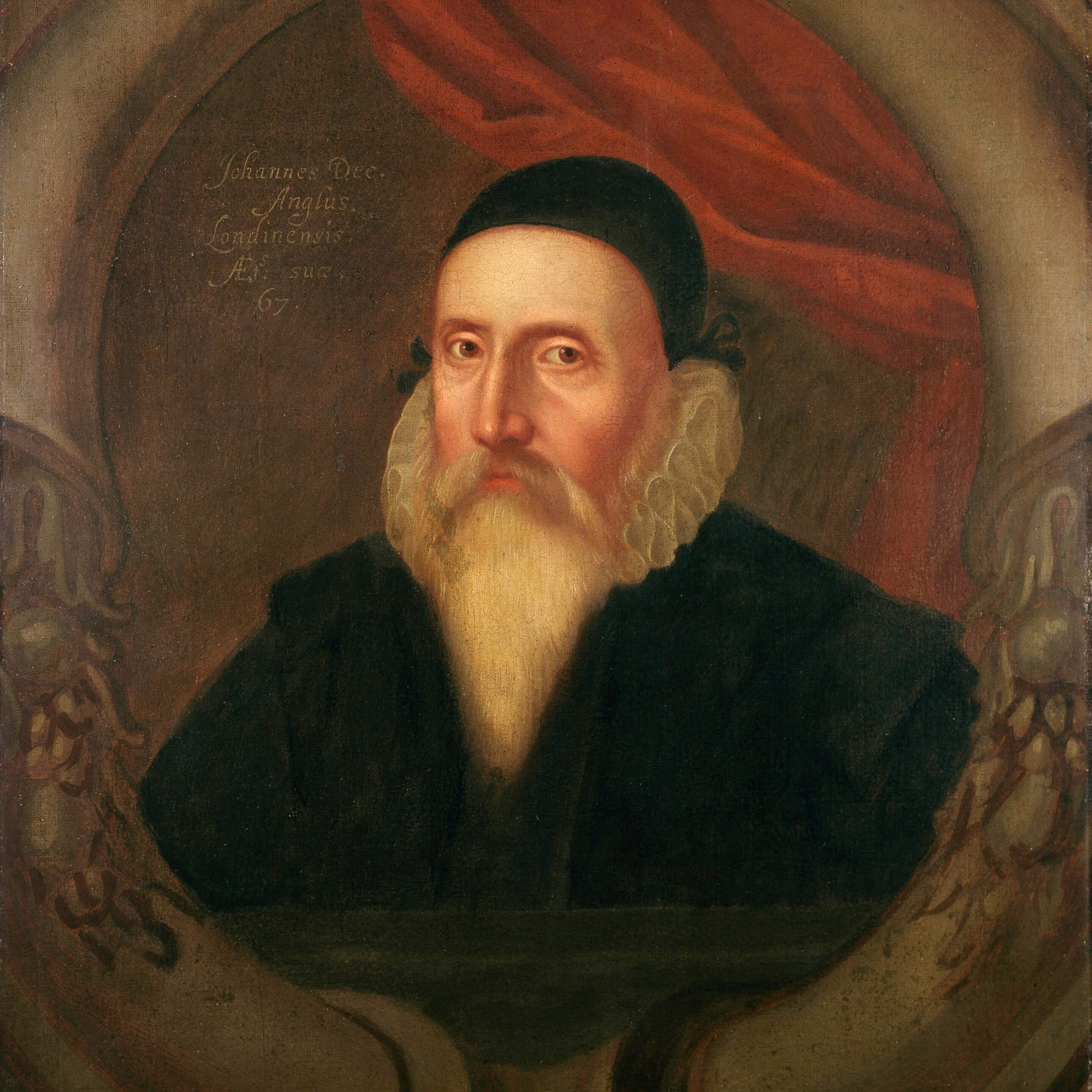
In the sixteenth century, the boundaries between mathematics, astronomy and magic were far less clear than they are today. Scholars charted the movements of the planets and also studied the hidden powers of names, numbers and symbols. No one embodied this mix more fully than John Dee.
He was a mathematician, a navigator's advisor and a respected scholar who served as an adviser to Queen Elizabeth I of England. He also spent much of his life searching for a secret language that he believed had been given to humanity from above.
Dee was a collector of books and instruments, and his library in London was one of the largest in Europe. Yet his deepest interest lay in questions that the court could not easily answer. He wanted to understand the order behind nature, and he believed that the right words could reveal it.
The Language Dee Sought
Dee believed that humanity had lost an original language, a speech that Adam was said to have used to name creatures and to understand their true nature. Recovering that language, he thought, would give the wise a key to the inner order of the world. This idea was part of a broader current of Renaissance thought, which admired ancient wisdom and hoped to restore it.
To pursue this search, Dee worked with Edward Kelley, a younger man who claimed to see visions in a polished stone and in a dark mirror. Kelley would fall into a trance and describe what he saw, while Dee wrote down every word.
The method was unusual, but it was not unique in that age. Scrying, or gazing into a mirror or crystal, was a practice found in many magical traditions.
The Enochian Words
The sessions produced a body of text that Dee and Kelley called Enochian, after the biblical patriarch Enoch. It included an alphabet, a grammar and long lists of words. The entities that spoke through Kelley claimed to be angels, and they described the language as a sacred tongue meant for higher purposes.
Modern linguists who have studied the material note that the system is elaborate and internally consistent, though it is hard to connect to any known language.
The words were not meant for everyday conversation. Dee understood them as keys, or calls, that could be spoken in ritual to open a path toward spiritual knowledge. Many readers see them as a remarkable example of imagination working at full strength.
The Seals and the Mirror
The angels also gave Dee geometric seals, such as the Sigillum Dei Aemeth, a complex figure that was meant to protect and steady the magician during ritual work. These seals were drawn on paper, wax or metal and used as tools of concentration. In the esoteric tradition, such images are valued because they gather attention and shape the mind.
The mirror itself was an important part of the work. A dark glass or a crystal sphere can show nothing but reflections, yet many scryers have described visions that arise in those reflections. Dee and Kelley recorded such visions in great detail, and their accounts remain one of the richest sources for the history of magic in England.
A Life of Rumor and Loss
The later years were hard. Kelley's behavior became more troubled, and the partnership ended in a bitter split. Kelley later died while trying to escape from imprisonment in Bohemia. Dee returned to England, but his reputation suffered. A mob attacked his house in 1583, while he was away, and his library was damaged and scattered. Accusations of witchcraft followed him, and he spent his last years in poverty.
These events show how dangerous it could be to stand at the edge of unusual knowledge. The line between a scholar and a suspected sorcerer was thin, and popular fear could turn quickly into violence.
The Afterlife of the Enochian System
Dee's work did not disappear with him. Centuries later, the Enochian system was studied and adapted by members of the Hermetic Order of the Golden Dawn, a magical society founded in England in the late nineteenth century. Aleister Crowley, who had been connected to the Golden Dawn, also used Enochian material in his own writings. Through these later movements, the system became one of the best known frameworks of Western ceremonial magic.
Its importance today lies less in any claim to literal communication with angels than in what it reveals about the minds that created it. Dee's notebooks show a man searching for unity between faith, nature, language and number.
Reading the Story Wisely
The story of Dee and Kelley is best read as history and as a mirror of the seeker's heart. The angels, the visions and the sacred language can be studied with curiosity and respect, but they are best understood as the products of human imagination in a particular time and place.
A careful reader can admire the energy of the search and still ask honest questions about evidence, memory and the influence of others.
Closing
John Dee stands at the crossroads of science and mystery, a scholar who believed that the right words could unlock the secret order of the world. His life was brilliant, troubled and often sad. The Enochian language remains a fascinating puzzle, a sign of how deeply the human mind longs to hear a voice from beyond.
Whether we see it as a sacred gift or as a remarkable product of imagination, it still invites us to listen closely to the stories we tell about the unseen.
Related Esoteric Inquiries
- John Dee and the Enochian System: The Magus Who Spoke with Angels
- Enochian Magick: The Language of the Angels and the Sigil of Truth
- The Mystery of the Book of Soyga: John Dee's Cryptic Magical Grimoire
Lux Esoterica.
2026.


Comments