The Alchemy of the Spear of Destiny: The Holy Lance of Longinus
In the Imperial Treasury of the Hofburg Palace in Vienna lies an old iron spearhead, bound with wire and covered in part by a sleeve of gold. It is known as the Holy Lance, and for centuries it was among the most precious relics of the Holy Roman Empire. According to tradition, it is linked with the spear that pierced the side of Jesus on the cross.
Around this object, a modern legend has grown: the legend of the Spear of Destiny, a talisman said to grant world power to whoever holds it. The history behind it is fascinating, and the legend tells us much about the hopes and fears of the twentieth century.
The Spear in the Gospel
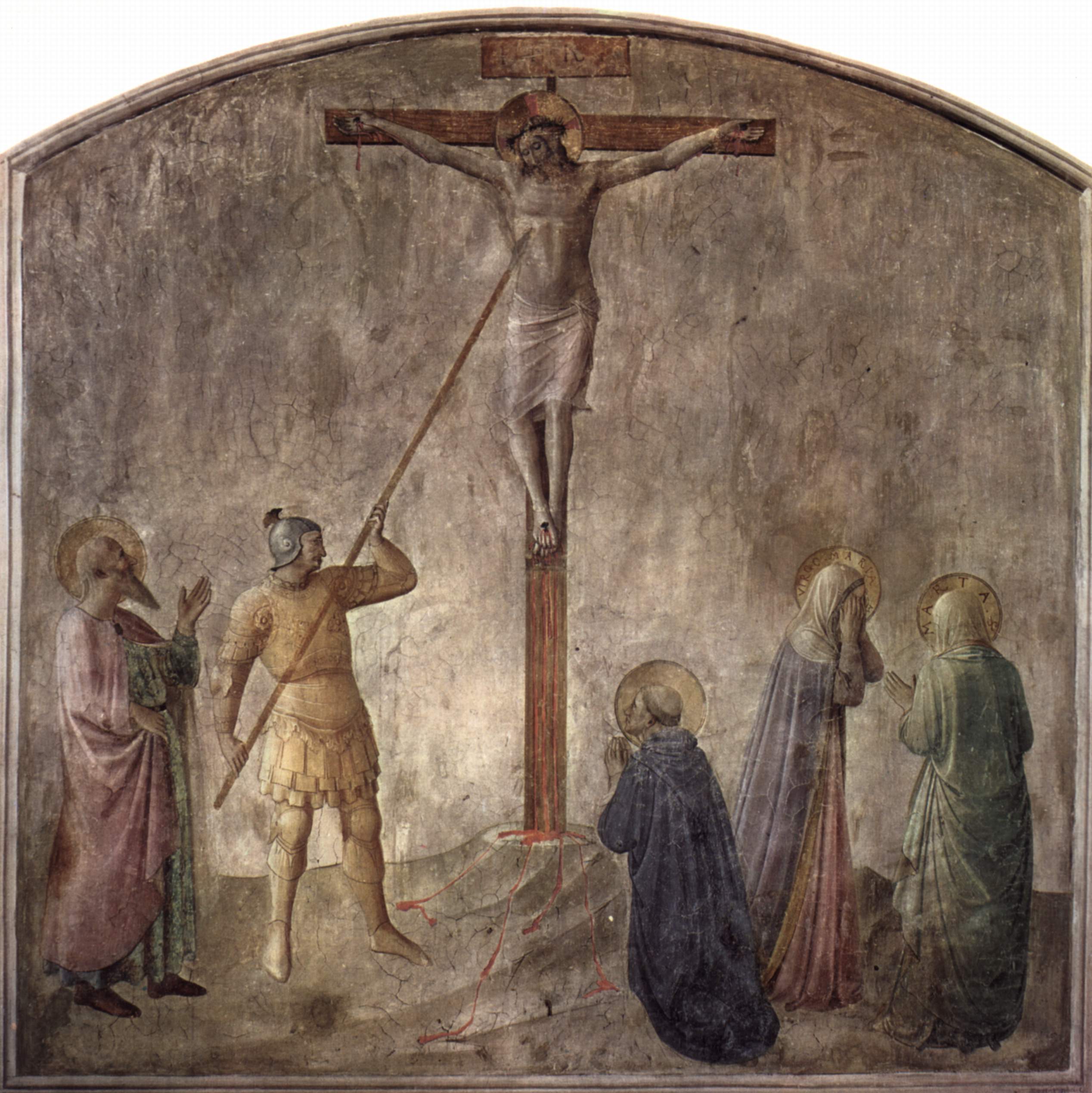
The Gospel of John tells that, after Jesus died on the cross, a Roman soldier pierced his side with a spear, and blood and water flowed out. The soldier is not named in the Gospel. Later Christian writings, such as the apocryphal Gospel of Nicodemus, gave him the name Longinus, and tradition came to honor him as a saint who believed after the crucifixion.
Over the centuries, several churches claimed to possess the holy lance. Relics associated with it are found in Rome, at Saint Peter's Basilica, in Echmiadzin in Armenia, and in Vienna, among other places.
The Vienna Lance
The Vienna lance is a winged spearhead of a type common in the early Middle Ages. Historians generally date it to the Carolingian period, around the eighth century, and a metallurgical study in the early twenty-first century suggested a date around the seventh century. An iron pin set into its blade was believed to be one of the nails of the Crucifixion.
The lance became part of the imperial regalia of the Holy Roman Empire, used in ceremonies and carried before emperors. In the fourteenth century, the Emperor Charles IV had a gold sleeve added with an inscription naming it the lance and nail of the Lord.
The Legend of Power
The idea of the spear as a talisman of world domination became popular through modern books, above all The Spear of Destiny by Trevor Ravenscroft, published in 1973. It claimed that the lance had passed through the hands of great rulers such as Constantine, Charlemagne and Frederick Barbarossa, and that whoever held it would decide the fate of the world.
Historians regard most of these claims as inventions or exaggerations. There is no reliable evidence that the Vienna lance belonged to Constantine, and the links with many of the rulers named are legendary.
Hitler and the Lance
The most dramatic part of the legend involves Adolf Hitler. According to Ravenscroft, the young Hitler, living in Vienna before the First World War, became fascinated by the lance and saw it as a source of occult power. These details come mainly from Ravenscroft's book and from claims he said came from other sources, and many historians consider them unreliable.
What is documented is that, after Nazi Germany annexed Austria in 1938, the imperial regalia, including the lance, were taken from Vienna to Nuremberg, a city the Nazis used as a symbolic center. There they were stored, and during the war they were hidden in a protected underground vault.
The End of the War
In April 1945, American forces captured Nuremberg. The regalia were later recovered and, in 1946, returned to Vienna, where they remain today. The legend claims that American troops took possession of the lance at the very hour of Hitler's death in Berlin, on April 30, 1945. This dramatic coincidence is part of the myth and is not supported by solid evidence.
Popular versions sometimes add that General George Patton personally seized the spear. This too belongs to the legend rather than to history.
Why the Legend Endures
The Spear of Destiny combines powerful elements: a sacred relic, the death of Christ, emperors, secret knowledge and the darkest regime of modern history. It offers a simple explanation for great events: power belongs to whoever holds the talisman.
Yet this simplicity is misleading. History is shaped by countless human choices, by economies, armies and ideas. Reducing it to a single object hides the real responsibility of the people who acted.
The Spear as Symbol
From a spiritual point of view, the lance can be read very differently. In Christian tradition, it is the instrument that opened the side of Christ, from which, according to many interpreters, the Church and its sacraments flowed. In Grail legends, a bleeding lance appears beside the Grail itself, a mysterious sign of wounding and healing.
Seen this way, the spear is not a tool of domination but a symbol of sacrifice and grace.
Closing
The Holy Lance in Vienna is a real and ancient relic, treasured by emperors for centuries. The Spear of Destiny, as a talisman of world power, is mostly a modern legend, shaped by imaginative books and by the shadow of the Second World War.
Between the two lies an enduring lesson: sacred objects can inspire devotion or obsession, and their deepest meaning is found not in power, but in the mysteries of sacrifice and healing they recall.
Related Esoteric Inquiries
- The Spear of Destiny: The Occult Quest for the Relic of Longinus
- The Alchemy of the Dead Sea Scrolls: The Essene Brotherhood
- The Alchemy of the Templars: The Curse of Jacques de Molay
Lux Esoterica.
2026.


Comments