The Enigma of the Hyperborean Myth: The Lost Golden Age of the North
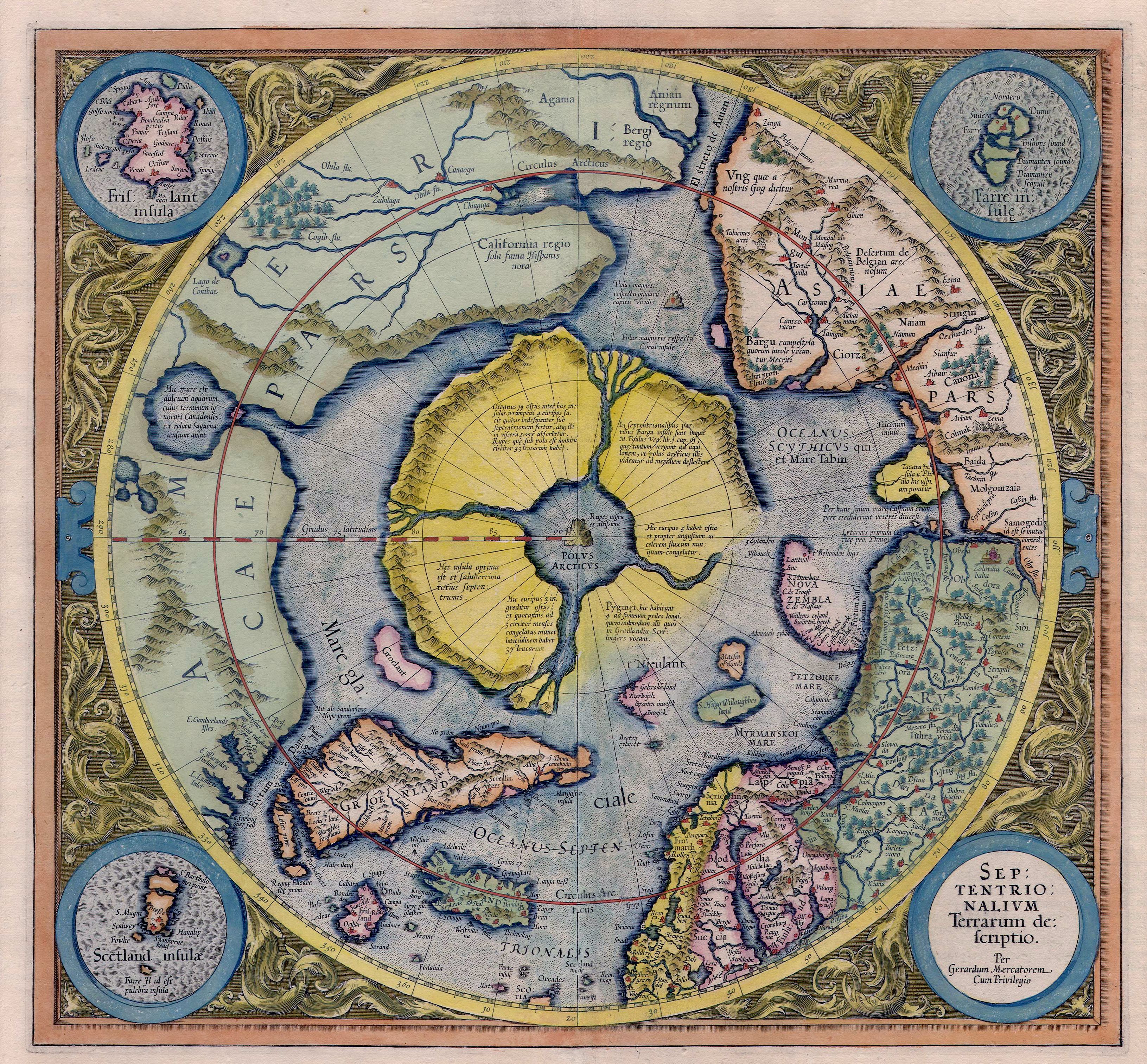
Beyond the biting winds of Boreas, the north wind, ancient Greek writers spoke of Hyperborea. It was a land of perpetual sunlight and perfect peace, where people lived beyond the reach of disease and old age. Some ancient sources placed it far north, past the lands the Greeks knew well, and the myth grew with every retelling.
For many mystics, Hyperborea was not only a place on a map. It was a spiritual symbol, a kind of true north of the soul, where the human spirit once lived in a golden age.
The myth in ancient Greece
Greek authors such as Pindar and Herodotus mention the Hyperboreans, though their accounts differ. In the myth, Apollo, the god of light, was said to spend part of his year among them. The Hyperboreans were thought to receive the god with song, music and dance, and to live in a state of calm and joy.
The land was described as a blessed place. Its people were said to live in harmony with nature, free of hardship and conflict. Because of this, Hyperborea became a symbol of a perfect origin that had been lost.
A place or a symbol?
Scholars agree that the Hyperborea of the myth was never a real country that could be visited. The name seems to refer to a distant northern land, and the stories grew as they passed from one writer to another. Over time, the myth became a way to talk about an ideal world.
Esoteric writers took this idea further. They saw Hyperborea as an inner state, a place reached by turning inward rather than by traveling north.
The axis and the cosmic wheel
The myth connects with the esoteric idea of an axial center, a cosmic pillar that holds together the heavens and the earth. In this reading, the north is the still point around which the sky turns. To seek Hyperborea is to climb the spine of the world and recover the solar consciousness that the turning of the cosmic wheel seems to have scattered.
Some esoteric authors added that, as the axis shifted and the ice covered the land, the Hyperboreans withdrew inward. They are said to be silent guardians of an esoteric flame, guiding humanity from behind the veil.
A warning about modern uses
Hyperborea has also been used in political and racial myths in the twentieth century, especially in movements that claimed a perfect northern origin for one people. These uses are false and dangerous, and they do not come from the ancient sources. Readers should be careful when they meet these ideas.
Reading the myth today
The myth can also be read as a lesson about attention. Those who search for a lost golden age often learn more about their own longings than about the ancient world.
Many people feel that modern life has caused a kind of spiritual forgetfulness. The Hyperborean story speaks to that feeling. It suggests that we are exiles from a kingdom of light, moving through a twilight age. The idea of remembering that origin is what the Greeks would call anamnesis, the recovery of knowledge we already held.
For readers who enjoy myth, Hyperborea offers a useful lesson. Ancient stories often mix geography, religion and hope. Separating those layers helps us enjoy the myth without mistaking it for history.
Closing
Hyperborea remains a beautiful myth, a reminder of a golden age that may exist more in the heart than on any map. Read it as a story about longing for light, and let it inspire a search for inner clarity without forgetting the real history behind it.
Related Esoteric Inquiries
- The Thule Society and the Quest for Vril
- The Hyperborean Echoes of Callanish
- The Cartography of the Primordial North: A Blueprint of the Aetheric Realm
Lux Esoterica.
2026.


Comments