The Flannan Isles Lighthouse: Three Keepers Who Walked Into the Wind and Never Returned
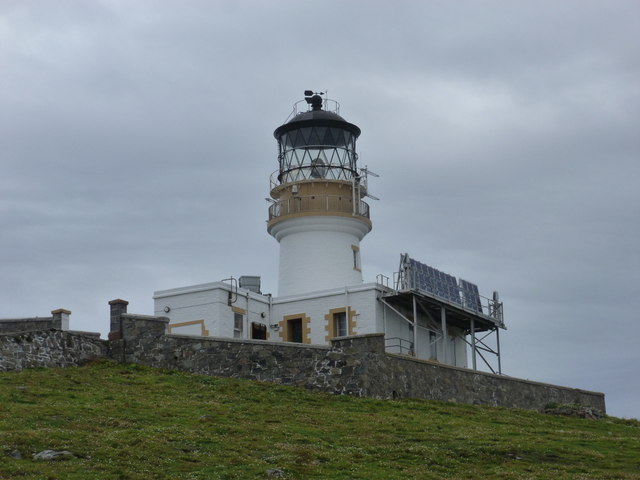
Twenty miles west of the Isle of Lewis, out where the Atlantic stops being a sea and becomes an appetite, there is a cluster of green rocks the old Hebrideans called the Seven Hunters. On the largest of them, Eilean Mòr, a white tower stands against a sky that is almost never still. It was there, in the last days of December 1900, that three men vanished so completely that not a bone, not a boot, not a single certain answer was ever recovered. The lighthouse still turns its light over the water. The men who tended it walked out one afternoon into the wind and were simply gone.
A Light on the Edge of the World
The Flannan Isles lighthouse was young when the mystery began. Designed by David Alan Stevenson — of the same restless engineering family that gave Scotland both its great lights and the novelist Robert Louis Stevenson — it had shone for barely a year, first lit in December 1899. Building it had been a labor bordering on the heroic. Every stone, every barrel of oil, every length of rope had to be hauled up the sheer cliffs by crane and railway from two rough landing places, one on the east side of the island and one on the west, each exposed to a different mood of the ocean.
Because the station was so remote, it was manned by a rotating crew of three keepers on the island and a fourth ashore, so that one man was always resting on the mainland while three kept the watch. In the winter of 1900 the island trio were James Ducat, the principal keeper, a seasoned man with a family in Breasclete; Thomas Marshall, the second assistant; and Donald MacArthur, an occasional keeper standing in for a colleague who had fallen ill. Three ordinary working men, competent and unremarkable, doing one of the loneliest jobs the age could offer.
The Empty House
The first sign that something was wrong came not from the island but from a passing ship. On the night of the fifteenth of December, the steamer Archtor, bound for Leith, passed close to the Flannans and noted that the light was dark. In the weather of that week the report went unheeded for days. The relief vessel, the lighthouse tender Hesperus, was already overdue because of storms, and it was not until the twenty-sixth of December that she finally reached the island carrying Joseph Moore, the keeper due to take his turn on the rock.
What Moore found has haunted the story ever since. No flag flew from the mast. No empty provision boxes had been left on the landing stage for collection, as was the custom. No figure came down the steps to greet the boat. When the Hesperus sounded her whistle and sent up a flare, nothing answered but the gulls. Moore was put ashore and climbed the winding path alone, his unease growing with every step.
The entrance gate and the outer door were closed. Inside the lighthouse, the kitchen told a domestic little story frozen in mid-sentence. The clock had stopped. The ashes in the grate were cold. A meal — or the remains of one — sat waiting. One of the two kitchen chairs lay overturned on the floor. The beds were empty and unmade. Of the three men there was no trace at all. Moore, badly shaken, retreated to the boat and returned with a small search party, but a second sweep of the tower and its outbuildings only confirmed the impossible: the keepers had left, and they had not left by any door a living man would choose.
The Logbook and the Storm That Never Came
When the Northern Lighthouse Board's superintendent, Robert Muirhead, arrived to investigate, he pieced together what he could from the physical evidence and the station's records. The last log entry had been made on the fourteenth of December, with a note chalked up for the fifteenth. The lamp had been cleaned and refilled, ready to be lit. Whatever happened, happened during the daylight hours of the fifteenth, before the evening watch began — which is exactly why the Archtor found the tower dark that very night.
Here the legend and the fact begin to part ways. A famous later account claims the logbook recorded terrible storms lashing the island for days, and described the unflappable Ducat growing silent and the tough MacArthur weeping like a child, with a final entry reading, "Storm ended, sea calm. God is over all." It is a chilling passage, and it is almost certainly fiction — a poetic invention that attached itself to the story after the fact. The strangest part of the real record is quieter and, in its way, more unsettling: on the days the log described fierce gales, the weather stations on the mainland and the logs of passing ships reported the seas around the Hebrides as relatively calm. The storm that supposedly drove three experienced keepers to their deaths does not clearly appear in any independent record from those exact days.
The Evidence of the West Landing
Muirhead's most telling discovery lay down at the west landing, the one that faced the open Atlantic. There the sea had plainly been at work with terrifying force. A wooden box kept in a crevice a full one hundred and ten feet above the water had been torn from its place and smashed, its contents — ropes and mooring gear — strewn across the rocks. Iron railings were bent and buckled. A lifebuoy fixed to the rails had been ripped away, and turf had been stripped from the cliff edge at a height where no ordinary wave should ever reach. Something vast had risen out of the ocean and clawed at the island far above the normal tide.
Inside the tower, Muirhead noted a small human detail. Two of the three sets of oilskins and sea-boots — those belonging to Ducat and Marshall — were missing, meaning the two men had dressed for foul weather and gone outside. But MacArthur's waterproofs still hung on their peg. Whatever called the third man out, he had run into it in his shirtsleeves, without stopping to dress against the cold and wet. To Muirhead this suggested a sudden emergency: two keepers working at the landing to secure equipment against the rising sea, and the third rushing down bareheaded to warn or help them — perhaps at the very instant a monstrous wave came over the rocks.
The Theories
The official verdict was cautious and humane. Muirhead concluded that the three men had most likely been swept into the sea by an exceptionally large wave while trying to secure the west landing's gear, and he refused to blame the keepers, whom he had known and respected. It remains the explanation that fits the physical damage best. A rogue wave, or a series of them, breaking over a low ledge could conceivably have caught men working there and dragged them into water from which, on that coast, in that season, there is no returning.
Yet the tidy theory leaves loose threads that have fed a century of speculation. Why would three careful keepers all be at the exposed landing at once, breaking their own standing rule that one man should always remain at the light? What sent MacArthur out without his oilskins, and where his overturned chair fits into the tale? Into these gaps have poured every kind of story: a murderous quarrel ending in the sea; a man driven mad by isolation; abduction by sea serpents, ghost ships, or beings from the sky; and older, darker ideas belonging to the islands themselves. The Flannans had a sinister reputation long before the lighthouse. Hebridean fishermen would land on Eilean Mòr to graze sheep and gather seabirds, but they observed strict rituals and taboos, treating the place as holy and haunted ground where a wrong word or a careless act might invite misfortune.
The Poem That Sealed the Legend
Much of the mystery's grip on the imagination comes from a single poem. In 1912 the writer Wilfrid Wilson Gibson published "Flannan Isle," a ballad that imagined the rescuers finding the meal half-eaten, the overturned chair, and the terrible silence, and wondering aloud whether the three keepers had been transformed into the great seabirds wheeling overhead. Gibson's verses are responsible for many of the "facts" people repeat about the case — the untouched meal especially — and for the eerie, dreamlike quality that clings to it. The poem is not history, but it captured something true about how the disappearance feels: an ordinary human scene, abruptly abandoned, with the answer just out of reach beyond the edge of the cliff.
An Esoteric Reading
Set aside the rogue wave for a moment and consider what the Flannan Isles have always meant to those who study the hidden order of things. A lighthouse is one of the purest symbols the western mystical tradition possesses: the tended flame set against the dark, the small circle of human order holding back a limitless and formless sea. In the old alchemical language, the ocean is the prima materia, the boundless chaos out of which all things are born and into which all things dissolve. The keeper is the adept, charged with guarding a single point of light so that others may find their way. The story of Eilean Mòr is, in this reading, the nightmare that sits at the root of the whole symbol — the moment when the chaos rises higher than any wall, reaches up past the hundred-and-ten-foot mark where no wave should reach, and takes the keepers of the flame back into itself.
The details become parable almost against their will. The overturned chair is the interrupted work of the soul, the labor abandoned mid-motion. The two men in their oilskins are those who saw the danger and armed themselves against it; the third, running out bare-headed, is the one who answered the call too quickly to prepare. And the light itself — this is the part the mystics would linger on — did not go out because the flame failed. It went out because there was no longer anyone to tend it. The tower still stood, whole and ready, the lamp cleaned and filled. What vanished was not the light but the watchers, and a light with no one to keep it is only a cold lens waiting in the dark.
Perhaps that is why the Flannan Isles refuse to release their hold on us. Every other unsolved disappearance asks what happened to the people. This one asks something stranger and older: what is it that waits just beyond the small warm room of the known, patient and enormous, for the instant we step outside without our coats? The three keepers walked into the wind on an afternoon in December and the sea closed over the place where they had been, and the light — indifferent, faithful, alone — went on turning for no one at all.
Related Esoteric Inquiries:
- The Flannan Isles Lighthouse: Three Keepers Who Vanished Into the Sea Wind
- Colonel Fawcett and the Lost City of Z: The Explorer Who Walked Into the Amazon and Never Came Out
- The Lost Franklin Expedition: The Doomed Voyage Into the Ice From Which No One Returned
Lux Esoterica.
2026.


Comments