The Great Stones of Baalbek: The Thousand-Ton Blocks No One Can Explain
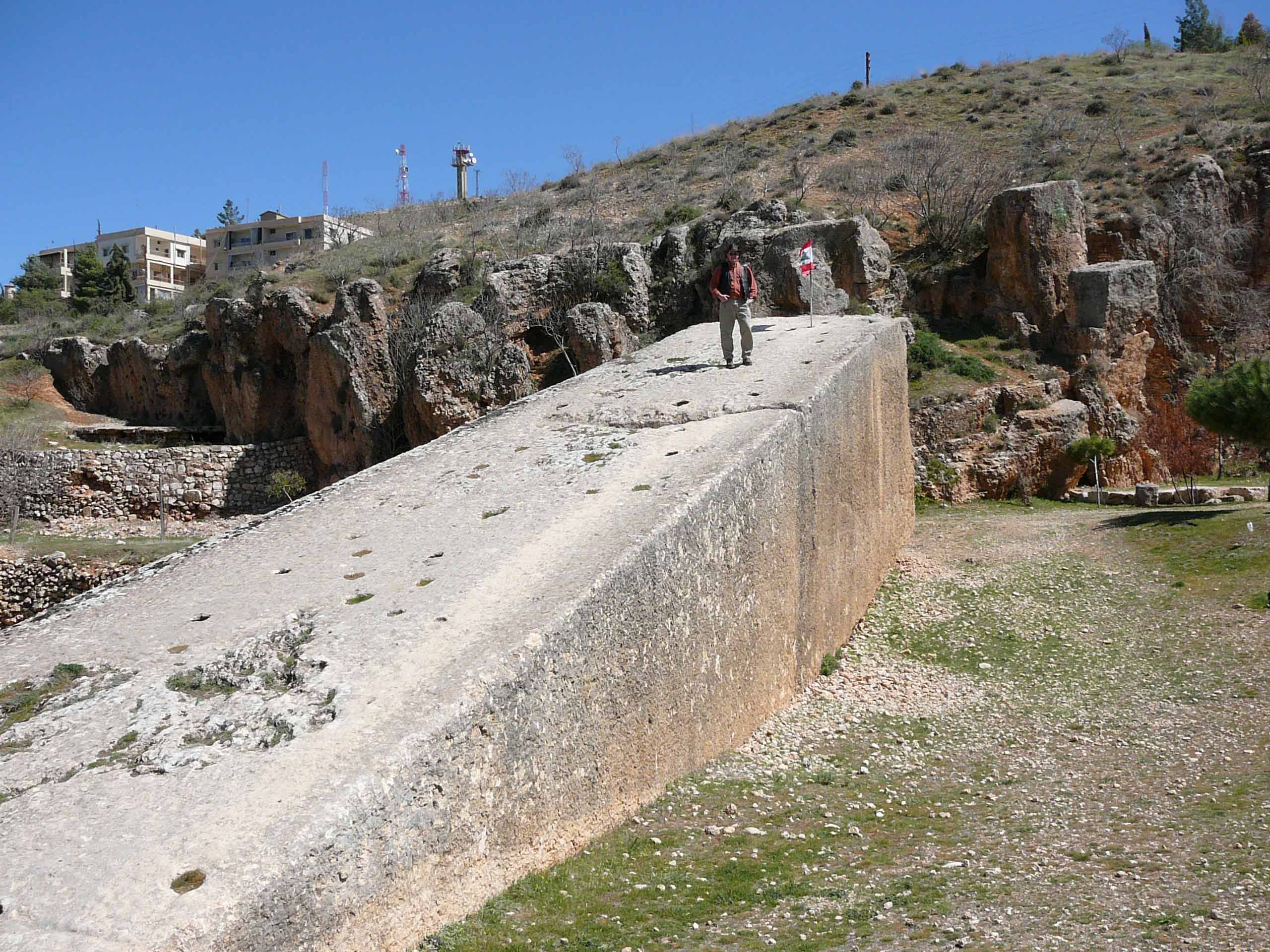
In the Bekaa Valley of Lebanon, on a site the ancients called Heliopolis, the City of the Sun, there stand the ruins of one of the most staggering temple complexes of the old world. Great Roman temples once rose here in honor of Jupiter and other gods, their soaring columns among the largest ever raised. But it is not the columns, magnificent as they are, that have made Baalbek a byword for mystery. It is the stones beneath them — and above all a handful of colossal cut blocks whose sheer, almost incomprehensible size has baffled engineers, archaeologists, and travelers for centuries. Buried in the foundations of the temple platform, and lying still in the ancient quarry nearby, are some of the largest building blocks ever shaped by human hands: monoliths weighing hundreds and even upward of a thousand tons apiece. How they were cut, moved, and, in some cases, lifted into place high off the ground, remains a genuine and unresolved puzzle, and it has made the great stones of Baalbek one of the enduring wonders and mysteries of antiquity.
The Trilithon and the Stone in the Quarry
The most famous of these blocks form part of the foundation platform of the great temple. Within that platform, at a considerable height above the ground, lie three enormous stones set side by side, known together as the Trilithon. Each of these three blocks is a single piece of cut limestone of truly monstrous proportions, measuring many meters in length and weighing, by careful estimate, on the order of eight hundred tons apiece. They were quarried, transported some distance, and then raised and fitted into the wall of the platform with extraordinary precision, resting upon still more courses of massive stone below them. To stand before the Trilithon is to confront a feat of construction that strains belief — three single blocks, each heavier than many hundreds of automobiles, lifted and positioned in a wall high above the earth.
And the Trilithon is not even the largest. In the ancient quarry a short distance away, three still greater monoliths lie where they were cut, never fully freed from the bedrock or never moved to the site. One of them, long known as the Stone of the Pregnant Woman, is a single shaped block of limestone estimated to weigh well over a thousand tons; and modern investigation has revealed additional blocks nearby that may be even more massive still, ranking among the very largest stones ever cut by human beings anywhere on earth. These giants remain in the quarry, partly detached from the living rock, as though the builders had begun the almost impossible task of extracting and moving them and then, for reasons unknown, left them behind. They lie there today, colossal and mute, a permanent measure of the ambition of whoever set out to move them.
The Question of How
The central mystery of Baalbek is a practical one, and it has never been fully answered: how did the builders of the ancient world cut, transport, and raise stones of such staggering weight? The great temples at the site were largely the work of the Romans, master engineers whose achievements across their empire were prodigious, and it is generally accepted that the enormous foundation blocks were quarried and set in place in antiquity as part of this vast building program. The Romans possessed sophisticated techniques of leverage, cranes, capstans, sledges, and the organized labor of great numbers of men, and with these methods they accomplished engineering marvels throughout their world. Most scholars hold that, with sufficient manpower, timber, ramps, and ingenuity, the moving and placing of even the Trilithon blocks lay within the reach of ancient technology, difficult and remarkable as it was.
Yet the difficulty is so extreme that it has never ceased to provoke astonishment and doubt. To move a block of eight hundred or a thousand tons across the ground, even over a short distance, is a challenge that pushes against the very limits of what ropes, rollers, and human muscle can achieve; the forces involved are enormous, and a single miscalculation could shatter the stone or crush the workers. To then lift such a block and set it precisely into a wall raised above the ground compounds the difficulty enormously. Skeptics of the conventional account point out that the largest cranes and lifting devices known from the ancient world would have struggled to handle a fraction of such a weight, and they ask how the builders solved a problem that would tax even considerable modern equipment. The mainstream reply is that the Romans did it through the patient application of ramps, embankments, levers, and overwhelming manpower rather than through cranes alone — but the precise method they used at Baalbek is not documented, and the surviving evidence leaves room for genuine uncertainty about exactly how the greatest of the stones were managed. Why the builders chose to work at such an extreme and dangerous scale at all, when smaller blocks would have served, is itself a question without a clear answer.
Older Than the Romans?
Beyond the engineering puzzle lies a deeper and more contested question: how old are the foundations, and who first began to build on this scale at Baalbek? The temples that crown the site are Roman, but the great platform beneath them, and the tradition of monumental building at the location, may reach back much further. Baalbek was a sacred place long before the Romans came; it had been a center of worship under earlier peoples and cultures, and some have argued that the most massive foundation stones, or at least the choice of the site and the ambition of its scale, may belong to a much older layer of history. This has fed speculation, some of it sober and some of it wildly imaginative, that the true origins of the greatest stonework at Baalbek lie in a remote and forgotten antiquity, the work of builders whose identity and methods have been lost.
The more extravagant theories, which flourish around any such site, have proposed lost civilizations, forgotten technologies, or even visitors from beyond the world as the only conceivable movers of such impossible weights. Serious archaeology finds no need for these, and the evidence continues to point to human builders working within the long tradition of ancient monumental construction, most of the visible grandeur belonging to the Roman age. And yet the honest core of the mystery survives all the debunking: that human beings, at some point in antiquity, set themselves to quarry and move single stones weighing as much as a thousand tons, that they very nearly succeeded and in the case of the Trilithon did succeed, and that we cannot fully reconstruct how, or entirely explain why they attempted so extreme a thing. The great stones of Baalbek remain a challenge flung down across the centuries — proof that the ancients reached for a scale of achievement that still, even now, lies at the outermost edge of the possible.
An Esoteric Reading
To the student of the sacred traditions, the great stones of Baalbek speak of something far beyond mere engineering, for they raise a question that is spiritual before it is practical: what was the impulse that drove human beings to attempt the almost impossible, to quarry and move stones of a thousand tons in the service of the sacred? The answer the tradition gives is that monumental building of this kind has never been about mere utility. No temple required a foundation block of eight hundred tons; a wall of smaller stones would have held up the columns just as well. The choice to work at a scale that strained the very limits of the possible was an act of devotion, an offering of superhuman effort to the divine — a way of making the temple not merely large but transcendent, of building into the very stones a statement that here, at the City of the Sun, humanity had reached beyond itself toward the gods. The great stones are frozen aspiration, the labor of a people straining upward, and the mystic reads in their impossible weight the measure of a longing that would not be content with the ordinary.
Consider the meaning of the stone itself in the language of the mysteries. The stone is the emblem of permanence, of the eternal, of that which endures when all else passes; to build the house of the divine upon a foundation of the greatest stones was to root the sacred in the imperishable, to declare that what was raised here was meant to stand against time itself. And there is a deep symbolism in the placing of the most massive blocks not where they could be seen and admired but low, in the foundation, hidden beneath the soaring temple above. The tradition teaches that the greatest labor is the hidden labor, that the foundation which no eye admires is what upholds the whole, and that the truest strength is the one buried out of sight at the base. The builders of Baalbek lifted their most colossal stones into the foundation, expending their supreme effort on the part that would be least seen — an act that mirrors the mystical truth that the deepest and most costly spiritual work is done in secret, at the foundation of the soul, unseen by the world that beholds only the beauty raised above.
And here the unfinished stone in the quarry offers the final and most poignant teaching. The Stone of the Pregnant Woman lies where it was cut, colossal and nearly freed, yet never moved, never raised, never set into the sacred wall — the greatest of the stones, and the one left behind. The mystic sees in it an image of the highest aspiration that reaches almost, but not quite, to its fulfillment; the supreme effort begun and not completed; the ambition that cuts the stone free from the rock of the ordinary and then finds it too great to lift. There is no failure in this, the tradition would say, but a mystery and even a kind of glory: for the unmoved giant in the quarry testifies, more eloquently than any finished wall, to the reach of those who attempted it. They dared to shape a thing at the very edge of the possible, and whether they meant to move it or left it as a monument to the attempt, it stands now as the perfect emblem of the soul's own labor — to cut free from the bedrock of the common world a greatness almost beyond our strength to raise, and in the very attempt, whether it is completed or not, to become something larger than we were. The great stones of Baalbek keep their secret of how; but their deeper secret, the tradition would say, is why — and the why is written plainly in their impossible weight: that the human spirit was made to reach beyond itself, to quarry the eternal, and to build, at whatever cost, a foundation worthy of the gods.
Related Esoteric Inquiries:
- The Longyou Caves: The Vast Man-Made Caverns That No History Remembers
- Cahokia: The Great City of Mounds That Rose, Ruled, and Vanished Before Columbus
- Roopkund, the Skeleton Lake: Five Hundred Dead in the Himalayas Who Died a Thousand Years Apart
Lux Esoterica.
2026.


Comments