The Invunche: The Twisted Guardian of the Warlocks' Cave
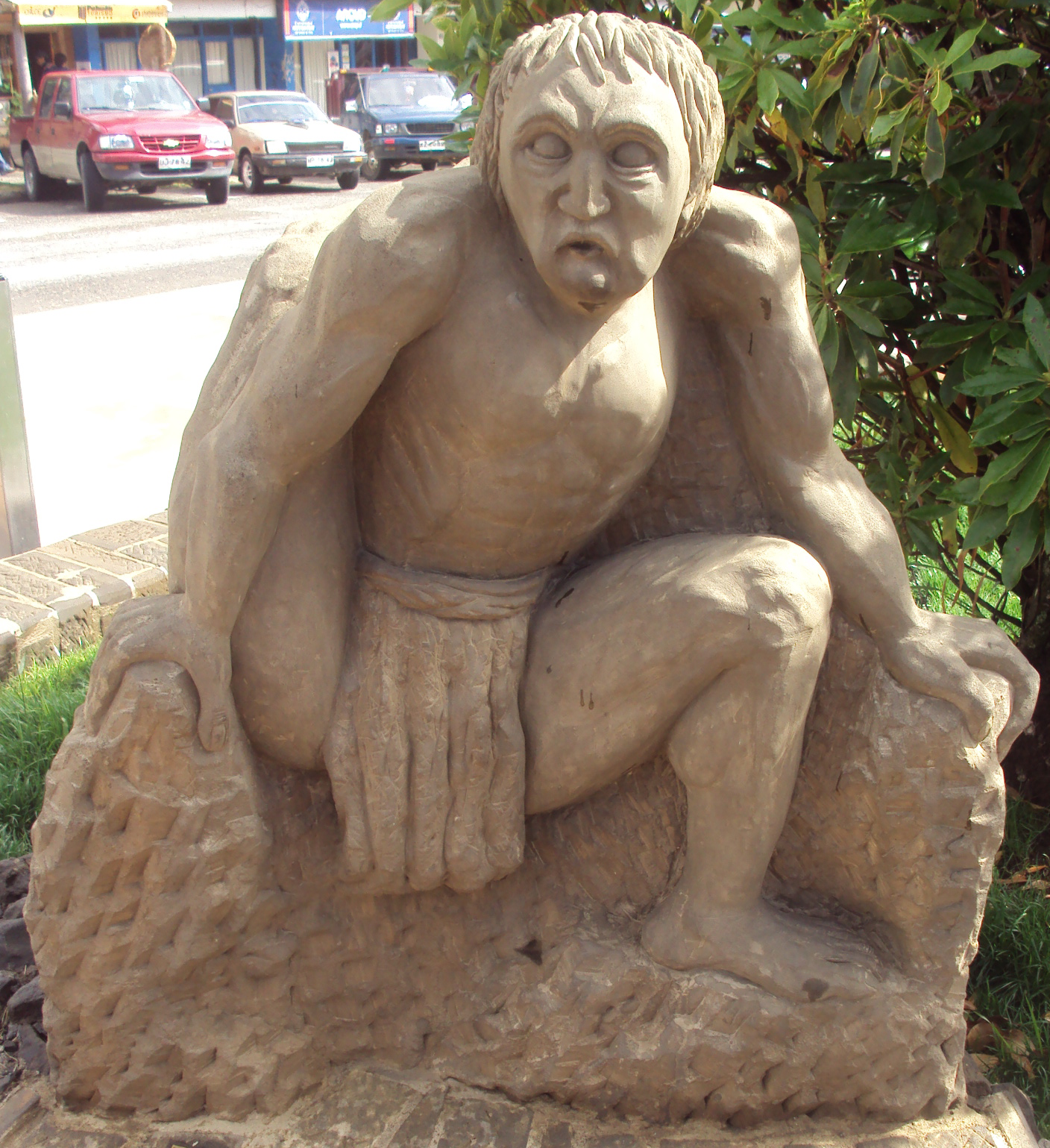
Of all the beings that haunt the rain-soaked archipelago of Chiloé, off the southern coast of Chile, none carries a horror quite like the Invunche — because his horror is not what he does. It is what was done to him. The Caleuche takes sailors; the sea-spirits take the drowned; but the Invunche took nothing from anyone. He was taken. Somewhere at the beginning of his legend there is always a human infant — a firstborn son, stolen from his cradle or, in the darkest tellings, sold by his own desperate family — and everything monstrous about him afterward is the workmanship of men.
The old Chilotes said it plainly and said it low, because on Chiloé these things were not spoken of carelessly: the warlocks make him. And the warlocks, on Chiloé, were not a fairy tale.
The Island at the Edge
Chiloé is a world apart and has always known it. A great green island wrapped in mist and rain, fringed with smaller islands like a hen with chicks, it was for centuries among the most isolated outposts of Spanish America — a place where shipwrecked mariners, Huilliche fishermen, and Jesuit missionaries wove their beliefs together into a folklore denser and stranger than almost anywhere else on the continent. Its wooden churches are now treasures of the world's heritage; its mythology is a treasure of another kind — an entire parallel government of the unseen. For the Chilotes did not merely believe in scattered spirits. They believed in an organization: a secret brotherhood of warlocks, the Brujos de Chiloé, who called their society La Recta Provincia — "the Righteous Province" — with its own districts, ranks, tribunals, and laws, a shadow kingdom administered from a hidden cave near the hamlet of Quicaví, on the island's eastern shore, where the mist comes in off the gulf.
This was no mere whisper. In 1880, in the town of Ancud, the Chilean authorities actually put the Recta Provincia on trial — a real judicial process, with real defendants, some of whom described the sect's initiations and offices to the court. Whatever the truth behind those confessions, the trial fixed the legend in history's ledger. The warlocks of Chiloé have a court record. And their cave, tradition insists, has a doorkeeper.
The Making of the Guardian
He is called the Invunche — also Imbunche, or Machucho — and the tradition recounts his making with the terrible precision of a recipe, which is exactly what makes it unbearable. The warlocks require a male infant, a firstborn, unbaptized. Sometimes he is stolen. Sometimes — and the tellers drop their voices here — he is bought, from a family too poor or too frightened to refuse. Within the cave, the child is unmade as a human being, step by deliberate step. His skin is rubbed with strange ointments until it coarsens. His tongue is split like a serpent's, so that human speech is closed to him forever; what remains to him is a guttural, broken cry — the Chilotes said you could hear it on bad nights, carried over the water, and everyone who heard it crossed themselves. And then the last and defining cruelty: one leg — the right, tradition specifies — is twisted, broken, and bound up over his back against the spine, so that the creature can never again walk as men walk. He moves for the rest of his existence on his hands and his single leg, a lurching tripod of a being, unable to run, unable to leave. He is fed, the stories say, first on cat's milk and goat flesh, and later on darker fare, until nothing of the cradle remains in him.
Why? Because the cave must be guarded, and the warlocks' logic is the logic of locks: a perfect guardian is one who can never desert his post, never repeat what he hears, and never be mistaken for anything but a warning. The Invunche is all three by construction. He cannot flee — his own body is his chain. He cannot betray the brotherhood's secrets — his split tongue holds them better than any oath. And no intruder who sees him at the cave mouth, or hears that cry in the dark, needs to be told to turn back. In some tellings he is more than a sentry: the warlocks consult him as a kind of oracle, and his rare public appearance — carried, since he cannot travel far — is an omen of calamity for whichever village he faces. But he is never, in any telling, free. The most feared being of Chiloé is also its most absolute prisoner.
The word itself tells the older story. Ivum-che, in the Mapuche tongue from which Chilote folklore drew so deeply, means something close to "small person" or "child-being," and scholars trace the figure back to pre-Hispanic beliefs about beings deformed by sorcery for magical service. Over the colonial centuries this ancient dread braided together with European witch-lore — the stolen unbaptized child, the devil's compact, the secret sabbath — until Chiloé produced this creature that belongs wholly to neither world and entirely to the island.
Terror and Pity
Here is what makes the Invunche unique in the corridors of world folklore: no other guardian-monster is so completely a victim. The dragon chose its hoard. The Kelpie delights in its hunting. Even the golem, most obedient of servants, was shaped from clay that suffered nothing. But the Invunche was a child, and every Chilote hearing the tale knew it, and the tale never lets you forget it. His monstrousness is a wound wearing a body. When the grandmothers of the archipelago told of him, the children shivered — and then, almost always, someone would ask the question the legend is designed to plant: but it wasn't his fault, was it? No, the grandmothers agreed. It was not his fault. That is the point. Fear him, pity him, and remember who made him.
And the islanders' gentler spirits stand in deliberate contrast around him. The Pincoya, dancing on the beaches with her arms to the sea, brings abundance to the coves; she is Chiloé's open hand. The Invunche, crouched at the cave door in the dark, is its closed fist — and the folklore of the island holds both, honestly, as every honest picture of a community must. Chiloé's mythology has been called a mirror of its history: generous and secretive, devout and defiant, luminous at the shoreline and very dark in the caves. No figure carries the dark half more faithfully than the guardian of Quicaví.
He endures, too, with strange vigor. Chilean writers of the last century carried the imbunche out of the archipelago and into literature, where the image of the sewn-up, silenced, folded-in being became a byword for everything a society does to shut its own children in the dark — orphaned talents, silenced voices, lives bound so they cannot leave. The monster of Quicaví turned out to be portable. Every country, the writers discovered, has its caves.
An Esoteric Reading
Read with the inner eye, the Invunche is the most exact image folklore has ever produced of what the old spiritual masters called the bound soul — and the binding is worth reading limb by limb. His tongue is split: the power of the word, the faculty by which the inner life declares itself, is cut at the root, and what should have been speech becomes a cry that terrifies instead of communicates. His leg is lashed to his back: the power of the path, the ability to walk away, to progress, to make the journey that every tradition calls the soul's birthright, is folded against his own spine — his freedom is not taken from him so much as tied to him, carried everywhere as a dead weight, which is the bitterest form of loss. And all of it was done early, in the cradle-dark, before he could consent or resist or remember anything else. The mystics who spoke of souls imprisoned in habit and fear meant exactly this anatomy. What binds us oldest binds us deepest, and it is always the tongue and the road that the binders go for first.
But the legend's sharpest teaching is about the binders. The Invunche guards a threshold of secrets, and the warlocks' insight — the eternal insight of every Righteous Province the world has known — is that the cheapest lock is a mutilated life. Institutions, families, whole nations have set their wounded at the door to frighten others from the truth of what happens inside; the guardian's cry does the work, and the guardian takes the blame. Whoever would enter the cave of hidden things must therefore pass the test the tale sets silently before every listener: can you look at the monster at the door and see the stolen child? That seeing — fear transmuted into pity without losing its clear sight — is the beginning of the undoing of such places. The grandmothers of Chiloé, who understood more than they claimed, always told it so that the question would rise on its own. It wasn't his fault. Remember who made him. And mind, always, what is done with the firstborn things — the first voice, the first step, the first light of a life — for what is bound in the cave's dark does not die. It waits at the door, crying out in the only language it was left, for someone to finally come in.
Lux Esoterica.
2026.


Comentarios