The Secret of the Georgia Guidestones: The Rosicrucian Monolith
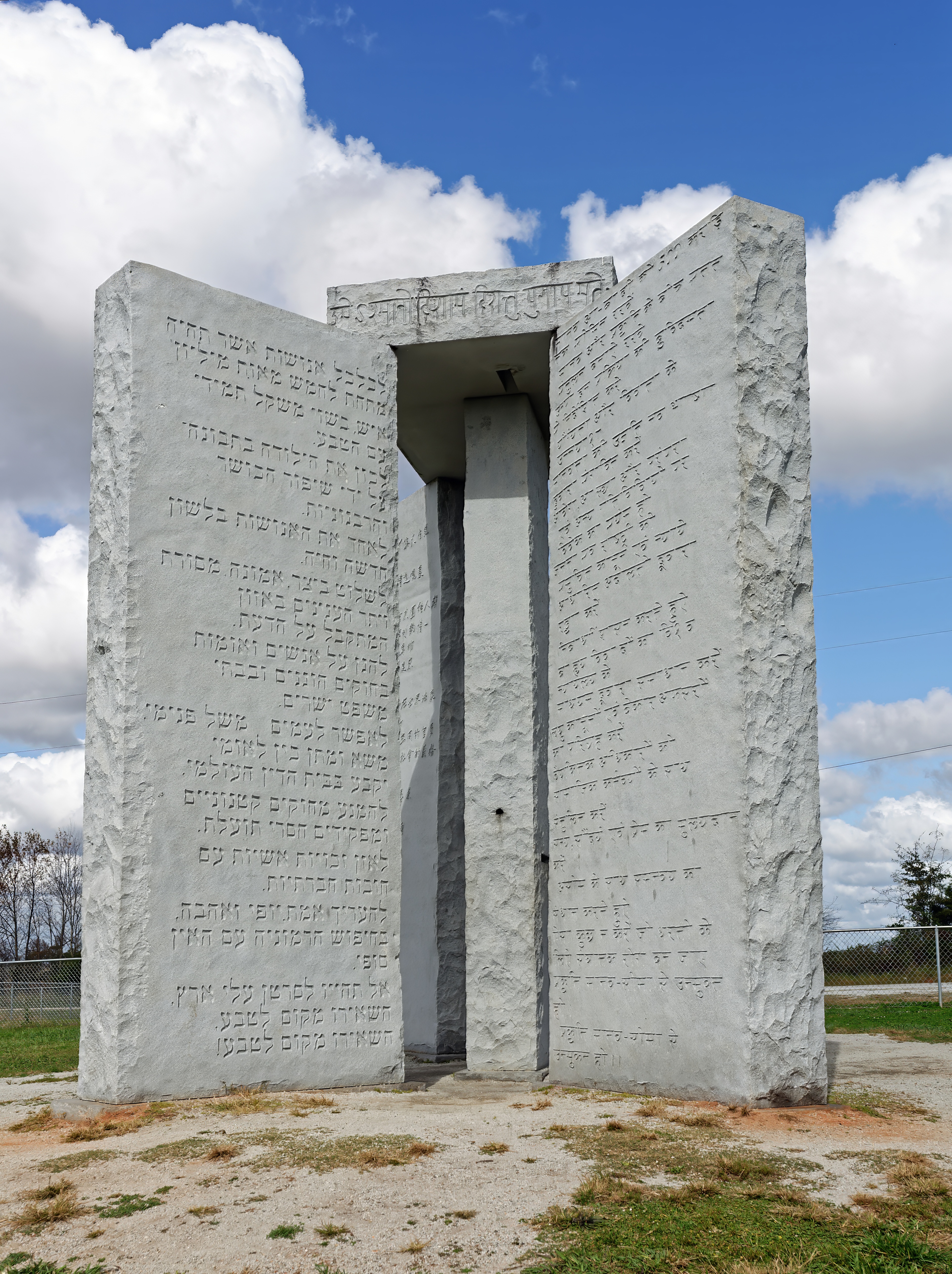
In June 1979, a man who gave his name as R.C. Christian visited a granite company in Elbert County, Georgia. He brought detailed plans for a large stone monument that he said would work as a calendar and a clock, and he spoke for a small group of Americans who wished to remain anonymous.
The result was the Georgia Guidestones, a structure of polished granite slabs that stood for more than four decades and became known as the American Stonehenge.
The Guidestones were famous for their astronomy and for their inscriptions. Visitors came from across the country to read the text, and many were shocked by its message. The monument has a complicated history, and it is worth looking at it carefully.
The Structure
The Guidestones were built from several large granite blocks, with a central stone and a surrounding circle of slabs. The main stone was said to be about sixteen feet tall, and the total weight of the granite was reported at around 237,000 pounds.
A slot in the central pillar was aligned to mark the solstices, and a hole in the capstone was lined up with the North Star. In this way, the monument could track the seasons and the sky.
The construction was impressive, and the alignments were carefully planned. Such details made the Guidestones attractive to people who love stone circles and ancient astronomy, even though the monument itself was modern.
The Ten Guides
The inscriptions were carved in eight modern languages, and they listed ten guides, which the monument called principles for an age of reason. Among them were calls for unity, fair laws, care for the environment and the use of living well. The first guide, however, became the subject of fierce debate. It read, in English, that humanity should be kept under 500 million people in balance with nature.
At the time the stones were erected, the world's population was far above that number. The guide was widely criticized as an endorsement of population reduction, and it caused strong reactions from scientists, religious leaders and ordinary visitors. Many people saw the guide as dangerous, while others read it as a general call for restraint.
Who Commissioned the Stones
The man who ordered the monument used a pseudonym, and his identity was never publicly confirmed. Some people speculated that he was a wealthy businessman with unusual views, and others believed he was connected with a secret group. The local community debated the stones for years, and many residents asked whether a monument with such a message should be allowed to stand on public or private land. Because the sponsors kept their names private, rumors grew over the years.
Some writers linked the name R.C. Christian with the legendary founder of the Rosicrucians, Christian Rosenkreutz. This connection is a guess based on the name alone. There is no reliable evidence that the sponsors belonged to any secret order, and the link is best treated as a speculative story.
Vandalism and the Final Destruction
For decades, the Guidestones attracted vandalism. Graffiti appeared on the stones, and some people painted messages of protest or support for their own causes. The site was also the subject of local debate about whether the monument should remain standing.
In July 2022, the monument was damaged by an explosion, which destroyed one of the main slabs. Officials then took down the rest of the structure, citing safety concerns. The site was cleared, and the Guidestones were no longer standing.
Conspiracy Claims
After the explosion, many online posts repeated stories about hidden elites and secret plans. Some claimed that the monument was a blueprint for a global reset or that its creators were still working in the shadows. None of these claims has been supported by solid evidence. The monument was a private project with a controversial message, and its later destruction was a criminal act.
It is important to separate the documented facts from the stories that grew around the stones. The public debate about the first guide, for example, was real, and it deserves careful discussion about population, resources and ethics. The hidden plot theories, however, do not stand up to scrutiny.
Closing
The Georgia Guidestones were a bold and controversial monument. They combined astronomy, public instruction and a message that many found disturbing. Their story shows how a stone structure can carry ideas that spark argument for generations, and how rumors can grow where the sponsors remain unknown.
Those who study the monument can learn from its design, its inscriptions and the debate it created, while keeping a firm line between history and speculation. The old question it raised, about how people should think about the earth, its resources and its future, remains open and deserves careful, honest discussion.
Related Esoteric Inquiries
- The Alchemy of the Somerton Man: The Tamam Shud Enigma
- The Secret of the Kensington Runestone: The Templars in America
- The Secret of the Kecksburg Ufo Crash: The Die Glocke Connection
Lux Esoterica.
2026.


Comments