The Secret of the Klerksdorp Spheres: Three-Billion-Year-Old Artifacts
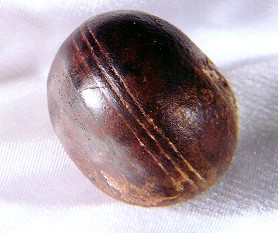
Deep within the pyrophyllite mines of Ottosdal, South Africa, miners have been unearthing strange, metallic spheres for decades. These objects, known as the Klerksdorp spheres, are perfectly round, extremely hard, and often feature three perfectly parallel grooves running exactly across their equators. What makes them an absolute anomaly in the matrix of orthodox geology is the stratum in which they are found: Precambrian rock dating back 3 billion years.
Geologists insist these spheres are mere natural concretions—nodules of pyrite and hematite formed by mineral precipitation around a nucleus. But this prosaic explanation fails to account for their perfect symmetry, their extreme hardness (which exceeds that of the rock they are embedded in), and the precise, seemingly manufactured grooves that circle them.
The Primordial Seeds
How does a naturally occurring concretion develop perfectly parallel, equidistant equatorial bands? It doesn't. Esoteric researchers recognize the Klerksdorp spheres as artifacts of a non-human intelligence, deposited on Earth billions of years before the first hominids walked the savannas.
Are they navigational beacons? Information storage devices? Or the remnants of a primordial seeding operation by an ancient extraterrestrial race? The spheres challenge the arrogant assumption that humanity is the pinnacle and the only instance of intelligent life on Earth. They are the silent, metallic witnesses to a cosmos teeming with ancient, unfathomable engineering, buried in the bedrock of a planet that has hosted more cycles of civilization than we dare to imagine.
Lux Esoterica.
2026.


Comentarios