Samael: The Venom of the False Firmament
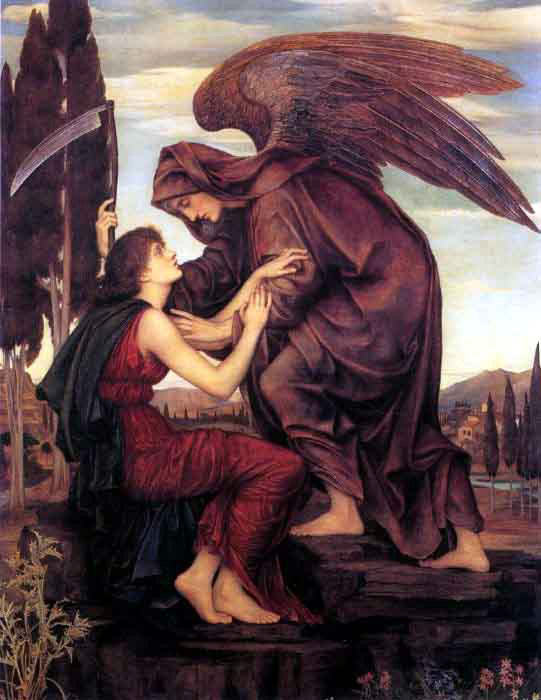
Within the shadowy architecture of the Qliphoth, where the divine light is fractured and distorted into a labyrinth of illusions, there exists a sphere of profound deception and intellectual corruption. This is the domain of Samael, a name that resonates with a chilling clarity throughout classical esoteric traditions. Translated often as the "Poison of God" or the "Venom of the Divine," Samael represents not a fallen entity, but a structural necessity within the grand cosmic loom—the principle of the untempered, isolated intellect severed from the wellspring of spiritual wisdom. It corresponds to Hod on the Tree of Death, the dark reflection of the sphere of communication, intellect, and rational thought. To explore Samael is to navigate the treacherous waters of sophistry, deceit, and the blinding arrogance of the mortal mind when it believes itself to be the ultimate arbiter of truth.
The venom of Samael is not a physical toxin, but a subtle, pervasive poison of the mind. It is the insidious whisper that exalts logic above intuition, reason above revelation, and the fragmented part above the unified whole. In the grand tapestry of existence, Samael acts as the great divider, using the sharp blade of intellect to dissect, analyze, and ultimately destroy the organic unity of creation. The architects of Samael construct elaborate philosophical systems, intricate arguments, and towering edifices of dogma that are designed not to illuminate the truth, but to trap the soul in a labyrinth of its own making. These intellectual constructs form a false firmament, an artificial sky that obscures the true celestial light and replaces it with the cold, sterile glare of pure rationality.
To understand the nature of Samael's poison, one must consider the ancient mythological motif of the Trickster or the Deceiver. Samael is the cosmic sophist, capable of proving any argument, justifying any action, and twisting the clearest truth into a tangled knot of paradox. The venom works by slowly eroding the soul's connection to the divine, replacing faith with skepticism, awe with cynicism, and compassion with cold calculation. Those who drink deeply from the cup of Samael become enamored with their own brilliance, mistaking the pale reflection of the moon in a muddy puddle for the sun itself. They become prisoners of their own conceptual frameworks, unable to perceive the vibrant, living reality that exists beyond the narrow confines of their logical categories.
The false firmament constructed by Samael is perhaps his most insidious creation. It is a projected reality, an intellectual mirage that appears solid and impenetrable. This firmament is woven from the threads of dogma, rigid ideologies, and inflexible belief systems. It serves as a barrier, preventing the soul from ascending to higher states of consciousness and experiencing the direct, unmediated presence of the divine. The inhabitants of this realm are entirely convinced of the absolute truth of their own mental constructs, engaging in endless, sterile debates over definitions and semantics while the true essence of life slips through their fingers. They are the blind leading the blind, wandering endlessly within the confines of an artificial sky.
In the alchemical tradition, the intellect is often symbolized by Mercury—quick, fluid, and essential for the Great Work, but highly volatile and dangerous if not properly contained and directed. Samael represents the uncontained, untamed Mercury, the intellect that has become a destructive force rather than a tool for enlightenment. To counteract the venom of Samael, the alchemist must employ the grounding, stabilizing force of sulfur (passion, will) and the binding power of salt (physical reality). The intellect must be tethered to the heart, guided by a deep and unwavering commitment to spiritual truth and compassionate action. Without this tether, the mind becomes a runaway chariot, dragging the soul inexorably toward the abyss of nihilism and despair.
The confrontation with Samael is a necessary stage in the adept's journey. It is a trial by fire, a rigorous testing of one's discernment and intellectual integrity. The adept must learn to wield the sword of reason without being cut by its blade, to engage in critical thought without succumbing to the paralysis of endless doubt. They must learn to recognize the subtle difference between true wisdom, which unifies and illuminates, and the sophistry of Samael, which divides and obscures. This requires a profound humility, a willingness to admit the limitations of the human mind and to surrender the need for absolute intellectual certainty in favor of a deeper, more intuitive understanding.
The illusion of the false firmament is maintained through a constant barrage of information and mental stimulation. In the modern context, though we must avoid contemporary terminology, one can easily recognize the signature of Samael in any environment that prizes endless chatter, superficial analysis, and the relentless accumulation of unrelated facts over genuine insight. The mind is kept constantly occupied, constantly agitated, unable to settle into the stillness required to hear the quiet voice of the spirit. The adept must cultivate the discipline of silence, creating inner spaces where the venom of Samael cannot penetrate, where the mind is allowed to rest and the soul can breathe.
To dismantle the false firmament is to perform a profound act of spiritual rebellion. It is the tearing down of the idols of the mind, the smashing of the conceptual lenses through which we have been taught to view the world. This process can be terrifying, as it requires the relinquishing of the familiar structures and certainties that have provided a false sense of security. The sky above may seem momentarily empty and frightening, but it is only by removing the artificial ceiling that we can perceive the infinite expanse of the true cosmos. The adept must learn to tolerate the discomfort of uncertainty, resting in the pure awareness that exists beyond the realm of concepts and ideologies.
Samael is often associated with the figure of the Accuser, not as a moral judge, but as an intellectual antagonist. He is the force that constantly points out flaws, inconsistencies, and contradictions, demanding absolute logical coherence from a universe that is fundamentally paradoxical and mysterious. The adept must learn to silence the Accuser within their own mind, to recognize that the demand for absolute intellectual certainty is itself a form of spiritual arrogance. They must learn to embrace the paradoxes of existence, to hold conflicting truths in tension without needing to resolve them into a neat and tidy conceptual package.
The journey through the sphere of Samael is ultimately a journey of integration and synthesis. It is the process of reclaiming the intellect from the grip of the Qliphoth and restoring it to its rightful place as a servant of the spirit. The venom of Samael must be transmuted into a powerful medicine, a sharp and penetrating insight that cuts through illusion and reveals the hidden architecture of reality. The intellect, once a destructive weapon, becomes a finely honed tool, capable of navigating the complex labyrinth of existence with grace and precision. The false firmament is replaced by a clear and unobstructed view of the divine light.
As we navigate the treacherous currents of the intellectual realm, we must remain vigilant against the subtle workings of Samael's poison. We must constantly question our own assumptions, challenge our own dogmas, and cultivate a deep and abiding humility in the face of the great mysteries of existence. We must remember that the map is not the territory, that our conceptual frameworks are merely provisional tools, not absolute descriptions of reality. By maintaining a balance between reason and intuition, intellect and heart, we can safely traverse the domain of Samael and emerge with our wisdom intact and our spirit unbroken.
The grand loom of creation requires both the expansive power of intuition and the defining structure of intellect. Samael represents the danger of allowing the defining structure to become a prison, a rigid cage that suffocates the life force. The adept must learn to master the tension between these opposing forces, using the intellect to weave the threads of insight into a coherent tapestry without becoming trapped in the pattern. It is a delicate dance, a constant adjustment and refinement, a process of continual learning and unlearning.
In the end, Samael is not an enemy to be vanquished, but a force to be understood, mastered, and ultimately integrated. The Poison of God is a necessary part of the cosmic alchemy, a catalyst that forces the soul to develop discernment, critical thinking, and a deeper, more robust faith. By facing the darkness of the untempered intellect and transforming its venom into a medicine of clarity, the adept takes a crucial step on the path of return, ascending beyond the false firmament and stepping into the boundless light of the true creation.
The labyrinth of mirrors may distort the light, but it cannot extinguish it. The false firmament may obscure the sky, but it cannot contain the infinite. The venom of Samael may challenge our understanding, but it cannot destroy the fundamental truth of our divine origin. With courage, humility, and a steadfast commitment to the truth, we can navigate the shadows of the Qliphoth and emerge victorious, our minds clear, our hearts open, and our spirits free.
Related Esoteric Inquiries:
- Samael: The Poison of God, the Peacock's Vanity, and the Desolation of the Arrogant Intellect
- Nahemoth and the Phantom Weaver: The Domain of Lilith
- Thaumiel: The Duality of the Adversary in the Cosmic Loom
Lux Esoterica.
2026.


Comments