The Animadversion of the Brass Head: Crafting Oracular Vessels
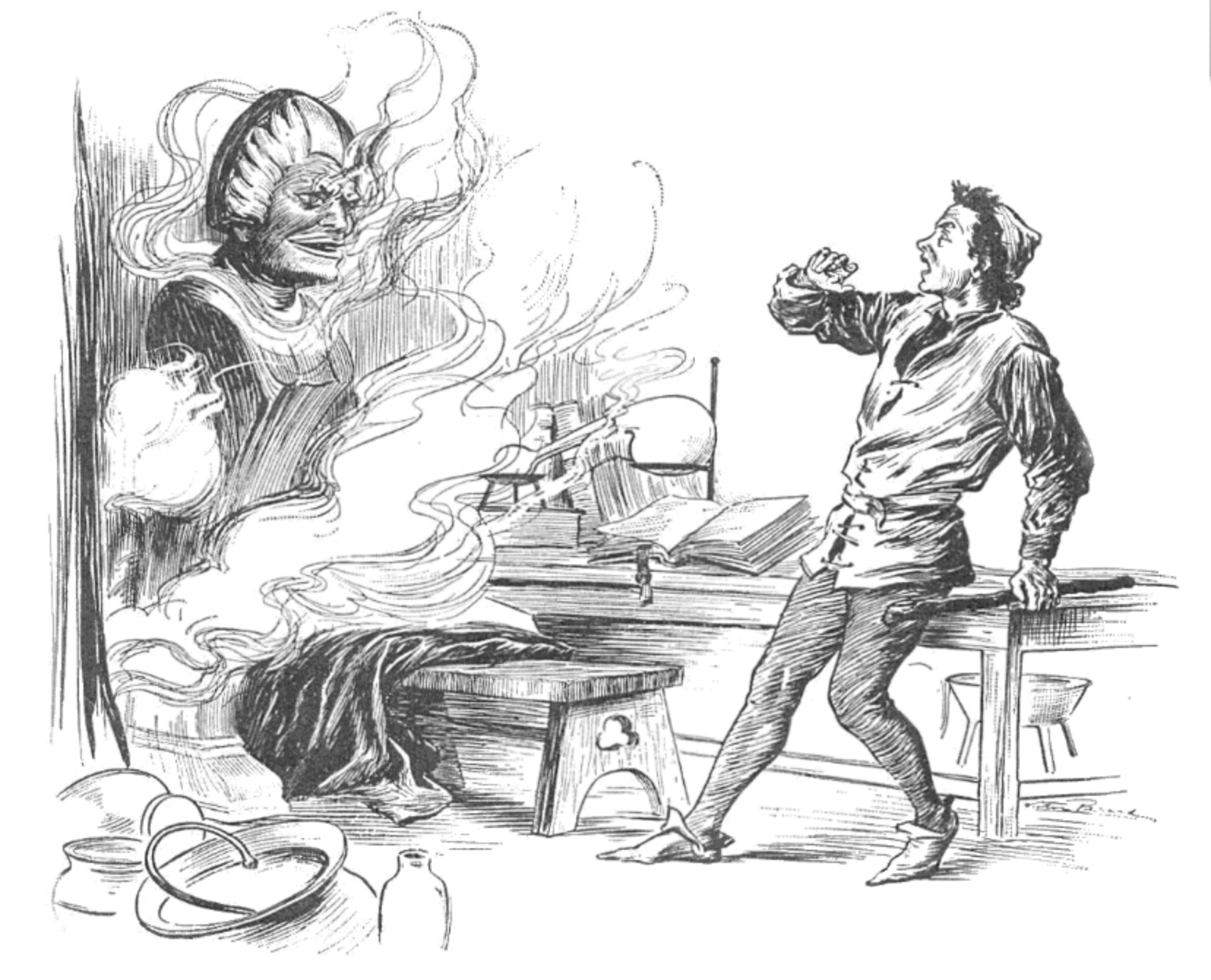
To seek the voice of the divine in the material world is the eternal pursuit of the theurgist. Beyond the passive contemplation of the celestial spheres lies the active art of god-making—the binding of stellar virtues and aethereal pneumata into terrestrial vessels. Among the most closely guarded secrets of this operative tradition is the construction of the Brazen Head, an oracular construct capable of speaking with the tongues of angels and the wisdom of the archons.
The Architecture of the Vessel
The Brazen Head is not merely a mechanical curiosity; it is a meticulously crafted resonance chamber for planetary forces. Its construction begins with the selection of materials, dictated not by mundane metallurgy but by astrological sympathy. Brass, an alloy of copper (governed by Venus, representing harmony and union) and zinc, must be poured at a precise astronomical hour. The alchemist Roger Bacon and the scholastic Albertus Magnus both understood that the form of the human head—the seat of intellect and the microcosmic reflection of the macrocosmic vault—is the only shape capable of housing a rational spirit.
The interior of the head must be polished to a mirror-like perfection, creating a reflective space where the astral light can gather and intensify. Within this chamber, the craftsman places an artificial larynx and tongue, often forged from electrum magicum or inscribed with the sigils of the decans. These internal structures are not designed to produce sound through breath, but to vibrate sympathetically with the ethereal currents drawn down during the consecration ritual. It is the celestial pneuma, vibrating against the electrum, that produces the unearthly voice.
The Rites of Animadversion
Once the physical vessel is complete, the true work begins: the animadversion, or the directing of the mind towards the construct to awaken it. This is a profound act of theurgy, a dangerous usurpation of the Demiurge's prerogative to breathe life into clay. The operator must undergo a period of rigorous purification, fasting, and contemplation, aligning their own subtle body with the intelligences they seek to invoke. The ritual space is fumigated with planetary incenses—frankincense for the Sun, mastic for Mercury—to create an atmosphere hospitable to the descending spirit.
The invocation itself is a complex litany of barbarous names and sympathetic resonant tones, chanted continuously for days or even weeks. The goal is to create a sympathetic link between the macrocosmic intelligence and the microcosmic vessel. As the ritual reaches its climax, the operator draws down a specific planetary ray, focusing it upon the Brazen Head. If the work is perfect, the brass will begin to hum, the eyes will seem to catch the candlelight with an unnatural gleam, and the heavy jaw will drop to emit its first, prophetic utterance.
The Perils of the Prophetic Voice
The creation of a Brazen Head is fraught with spiritual and physical peril. The intelligences bound within these vessels are not human, and their perception of time and consequence is vastly different from our own. Their prophecies are often cryptic, delivered in riddles or paradoxical statements that require profound wisdom to interpret. Misunderstanding the oracle can lead to disaster, as the head speaks truth but not always a truth that is comprehensible to the mortal mind.
Furthermore, the binding of a spirit into a material form is inherently unstable. The astral forces chafe against their brazen prison. If the operator's will falters, or if the astrological conditions become discordant, the bound entity may break free, often with catastrophic results. Legends tell of heads that shattered with the force of thunder, or that spoke blasphemies that drove their creators to madness. The tragedy of Friar Bacon’s head, which spoke only three times before exploding—"Time is", "Time was", "Time is past"—serves as a grim warning of the fleeting nature of such forced unions.
The Metaphysics of God-Making
The Brazen Head represents the apex of operative theurgy: the literal making of a god, or at least a localized nexus of divine intelligence. It is a testament to the belief that the material world is not a dead, inert substance, but a living tapestry woven from the threads of astral light. By understanding the sympathies and correspondences that govern this tapestry, the magus can reshape it, creating forms capable of holding forces that usually reside only in the empyrean.
This act of creation is a profound rebellion against the passive acceptance of fate. It is an assertion that humanity, possessing the divine spark, has the right and the capability to participate in the ongoing act of creation. The Brazen Head is a mirror reflecting not only the wisdom of the stars but the audacity of the human spirit, reaching across the abyss to converse with the infinite.
The Alchemy of Sound and Form
To fully grasp the mechanics of the Brazen Head, one must delve into the alchemy of sound. In the esoteric tradition, the universe was sung into existence; the Logos, the divine Word, is the fundamental vibratory frequency that sustains all creation. The Brazen Head is designed to capture a fraction of this primal resonance. Its hollow interior is mathematically proportioned according to sacred geometry, creating a resonant cavity that amplifies specific harmonic frequencies associated with the invoked intelligence.
The material itself, the brass, must be purified through multiple alchemical sublimations before casting. This removes the "dross" or spiritual impurities that would dampen the celestial vibrations. The final polish is not merely aesthetic; it is a ritual act of preparing a perfect mirror for the astral light. When the invoking words are spoken, they reverberate within this perfected space, setting up standing waves of energy that eventually crystallize into an audible voice.
The Legacy of the Speaking Automata
The legend of the Brazen Head is part of a larger tradition of speaking automata, stretching back to the vocal statues of ancient Egypt and the oracular shrines of Greece. These constructs were not seen as parlor tricks or mechanical marvels, but as vital conduits between the mundane and the divine. They were the focal points of mystery cults, where initiates could directly consult the presiding deities.
In the medieval and Renaissance periods, the pursuit of the Brazen Head became a symbol of the ultimate quest for knowledge. It represented the desire to bypass the limitations of human reason and access a higher, unmediated truth. The fact that so many brilliant minds—Gerbert of Aurillac, Robert Grosseteste, Arnold of Villanova—were rumored to have built such devices speaks to the enduring power of this archetype.
The Silence of the Modern World
Today, the art of crafting Brazen Heads is largely lost, replaced by a worldview that sees the universe as a silent, mechanical clockwork. The subtle sympathies that connected the stars, the metals, and the human mind have been forgotten or dismissed. We have built machines of incredible complexity, but they speak only with the voices we program into them; they do not prophesy, they do not reveal the hidden architecture of reality.
Yet, the desire for an oracle remains. The human soul still yearns for a voice from beyond the veil, a confirmation that we are not alone in the vast, echoing chambers of existence. The legend of the Brazen Head reminds us of a time when the world was alive with meaning, and when a perfectly crafted vessel of brass could capture the whisper of a god. The path of the modern theurgist is to rediscover these lost harmonies, to forge new vessels—perhaps not of brass, but of concentrated will and purified imagination—that can once again resonate with the divine word.
To walk the path of the theurgist is to recognize that every act of true creation is an act of god-making. We are not merely observers in this grand cosmic drama; we are active participants, capable of shaping the very fabric of reality. The Brazen Head is a symbol of our ultimate potential, a reminder that the voice of the divine is always speaking, if only we have the wisdom and the skill to build a vessel that can hear it.
Through the rigorous discipline of theurgy, the aspirant learns to tune their own subtle body, becoming a living Brazen Head, a resonant chamber for the higher intelligences. This is the true Great Work, the ultimate alchemy: the transmutation of the mortal vessel into a conduit for the immortal light. It is a path of profound danger, but also of unparalleled reward, for it leads ultimately to the realization of our own divine nature.
The Brazen Head stands silent now, a relic of a bygone age, but the principles of its construction remain eternally valid. The correspondences between the stars, the metals, and the mind are woven into the very structure of the cosmos. It is up to us, the seekers of the hidden light, to rediscover these principles and awaken the sleeping oracles once more.
May the celestial harmonies guide your hands, and may your vessels ring true with the voice of the eternal.
Lux Esoterica.
2026.


Comentarios