The Mystery of the Bélmez Faces: Paranormal Stone Manifestations in Spain
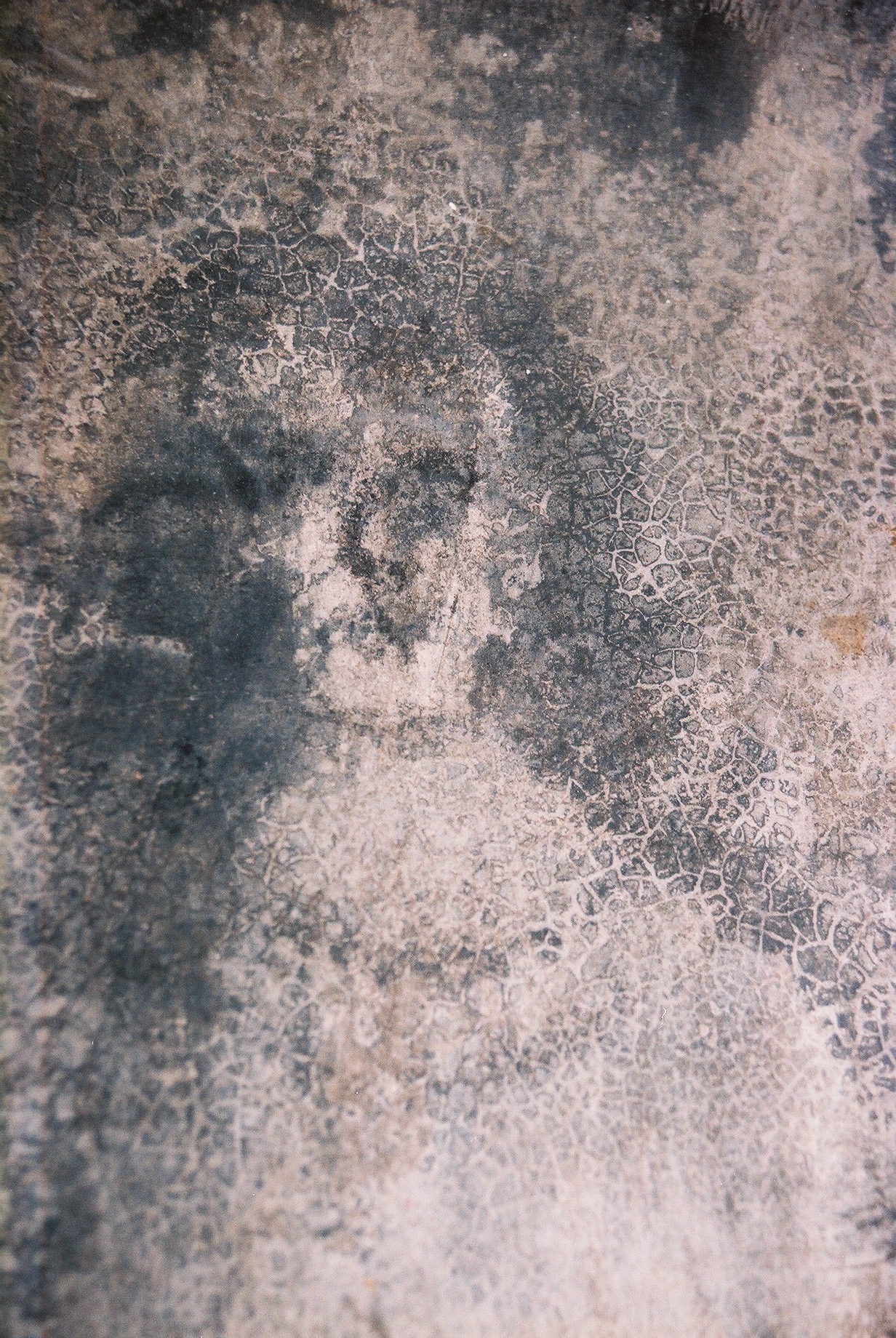
On a scorching summer morning on August 23, 1971, in the quiet village of Bélmez de la Moraleda in southern Spain, a homemaker named María Gómez Cámara stepped into her modest kitchen to prepare lunch. As she looked down at the concrete floor near the cooking hearth, she noticed something that sent a chill through her body: a faint, dark stain had formed on the gray surface. Within hours, the irregular smudge had organized itself into the unmistakable, haunting image of a human face.
Its eyes were wide, sorrowful, and deeply expressive, staring directly up at her from the solid stone.
Terrified by the unnatural apparition, María asked her husband, Juan Pereira, and their son, Miguel, to destroy it. Miguel took a pickaxe, violently smashed the concrete slab into rubble, and poured a fresh layer of smooth cement over the floor.
Yet, just one week later, the phenomenon returned with terrifying intensity. Not only did the original face reappear on the freshly poured concrete, but multiple new faces—men, women, and young children with agonized, pleading expressions—began to spontaneously materialize across the kitchen floor.
This was the beginning of the Bélmez Faces (Las Caras de Bélmez), widely regarded by investigators, parapsychologists, and esoteric researchers as the most documented and baffling paranormal manifestation of the twentieth century.
What caused these ghostly faces to emerge directly from solid stone? Were they the tragic echoes of souls buried beneath the house, an unconscious projection of the human mind onto matter, or a living demonstration of the memory of stone? To uncover the truth, we must step inside the legendary house on Calle Real.
The Spontaneous Emergence of the Faces
Word of the strange phenomenon spread rapidly through the province of Jaén and across Spain. Journalists, scientists, Catholic priests, and thousands of curious onlookers descended upon the small, sun-drenched village of Bélmez.
What made the phenomenon extraordinary was not simply the appearance of the images, but their dynamic, living behavior:
- Morphing Expressions: The faces were not static paintings. Over days and weeks, their facial expressions shifted. A face that appeared calm and serene on Monday would appear weeping, contorted with grief, or turning its head toward another image by Friday.
- Spontaneous Appearance and Vanishing: New faces would form in plain view over the course of hours, starting as faint shadows and gradually sharpening into crisp, high-contrast portraits. Other faces would slowly fade away, only to be replaced by new figures.
- Multiple Entities: Over the years, dozens of distinct figures emerged across the floor. Among the most famous were La Pincelada (The Brushstroke), El Pelao (The Bald One), La Dama (The Lady, depicting a graceful woman with melancholic eyes), and a chilling group composition known as El Coro (The Choir), consisting of numerous small faces gathered around a central figure.
The Forensic and Chemical Investigations
Skeptics initially alleged that the faces were an elaborate hoax—a clever trick created with paint, dye, or acidic chemicals to attract tourists to an impoverished rural town.
However, rigorous scientific investigations conducted by leading European researchers thoroughly contradicted the hoax hypothesis:
- The Bender and Argumosa Investigation: Professor Hans Bender, head of the Institute for Border Areas of Psychology at the University of Freiburg in Germany, traveled to Bélmez alongside the pioneering Spanish researcher Professor Germán de Argumosa. Bender and Argumosa declared the Bélmez phenomenon the most important paranormal event of the twentieth century. They conducted extensive on-site environmental monitoring, measuring electromagnetic fluctuations, ambient air humidity, and temperature gradients around the floor slabs.
- The Sealed Room Experiment: The investigators covered the entire kitchen floor with transparent plastic sheeting, sealed the edges with official notarized wax seals, and locked the room for nearly three months in the presence of municipal authorities and local notaries. When the seals were officially broken and the room reopened, detailed photographic comparisons proved that new facial outlines had formed and existing expressions had shifted beneath the completely intact, untampered wax seals.
- The Chemical Core Samples: Core samples of the concrete were extracted using diamond-tipped drills and submitted to the prestigious Instituto de Cerámica y Vidrio (ICYT), a branch of Spain’s National Research Council (CSIC). Using microscopic crystal analysis, ultraviolet spectroscopy, and acid assays, the scientists found no trace of paint, organic dyes, grease, animal fat, vinegar, or silver nitrate salts (which can darken upon exposure to light).
The official chemical report confirmed that the dark pigmentation was not a superficial paint or chemical wash applied to the top; the discoloration was embedded directly within the silicate crystalline matrix of the concrete itself, demonstrating that the mineral structure of the stone had undergone an unexplained molecular alteration.
The Discovery of the Subterranean Cemetery
Determined to discover if something beneath the foundations of the house was influencing the phenomenon, the local municipal authorities authorized a full archaeological excavation directly beneath the kitchen floor.
Workers dug nearly nine feet into the clay soil beneath the concrete hearth. To the shock of the villagers, the excavation uncovered a dense layer of human skeletal remains. Historical research in local ecclesiastical archives revealed that the house on Calle Real had been constructed directly over a forgotten section of an ancient medieval cemetery dating back to the thirteenth and seventeenth centuries.
During the thirteenth century, the province of Jaén was the fierce, bloody frontline of the Christian Reconquista, where Catholic armies under King Ferdinand III clashed with Moorish forces in brutal sieges. Several of the skeletons uncovered beneath the kitchen floor showed distinct signs of violent trauma, including missing skulls and weapon fractures, indicating they were victims of a violent battle or mass execution.
The skeletal remains were respectfully gathered, placed in consecrated caskets, and reinterred with full religious honors in the local parish cemetery. The excavation trench was refilled with clean soil, and a brand-new concrete floor was poured over the area.
Yet, despite the respectful removal and reburial of the physical bones, the faces reappeared on the new concrete floor within weeks, their expressions remaining as sorrowful and desperate as before. Physical removal of the skeletons had not cleared the subtle energetic imprint lingering in the soil.
The Psychotronic Hypothesis: Teleplasty and Thought-Forms
In esoteric science and parapsychology, the Bélmez phenomenon is classified as Teleplasty (Teleplastía)—the direct, spontaneous projection of human mental and emotional energy into physical matter.
According to this perspective, the primary generator of the phenomenon was María Gómez Cámara herself. María was not a fraud; rather, she possessed an extraordinarily rare, unconscious psychokinetic sensitivity.
The esoteric mechanics of the phenomenon can be understood through the following principles:
- The Human Soul as a Projector: In classical Hermetic doctrine, the human mind generates subtle energetic currents (Pneuma or astral fluid). When an individual experiences intense subconscious trauma, grief, or spiritual sensitivity, this astral energy can radiate outward like an invisible projector.
- The Catalytic Substrate: Fresh concrete contains water, lime, and silica—a chemically reactive, moist mineral mixture that is highly sensitive to external energetic fields before it fully cures. Just as a photographic plate captures light through chemical sensitivity, the wet silicate acted as a receptive mirror, capturing the subconscious thought-forms floating in the room.
- The Sympathetic Resonance: María was deeply empathetic and lived in constant emotional connection with the suffering of the dead buried beneath her hearth. Her subconscious mind acted as a biological medium or bridge, tuning into the historical trauma lingering in the soil and projecting those archetypal images into the receptive mineral floor.
Tellingly, during periods when María was ill or away from the house visiting relatives, the faces on the floor grew faint and indistinct. When she returned home, the images darkened and sharpened with renewed vigor.
The Acoustic Anomalies: Voices in the Silence
In addition to the visual teleplastic images, the house in Bélmez became a focal point for extraordinary acoustic phenomena.
Researchers set up reel-to-reel magnetic tape recorders in the empty, locked kitchen. When the recordings were reviewed, the tapes contained dozens of eerie, disembodied voices (psicofonías) speaking directly in archaic Spanish dialects:
- Faint, whispering voices were heard pleading: "The hell starts here...", "I want to leave...", and "She is the one who suffers."
- Sounds of rhythmic chanting, heavy footsteps, and muffled weeping echoed across the silent recordings.
These acoustic anomalies demonstrated that the house on Calle Real was an active dimensional vortex—a point where the boundary separating the physical world from the lower astral planes had grown extraordinarily thin and porous.
The Passing of María and the Memory of Stone
María Gómez Cámara passed away in February 2004 at the age of eighty-five, widely respected by her neighbors for her humility, faith, and patience in the face of decades of relentless public scrutiny.
Following her death, many skeptics predicted that the Bélmez faces would permanently vanish. Yet, while the intensity of the manifestations shifted, faint shadows and subtle facial outlines continued to form on the stone floors of her home and neighboring properties, proving that the energetic imprint of the site had saturated the very earth itself.
The Eternal Lesson of the Stone
The mystery of the Bélmez Faces challenges the rigid boundaries of modern materialism. It forces humanity to confront a profound truth long understood by ancient esoteric traditions: physical matter is neither dead nor inert.
The mineral kingdom possesses memory. Stone absorbs and records the intense emotional, spiritual, and psychic vibrations of the living beings who walk upon it. Under rare conditions, when the veil between dimensions thins and a sensitive human soul acts as a conduit, the stone itself can weep, speak, and show its face to the world.
The mournful eyes on the floor of Bélmez remain an eternal, haunting reminder that the past never truly dies; it sleeps within the bedrock beneath our feet, waiting for the light to reveal its hidden secrets.
Related Esoteric Inquiries:
- The Mystery of the Black Stone of Emesa in Ancient Rome
- The Mystery of the Marfa Lights: Ghost Lights of Texas
- The Mystery of the Tunguska Blast in Siberia
Lux Esoterica.
2026.


Comments