How To Move On, Let Go & Leave Your Past in The Past (Powerful Speech)
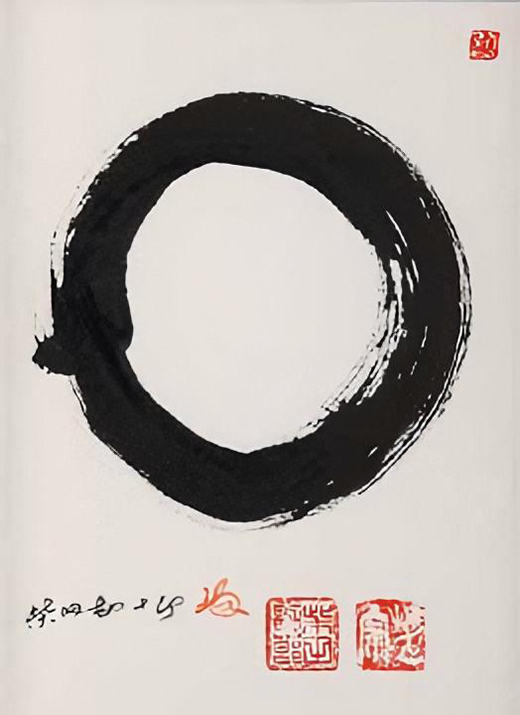
Ensō, the Zen circle, calligraphy by Kanjuro Shibata XX. CC BY-SA 3.0, via Wikimedia Commons.
There is a weight that almost everyone carries and few can name: the past, replayed. An insult from years ago, a door that closed, a person who did wrong. The body has long since left that room, but the mind keeps going back to sit in it. The speech below is a compilation of motivational voices on one theme: how to let go. Its message is simple, and the old traditions agree with much of it.
What the speech says
The narrator opens with a picture: you would never let a thief move into your house and live there rent free, so why let thoughts that steal your joy live in your mind? Resentment, he says, works like a virus; the person who wronged you "worries" more of your life if you let them invade it. The best revenge is moving on. People who live well are not luckier; when things fail, they drop the negative "like a hot potato" and turn to what can be done today.
Then come three borrowed ideas. First, a line credited to Richard Carlson: if you will not talk about something in the last hour of your life, do not make it a priority during your lifetime. Second, a line credited to Albert Einstein: there are only two ways to live, as though nothing is a miracle or as though everything is. Third, a definition of forgiveness as "giving up the hope that the past could be any different," which the speaker clarifies does not mean approving of what happened, only accepting that it did happen and asking what to do next.
The centerpiece is the story of two monks walking to a monastery. They meet a young woman who cannot cross a muddy road, and one monk carries her over. Hours later the other complains that monks should not touch women. The first answers: "Are you still carrying her? I put her down hours ago." The speech closes by asking who wins when we keep blaming: blame them for what they did, bless them for what they taught you, and take your power back.
What can be checked
The Einstein quotation is almost certainly not his. Quote Investigator places it among the sayings "probably not by Einstein": its earliest appearances are from 1989 and 1990, decades after his death, and no primary source has turned up. It is a good line, but it belongs to an anonymous writer, not to the physicist. The attribution to Richard Carlson, the author of Don't Sweat the Small Stuff, I could not confirm, and the wording in the video may be loose. The definition of forgiveness circulates in several slightly different forms and with several attributions; I found no single reliable origin.
The story of the monks is a real Zen parable, usually told with the names Tanzan and Ekido and which, as far as I recall, appears in early twentieth-century English collections of Zen stories. As with most oral tales, the details shift from teller to teller: the video makes the woman a seventeen-year-old in a kimono, a flourish that older versions do not necessarily have.
A skeptical look
"Let it go" is wise, and also easy to say. Telling someone to drop a grievance in a single stroke can be unkind when the grievance is a real wound. Forgiving does not mean staying near someone who harms you, nor pretending that nothing happened. Pain after serious loss, abuse or trauma is not a failure of willpower, and it is not solved by slogans. If memories of the past take over your days, disturb your sleep or leave you feeling empty, speak with a mental health professional; seeking help is not weakness, but part of moving on.
The speech also leans on the idea that "everything happens for a reason." It is a consoling idea for some, and a cruel one for others, because it can sound like a claim that suffering was deserved or planned. It is better held as an invitation to find meaning in what happened, not as a verdict on why it happened.
The esoteric reading
Every school of wisdom has an image for this. The Zen circle at the top of the page, the ensō, is drawn in a single breath and left unfinished or closed as the hand decides; it does not return to correct itself. In Greek myth, the dead drank from the river Lethe to forget before they were reborn, and Orpheus lost Eurydice precisely when he looked back. Lot's wife turned to salt for the same gesture. The alchemists spoke of solve et coagula: dissolve what has hardened, then give it a new form. Resentment is a hardened thing, and the work of forgiveness is a slow dissolving.
The monk who carried the woman across the mud performed the kindest of acts in a single moment and then walked on. The other carried only a rule, for hours. Between the two lies the whole spiritual path: act, set down, walk on.
Audiovisual reference material: How To Move On, Let Go & Leave Your Past in The Past (Powerful Speech)
Related Esoteric Inquiries:
- Zen Buddhism and the Art of Nothingness: The Direct Experience of the Void
- Haziel: The Angel of Mercy and Forgiveness
- The Five of Cups: The Shadow of Regret
- The Magic of Detachment: 3 Things You Must Let Go of to Manifest Your Dr...
Lux Esoterica.
2026.


Comments