Byzantine Art: Icons, Mosaics, and the Transfigured Image
Byzantine art is not primitive art that failed to achieve Western Renaissance naturalism. It is a sophisticated theological visual language that deliberately chose its conventions — the frontal gaze, the gold background, the stylized drapery, the elongated proportions — because those conventions best served its purpose: not the representation of the visible world but the manifestation of the invisible one. The icon (from the Greek eikon, image) is a window — a point where the divine reality becomes visible in the material world. The mosaic covering the dome of a Byzantine church is not a picture of heaven but an actual portion of it, the gold tesserae catching and transforming light to create a space in which the boundary between the earthly and the divine has been dissolved. The specific conventions of Byzantine art encode a theology of matter: that matter, properly arranged in obedience to the divine order, can become transparent to the sacred.

Christ Pantocrator, Hagia Sophia, Constantinople (9th century, restored 1934) — the 'Ruler of All' gazes from the apse with asymmetric authority: one eye merciful, one judging; the intentional asymmetry encodes the dual nature of divine judgment — the same gaze that shows mercy also shows truth
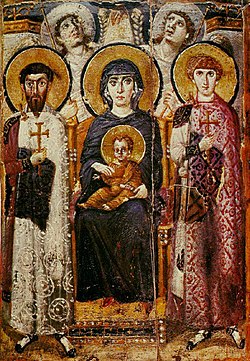
Virgin and Child, encaustic icon (6th century CE) — St. Catherine's Monastery, Mount Sinai; one of the oldest surviving painted icons, executed in the encaustic technique (pigment in hot wax) that the earliest Christian artists inherited from Roman portrait painting; the directness of the figures' gaze established the visual grammar of icon painting for fifteen centuries

Annunciation icon, Ohrid, North Macedonia (late 13th century) — the angel Gabriel bearing the lily of purity faces the Virgin across the gold ground of eternity; the gold background in Byzantine art is not a void but a positive substance — the uncreated light of the divine presence in which all sacred events take place simultaneously

Saint Arethas icon, Byzantine (Walters Art Museum) — the frontal gaze that characterizes all Byzantine sacred portraiture; the saint does not look at an event but at the viewer, engaging in direct spiritual contact; to look at an icon is to be looked at by the holy

Lamentation fresco, Nerezi Monastery, North Macedonia (1164 CE) — the Virgin holding the dead Christ is among the most emotionally direct images in medieval art; the Nerezi frescoes represent a moment of humanist renewal within the Byzantine tradition, two centuries before Giotto would achieve something similar in the Latin West

Nea Moni Monastery mosaics, Chios, Greece (11th century) — Imperial Byzantine mosaic of the highest quality, commissioned by Emperor Constantine IX; the tesserae are set at slight angles to catch the light at different times of day, so the figures appear to shimmer and breathe as the light changes

Anastasis (Resurrection), Daphni Monastery, Athens (c. 1100 CE) — Christ descending into Hades to raise the dead; he stands on the shattered gates of Hell, pulling Adam and Eve from their tombs by the wrists; the Byzantine Anastasis is the primary visual theology of the Orthodox Easter — not the empty tomb but the harrowing of death itself

Rotunda of St. George, Thessaloniki (4th-5th century CE) — some of the earliest surviving monumental Christian mosaics; the Roman rotunda converted to Christian use preserved its imperial grandeur and added the new theological vocabulary of gold ground and frontally gazing saints

Forty Martyrs of Sebaste ivory panel, Bode Museum, Berlin (Byzantine, 10th century) — forty soldiers martyred for refusing to sacrifice to pagan gods; the ivory medium, the most precious carving material available, encodes the value placed on these lives; Byzantine ivory carving achieved a delicacy that rivaled painting

St. Mark's Basilica, Venice — the most complete surviving Byzantine decorative program outside Constantinople; the entire ceiling and upper walls covered in gold mosaic, the accumulated donation of five centuries of Venetian wealth and faith; Venice acquired Byzantine relics, Byzantine craftsmen, and ultimately much of the Byzantine Empire itself


Comentarios