Runes: The Viking Alphabet, Divination and Magic
Runes are far more than an ancient writing system. They are symbols of power, portals to cosmic forces, and divination tools that Norse and Germanic peoples used for centuries. Today, in 2026, interest in this esoteric art is experiencing a notable renaissance. In this article we guide you through the mythical origin of runes, the Elder Futhark system, the meanings of each symbol, and concrete ways to use them in divination and magic.
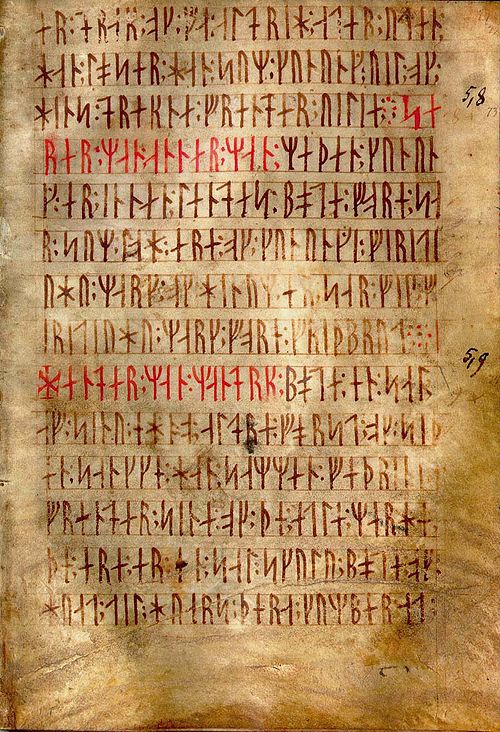
The *Codex Runicus*, a 14th century manuscript written in runes, is one of the most complete testimonies of medieval runic writing.
The Myth of Odin and the Birth of the Runes
According to Norse mythology, runes were not invented by humans: they were discovered by Odin, the supreme god of the Scandinavian pantheon. The story is told in the Eddic poems, especially in the Hávamál, the "Sayings of the High One."
Odin, in his ceaseless quest for wisdom, decided to submit himself to an extreme trial. He hung himself upside down from the Yggdrasil — the World Tree connecting the nine realms of Norse cosmology — for nine days and nine nights. Without eating, without drinking, and wounded by his own spear, Gungnir, the god endured in that liminal state between life and death.
At the end of the ninth day, in a moment of ecstatic vision, the runes revealed themselves from the depths of Urðr's well, the well of fate lying beneath the tree's roots. Odin saw them, understood their power, and seized them. Thus, the runic symbols were born not as human invention but as cosmic revelation.
This myth is fundamental for understanding the nature of runes in the esoteric tradition: each symbol is not merely a letter, but a living force of the universe.

Examples of Elder Futhark inscriptions carved in stone, the oldest and most documented use of the runic alphabet.
The Elder Futhark: The 24 Primordial Symbols
The Elder Futhark is the oldest known runic system, estimated to have emerged between the 2nd and 4th centuries CE. Its name comes from the first six runes: Fehu, Uruz, Thurisaz, Ansuz, Raidho, Kenaz.
The Elder Futhark is divided into three groups of eight runes called Aettir, each associated with a deity and thematic domain:
- First Aett (Freya's Aett): related to the material world, creation, and natural forces.
- Second Aett (Heimdall's Aett): related to challenges, change, and personal transformation.
- Third Aett (Tyr's Aett): related to cosmic order, justice, and spiritual enlightenment.
The 24 Symbols with Name and Meaning
First Aett:
- Fehu (ᚠ) — Cattle, wealth. Abundance, prosperity, creative power, material success.
- Uruz (ᚢ) — Aurochs (wild ox). Vital strength, health, animal power, endurance.
- Thurisaz (ᚦ) — Giant or thorn. Destructive and protective force, confrontation, threshold.
- Ansuz (ᚨ) — Mouth, god. Communication, divine wisdom, inspiration, Odin's messages.
- Raidho (ᚱ) — Wheel, journey. Movement, rhythm, path, cosmic order.
- Kenaz (ᚲ) — Torch. Knowledge, clarity, creative fire, revelation.
- Gebo (ᚷ) — Gift. Exchange, union, generosity, balance between giving and receiving.
- Wunjo (ᚹ) — Joy. Happiness, harmony, belonging, spiritual success.
Second Aett:
- Hagalaz (ᚺ) — Hail. Disruption, uncontrollable natural forces, radical transformation.
- Nauthiz (ᚾ) — Need. Restriction, resistance, learning through lack.
- Isa (ᛁ) — Ice. Stasis, stillness, concentration, the self in waiting.
- Jera (ᛃ) — Year, harvest. Natural cycles, reward for work, patience.
- Eihwaz (ᛇ) — Yew tree. Endurance, death and rebirth, connection between worlds.
- Perthro (ᛈ) — Dice cup / fate. Mystery, luck, the hidden, karma.
- Algiz (ᛉ) — Elk or sedge. Protection, connection with the divine, defense.
- Sowilo (ᛊ) — Sun. Success, vitality, guidance, solar energy, victory.
Third Aett:
- Tiwaz (ᛏ) — Tyr, the warrior god. Justice, honorable sacrifice, leadership, truth.
- Berkano (ᛒ) — Birch. Fertility, birth, growth, regeneration, the feminine.
- Ehwaz (ᛖ) — Horse. Harmonious movement, cooperation, soul travel, duality.
- Mannaz (ᛗ) — Human being. Humanity, the reflected self, mind, memory, community.
- Laguz (ᛚ) — Water, lake. Flow, intuition, unconscious, dreams, the emotional.
- Ingwaz (ᛜ) — Ing (fertility deity). Inner potential, seed, gestation.
- Dagaz (ᛞ) — Day. Transformation, awakening, dawn, turning point.
- Othala (ᛟ) — Ancestral home. Heritage, roots, legacy, connection with ancestors.

The Einang stone (Norway, 4th century CE) contains one of the oldest surviving Elder Futhark runic inscriptions.
Key Runes: Deep Analysis
Fehu — The Rune of Abundance
Fehu is the first rune of the alphabet and thus holds a special position. Originally meaning "cattle" — the primary measure of wealth in Norse society — in modern divination Fehu speaks of material prosperity and energy circulation. Its central message is that true wealth flows: it is not hoarded, it is shared. Reversed, it warns of losses or economic stagnation.
Ansuz — Odin's Rune
Ansuz is directly linked to Odin and represents divine wisdom arriving through language. It is the rune of messages, inspiration, sacred poetry (skaldcraft), and communication with the invisible. When it appears, there is an important message to hear — from a teacher, a dream, or one's own intuition.
Hagalaz — The Rune of Transformative Chaos
Hagalaz represents hail: a destructive force falling from the sky without warning. It is perhaps the most feared rune in readings, but its message is profound: the chaos it brings is not gratuitous. Like hail that destroys a field only to water the earth, Hagalaz announces disruptions that, seen in perspective, prove necessary for growth. It is the rune of creative crisis.
Tiwaz — The Rune of the Just Warrior
Tiwaz is the rune of the god Tyr, who sacrificed his hand to chain the wolf Fenrir and protect the worlds. It represents sacrifice made with honor, impersonal justice, and leadership based on ethical principles. In a reading, Tiwaz asks for moral courage: doing what is right even when it has a personal cost.
Laguz — The Rune of Deep Water
Laguz is perhaps the rune closest to the unconscious world. Water in Norse cosmology is associated with hidden knowledge, prophetic dreams, and the currents of destiny. This rune invites trusting intuition over logic, diving into emotional depths, and letting go to the natural flow of events.
Runic Readings: How to Consult the Oracle
Before any reading, create a sacred space: dim the lights, light a candle, breathe deeply, and formulate your question clearly. Runes are kept in a cloth or leather pouch and mixed before drawing.
1-Rune Reading: The Daily Oracle
The simplest and most powerful reading. Draw a single rune and meditate on its message in relation to your question or the day's energy. Ideal for daily practice and developing an intimate relationship with each symbol.
3-Rune Reading: Past, Present, and Future
The most widely used reading for guidance on a specific situation:
- Position 1 (left): The past — what forces or events led to the current situation.
- Position 2 (center): The present — the dominant energy at this moment.
- Position 3 (right): The future — where things tend if the current course is maintained.
5-Rune Reading: The Norse Cross
For more complex questions:
- Position 1 (center): The heart of the situation.
- Position 2 (top): The influence of the past.
- Position 3 (bottom): The potential outcome.
- Position 4 (left): Challenges or current blockages.
- Position 5 (right): Supporting forces or action to take.
Reversed Runes (Merkstave)
Some traditions work with reversed runes (merkstave), offering a different or complementary reading. When a rune appears upside down, it may indicate the shadow aspect of the symbol, a blockage in that energy, or the need to consciously work on that area.
Magical Use: Amulets and Bindrunes
The Norse carved runes on weapons to make them more effective, on ships to protect them at sea, on homes to attract prosperity, and on amulets to protect or heal.
Runic Amulets
A runic amulet is an object — stone, wood, metal, or leather — on which a rune is inscribed with a specific intention:
- Choose the rune according to your need. For protection: Algiz. For prosperity: Fehu. For love: Gebo. For mental clarity: Ansuz.
- Carve or paint the rune on the material, ideally during a meditation in which you visualize the energy of the symbol activating.
- Activate the amulet: blow on it three times, declaring its purpose aloud.
- Carry the amulet close to the body or place it in the space you wish to protect or influence.
Bindrunes: Combined Runes
A bindrune is a visual composition where two or more runes fuse into a single symbol. The bindrune combines the powers of the individual runes to create a more specific compound intention — essentially Norse sigils.
For example, combining Fehu (prosperity) with Wunjo (joy) creates a bindrune for the prosperity that brings genuine happiness, not mere accumulation. Uniting Algiz (protection) with Tiwaz (justice) generates a symbol of protection for those fighting for a just cause.

The inscription on the Golden Horn of Gallehus (Denmark, 5th century) is one of the most famous and studied runic inscriptions in the ancient world.
Runes in Modern Culture
The Esoteric Revival
The Ásatrú tradition — the Norse Neopagan religion venerating the Viking pantheon — places runes at its center. Practitioners use runes for both divination (rúnacasting) and daily ritual and magic.
Runes in Art and Literature
J.R.R. Tolkien was a great scholar of Norse languages and adapted runes to create the Tengwar and Dwarf Runes (Angerthas) of his Middle-earth universe. In The Hobbit, Thorin Oakenshield's map is written in real Anglo-Saxon runes. This literary use awakened generations of readers' interest in authentic runic alphabets.
The Bluetooth Connection
A curious fact showing runes' relevance in modernity: the Bluetooth logo is actually a combination of the runes Hagall (ᚼ) and Berkanan (ᛒ), the runic initials of Harald Bluetooth, the Viking king who unified the Danish tribes in the 10th century. The designers of Bluetooth technology, which sought to "unite" devices, chose this symbol in homage to the unifying king. Thus, without knowing it, millions of people worldwide carry runes on their phones every day.
Starting on the Runic Path
Obtain your own set. Runes can be purchased (in stone, wood, or clay) or handmade. Many practitioners consider carving or painting your own runes to charge them with personal energy. River pebbles painted with permanent marker are a simple starting material.
Study each rune individually. Before doing readings, dedicate a week to each rune. Carry it in your pocket, observe what situations arise, draw the symbol in your journal.
Keep a runic journal. Record each reading: the question, the runes that appeared, their position, your initial interpretation, and — weeks later — how accurate it proved. This record is invaluable for developing your own language with the symbols.
Start with simple readings. The rune of the day is the most powerful exercise for beginners. Doing it every morning for three months completely transforms the relationship with the system.
Read the primary sources. The Hávamál, Völuspá, and Sigrdrífumál (all part of the Poetic Edda) are essential reading. They contain direct references to the magical use of runes and the worldview that gives them meaning.
Runes are one of the most complete esoteric tools that exist: simultaneously a writing system, an oracle, a cosmological map, and a magical toolbox. Their origin in Odin's sacrifice charges them with a spiritual depth that few traditions can match. They are not simple letters nor mere good luck symbols: they are fragments of the language with which the universe narrates itself.
Working with runes is, ultimately, an act of listening. Listening to the forces moving behind events, listening to the ancestral wisdom that the Norse distilled into 24 symbols, listening to Odin's voice still resonating from the Yggdrasil, nine days after his initiation in the darkness.
— Lux Esoterica
Related Esoteric Inquiries:
- The Elder Futhark: Norse Runes as Oracle, Magic, and the Alphabet of the Cosmos
- Norse Runes: The Elder Futhark, Their Meanings, and How to Use Them for Divination
- The Secret Language of the Cosmos: Study and Mystical Symbolism of the 24 Runes of the Elder Futhark
Lux Esoterica.
2026.


Comments