The Hermetic Order of the Golden Dawn: The Secret Society That Shaped Modern Magic

The Rose Cross Lamen — the central symbol of the Hermetic Order of the Golden Dawn, combining the 22 petals of the rose (corresponding to the Hebrew alphabet and Tarot trumps) with the cross of the four elements. It was worn by initiates of the Inner Order during ritual work.
In the autumn of 1887, a London coroner named William Wynn Westcott came into possession of a set of manuscripts written in a strange cipher. Whether he discovered them in a box of old books, received them from a Rosicrucian contact, or — as some historians argue — created them himself, the story he told was more compelling than the truth: the Cipher Manuscripts contained the outlines of a complete system of initiation, written in a code based on a simple substitution cipher, and they included the address of a German Rosicrucian adept named Anna Sprengel who could authorize the establishment of an English temple.
Within months, Westcott had recruited his Masonic and occultist colleague Samuel Liddell MacGregor Mathers to flesh out the cipher's skeletal rituals into fully developed ceremonies, and the two men — along with the physician and Rosicrucian William Robert Woodman — founded a new magical society: the Hermetic Order of the Golden Dawn. Its first temple, Isis-Urania, was consecrated in London on March 1, 1888.
What followed was, by any measure, one of the most extraordinary experiments in organized Western esotericism ever conducted. In the short space of fifteen years, the Golden Dawn attracted some of the most gifted minds of the late Victorian era, synthesized centuries of scattered esoteric knowledge into a single coherent system, and generated a body of ritual, symbolism, and magical technique that continues to shape occult practice worldwide — long after the society itself collapsed in schism and scandal.
The Architecture of the System
The Golden Dawn was structured as a series of grades, organized across three orders:
The Outer Order (the First Order) comprised five grades corresponding to the four elements and the spirit that governs them: Neophyte (0=0), Zelator (1=10, earth), Theoricus (2=9, air), Practicus (3=8, water), and Philosophus (4=7, fire). Each grade involved instruction in a specific body of esoteric knowledge — Kabbalah, astrology, Tarot correspondences, alchemical symbolism — and a formal initiation ceremony of increasing complexity and depth.
The Second Order (Rosae Rubeae et Aureae Crucis — Red Rose and Golden Cross) was the inner order of practicing magicians, comprising three grades: Adeptus Minor (5=6), Adeptus Major (6=5), and Adeptus Exemptus (7=4). Entrance to the Second Order was the great threshold: here, the initiate received the full system of ritual magic based on the Kabbalistic Tree of Life, learned the construction and use of magical implements (wand, cup, sword, pentacle), and was initiated in the mysterious Vault of the Adepti.
The Third Order — comprising the grades of Magister Templi (8=3), Magus (9=2), and Ipsissimus (10=1) — was theoretically occupied by the Secret Chiefs: spiritual beings or advanced adepts who directed the Order from a non-physical plane and whose instructions came to Mathers through interior communication. The existence and nature of the Secret Chiefs was a persistent source of controversy and eventually became a catalyst for the Order's fragmentation.
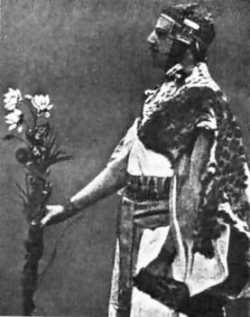
Samuel Liddell MacGregor Mathers in Egyptian ceremonial regalia — the dominant personality of the Golden Dawn's formative years, whose translations of grimoires and development of the ritual system shaped Western magic for a century.
The Synthetic Genius of the Golden Dawn
What made the Golden Dawn unique — and what has made its influence so enduring — was its ambition to synthesize the entire Western esoteric tradition into a single coherent map. Drawing on Hermeticism, Kabbalah, Renaissance ceremonial magic, Rosicrucianism, Freemasonry, astrology, Tarot, Enochian magic (the angelic language and system received by John Dee and Edward Kelley in the 1580s), alchemy, Egyptian religion, and Greek mystery traditions, the founders constructed a system in which every element was cross-referenced to every other.
The Kabbalistic Tree of Life — the diagram of ten Sefirot and twenty-two paths from Jewish mysticism — became the Order's central organizing schema. Every grade corresponded to a Sefirah. Every path corresponded to one of the twenty-two Hebrew letters and one of the twenty-two Major Arcana of the Tarot. Every planet, every element, every deity, every gemstone, every scent, every color was assigned to its proper position on the Tree. The result was a unified symbolic language in which a working magician could move fluently between Egyptian myth and Hebrew Kabbalah, between Renaissance planetary magic and Celtic mythology, because all of it had been mapped onto the same underlying structure.
Mathers was the primary architect of this synthesis. He translated and edited key esoteric texts that had previously been inaccessible to English readers: the Key of Solomon, the Book of the Sacred Magic of Abramelin the Mage, and the Kabbalah Unveiled (a translation of Knorr von Rosenroth's Kabbala Denudata). These translations placed in the hands of Golden Dawn members a corpus of magical literature that had not been available in English since the Renaissance.
The Vault of the Adepti
At the heart of the Second Order's initiation was the Vault of the Adepti: a heptagonal chamber, each wall painted in correspondences of the seven planets, colors, symbols, and divine names. At its center lay a pastos — a symbolic tomb — containing the effigy of Christian Rosenkreutz, the legendary founder of Rosicrucianism, depicted as if sleeping rather than dead. In the initiation ceremony, the adept "discovered" this tomb, received the secret knowledge contained within it, and was symbolically resurrected — reborn at a higher level of initiation.
The Vault was one of Mathers's most inspired creations, drawing directly on the Rosicrucian mythology of the Chemical Wedding and the Fama Fraternitatis. It synthesized the alchemical symbolism of death and resurrection, the Kabbalistic symbolism of the Tree, and the Egyptian mythology of Osiris's dismemberment and reconstitution into a single overwhelming initiation experience. Members who underwent it often reported it as genuinely transformative — not merely symbolically but experientially.
A Who's Who of Victorian Occultism
The Golden Dawn's membership roster reads like a catalogue of late Victorian creative and intellectual life. Several of its members went on to lasting fame far beyond the occult world:
William Butler Yeats (1865–1939) — one of the greatest English-language poets of the 20th century, winner of the Nobel Prize for Literature. Yeats was a committed Golden Dawn member for over two decades and drew extensively on its symbolism and teachings in his poetry and in his mystical prose work A Vision, which lays out an elaborate cosmological system based on the Wheel of the Grades and the interplay of spiritual forces across historical cycles.
Arthur Edward Waite (1857–1942) — a prolific occult scholar who, after the Order's schism, established his own Independent and Rectified Rite and collaborated with the artist Pamela Colman Smith to create the Rider-Waite Tarot (1909) — the most influential Tarot deck of the 20th century, whose imagery drew directly on Golden Dawn correspondences.
Florence Farr (1860–1917) — actress, theatrical director, and one of the most capable ritual magicians in the Order. Shaw's longtime companion and the model for Vivie Warren in Mrs. Warren's Profession, Farr led the Order's London temple after Mathers's move to Paris and conducted her own magical research into the use of sound and vibration in ritual.
Aleister Crowley (1875–1947) — the Order's most notorious member, who joined in 1898, was refused initiation into the Second Order by the London temple (which considered him morally unsuitable), and was eventually forcibly expelled. Crowley went on to develop his own system — Thelema — which drew heavily on Golden Dawn technique while entirely rejecting its Victorian occultist framework. His work, particularly through the A∴A∴ and later the OTO, carried Golden Dawn methodology into the 20th century in transformed and transgressive form.
Dion Fortune (1890–1946) — a later Golden Dawn member who founded her own Society of the Inner Light and wrote some of the 20th century's most influential esoteric texts: Psychic Self-Defence, The Mystical Qabalah, and the magical novels The Sea Priestess and Moon Magic. Fortune is arguably the most direct and enduring transmitter of Golden Dawn teaching to contemporary Western magical practice.

Hermes Trismegistus — the legendary sage who gave his name to the Hermetic tradition at the heart of the Golden Dawn's teachings. His motto, "As above, so below," encapsulates the Order's fundamental approach to magical symbolism and cosmological correspondence.
The Great Schism
The Golden Dawn's collapse was as spectacular as its rise. By 1900, tensions had been building for years: questions about the authenticity of the Cipher Manuscripts and the German adepts, disputes over the authority of the Secret Chiefs, personal conflicts between members, and a power struggle between Mathers in Paris and the London temple.
The crisis broke open with Aleister Crowley's attempt — at Mathers's instruction — to physically occupy Isis-Urania Temple and seize its documents. The London members, led by Yeats, resisted. Mathers was expelled from authority. The Order fragmented into at least three competing successor organizations:
- The Independent and Rectified Rite under Waite, which focused on mystical rather than magical development.
- The Stella Matutina under Robert Felkin, which maintained the Order's magical orientation and transmitted its teachings to Israel Regardie (who eventually published the entire Golden Dawn corpus in 1937–40).
- The Alpha et Omega under Mathers and later his widow Moina, which continued in Paris and had branches in various cities.
The schism was personally painful and institutionally disastrous. But it also, paradoxically, ensured the system's survival: by fragmenting into multiple lineages, the Golden Dawn's teachings were preserved in enough different forms and hands that no single institutional collapse could extinguish them.
Israel Regardie and the Publication of the System
The single most consequential act in the Golden Dawn's 20th-century afterlife was Israel Regardie's publication of the Order's complete teachings in four volumes (1937–1940). Regardie, who had been Aleister Crowley's secretary and had later joined the Stella Matutina, decided that the ritual system was too valuable to remain hidden behind the veil of secrecy — and that the Golden Dawn's decline was precisely because too few people had access to its complete teachings.
The publication was deeply controversial — it violated the initiatory oaths sworn by every Golden Dawn member. But it ensured that the system survived in complete and accessible form. Today, every practitioner of Western ceremonial magic, every Wiccan High Priest or Priestess, every chaos magician, and every Tarot reader works within a tradition that was directly or indirectly shaped by what the Golden Dawn gathered, synthesized, and transmitted.
The Golden Dawn's Lasting Influence
It is difficult to overstate the Golden Dawn's importance for the subsequent development of Western esotericism. Almost every significant development in 20th-century Western magical practice — Thelema, Wicca, chaos magic, contemporary Paganism, the revival of ceremonial magic — has roots that trace back through the Golden Dawn to the synthetic system Mathers, Westcott, and Woodman constructed in their London temple in 1888.
The Rider-Waite Tarot — still the world's best-selling Tarot deck — is a Golden Dawn product: its symbolism draws directly on the Order's Kabbalistic correspondences, and its interpretive framework, set out by Waite, reflects the Order's understanding of the Tarot as a pictorial Kabbalah.
The system of elemental magical implements (wand for fire, cup for water, sword for air, pentacle for earth) that appears in virtually every form of contemporary Western magic — from Wicca to Chaos Magic to the Thelema of Crowley's successors — was codified by the Golden Dawn.
The method of the Lesser Banishing Ritual of the Pentagram — a foundational practice of Western ceremonial magic, used daily by practitioners worldwide — is a Golden Dawn creation.
And the aspiration that lay at the heart of the Golden Dawn's project — the attempt to approach magic not as folk superstition or mere technique but as a complete system of spiritual development, rooted in a coherent cosmology and aimed at the integration of the human psyche with the divine — continues to animate every serious practitioner of the Western esoteric traditions.
The Order lasted barely fifteen years as a functioning institution. Its influence has lasted over a century and shows no sign of diminishing.
— Lux Esoterica
Related Esoteric Inquiries:
- The Hermetic Order of the Golden Dawn: The Secret School That Shaped Modern Magic
- John Dee and the Enochian System: The Elizabethan Magus Who Spoke with Angels
- Victorian Occultism and the Golden Dawn: The Anatomy of the Outer Order
Lux Esoterica.
2026.


Comments