The 7 Liberal Arts: 7 - Astronomy and the Order of the Heavens
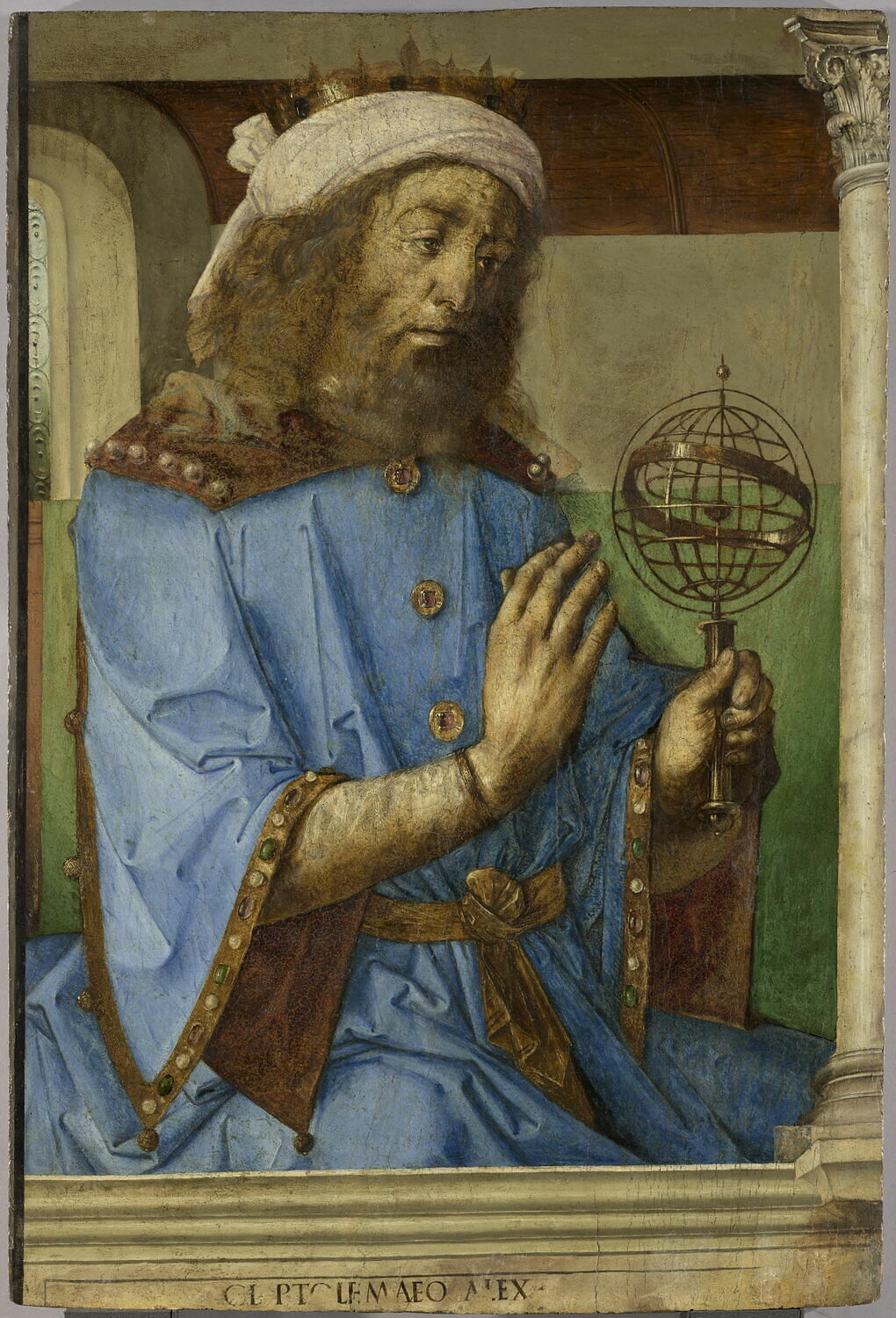
In the classical curriculum of the seven liberal arts, astronomy stood at the top of the mathematical group. Its task was to study the movements of the heavens: the sun, the moon, the planets and the fixed stars. For Greek and medieval thinkers, this was not only a matter of watching lights in the sky. It was a way of understanding order, time and the place of the earth within the cosmos.
Astronomy was studied with a mix of careful observation, geometric models and long lists of numbers that recorded the positions of stars and planets. Students learned to draw circles on a board, to measure angles with simple instruments and to compare their results with those of earlier teachers. Astronomers recorded eclipses, measured the seasons and tried to predict where the planets would appear. Their work shaped calendars, navigation and the rhythms of agriculture, and it also fed the great question of how the universe is arranged.
Ptolemy and the Model of the Heavens
One of the most influential works in ancient astronomy is the Almagest, written by Claudius Ptolemy in the second century CE. It described the heavens using a system of circles, called epicycles and deferents, that could account for the apparent movements of the planets seen from the earth. The model was remarkably successful at predicting positions, and it was used for more than a thousand years.
Ptolemy's system is also a good example of how science works. A model can be very useful even when its underlying assumptions are later revised. Copernicus, Kepler and Galileo eventually built a different picture, with the sun at the center and the planets moving in ellipses, but the earlier work was a serious and skillful achievement.
Astronomy and Astrology
In the premodern world, astronomy and astrology were closely connected. Astrology claimed that the positions of the heavens influenced human life, and many astronomers also practiced astrology as part of their work. Today, the two have separated. Astronomy studies the heavens through observation and physics, while astrology is a symbolic and cultural tradition that has not been supported by controlled scientific tests.
Understanding this difference helps us read esoteric texts with care. A symbolic map of the heavens can inspire reflection and meaning, but it is not the same as a measured cosmos. Both approaches can enrich our sense of wonder when we know which kind of claim we are making.
The Great Cycles
Ancient astronomers noticed that the stars slowly shift over long periods. The Earth wobbles on its axis, a motion called the precession of the equinoxes, which takes about twenty-six thousand years to complete one full cycle. This slow movement changes the position of the constellations that mark the equinoxes and inspired ideas about "great years" and ages of the world.
The scientific fact of precession is real and fascinating. Esoteric writers sometimes link it to periods of spiritual history, but such connections are interpretations rather than measurements. The sky itself keeps a slow and majestic rhythm, and that rhythm can invite us to think about patience.
Looking Up Today
Observing the night sky is one of the simplest ways to practice the spirit of astronomy. Find a dark place away from city lights, let your eyes adjust for ten minutes and then look for the brightest stars and planets. A star chart or a free app can help identify constellations, and a notebook can record what you see each night.
Even a small telescope or a pair of binoculars can reveal the moons of Jupiter, the rings of Saturn or the craters of the moon. Each observation connects the observer with a long human tradition of looking up. Many beginners find it helpful to keep a simple log of dates, times and what was seen, because patterns become clearer when they are written down and compared from one night to the next.
Humility Before the Sky
Astronomy has taught humanity a great deal about its place in the universe. The earth is one planet among many, orbiting a star among billions in our galaxy, which is itself one of countless galaxies. This understanding can be humbling, and many people find it deeply moving rather than frightening.
Some spiritual readers say that this humility is a gift. It reminds us that our daily worries are real but small in scale, and that we share the same sky with people across the world and across history.
Closing
Astronomy, the last of the liberal arts in the quadrivium, teaches patience, precision and wonder. From the careful models of Ptolemy to the modern study of distant galaxies, it shows how human curiosity can reach beyond the horizon. Whether we study the stars as science, read them as symbols or simply step outside on a clear night to look up, the sky offers a lesson that never grows old: we are small, we are connected and the heavens still invite us to pay attention.
Related Esoteric Inquiries
- The 7 Liberal Arts: 6 - Music and the Harmonics of the Soul
- The 7 Liberal Arts: 5 - Geometry and the Music of Space
- The 7 Liberal Arts: 4 - Arithmetic and the Archetype of Number
Lux Esoterica.
2026.


Comments