The 7 Wonders: 1 - The Great Pyramid and the Initiation into Stillness
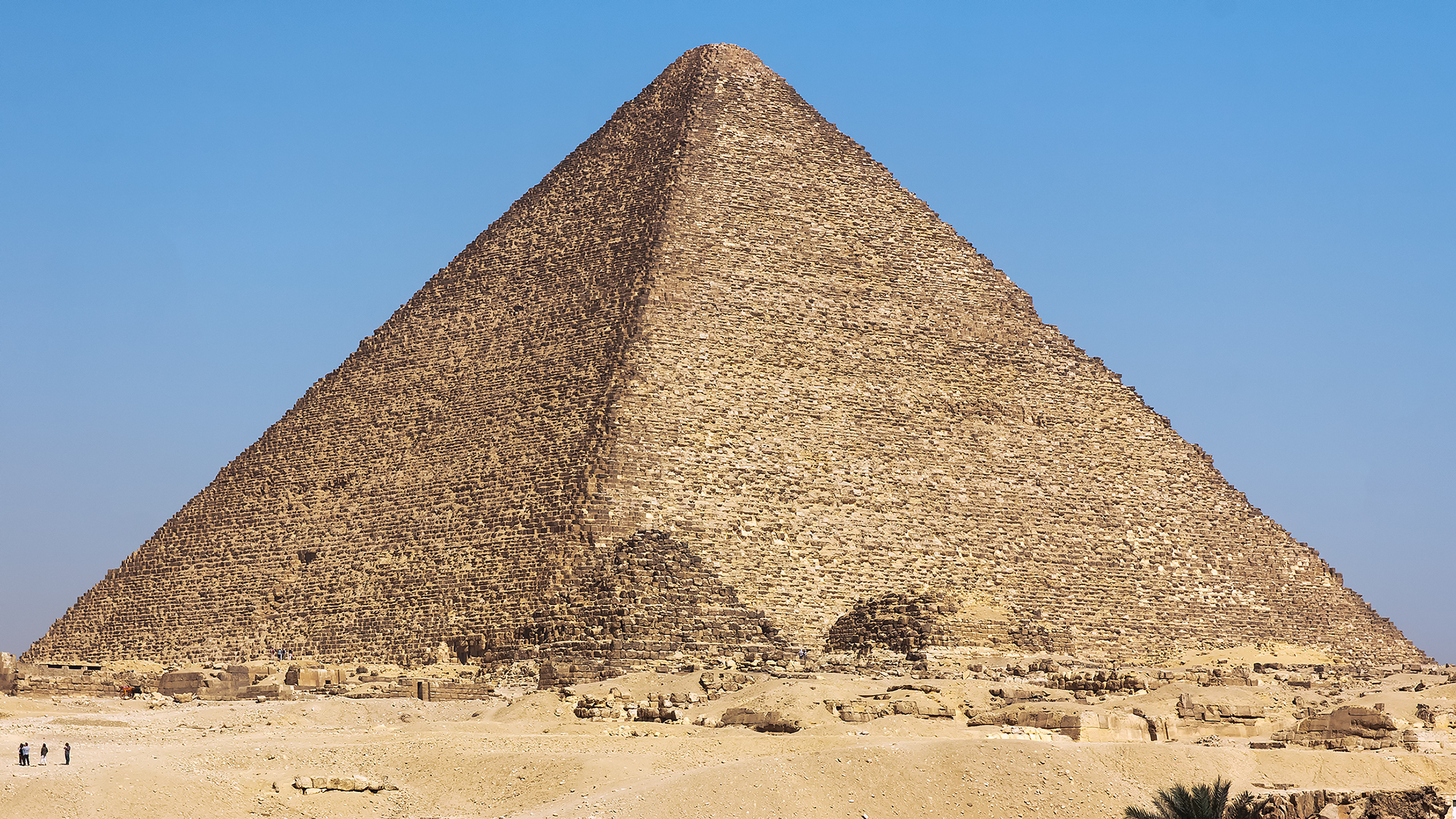
Of all the monuments of the ancient world, the Great Pyramid of Giza is the only one of the Seven Wonders that still stands. It rises on the Giza plateau near Cairo, built for the pharaoh Khufu around 2560 BCE.
Archaeologists see it first of all as a royal tomb, the greatest expression of a belief in the afterlife. Yet for many esoteric writers, the pyramid is also a symbol of initiation: a stone path from the outer world into a place of stillness and transformation.
This post looks at the pyramid through that symbolic lens. The historical facts and the spiritual readings are different kinds of truth, and it helps to keep them clearly apart while we explore both.
The Mountain of the Sun
Egyptian builders thought of the pyramid as a sacred hill, a shape that recalled the first mound of land that rose from the waters in the creation myths. The sun rose over such mounds, and the pyramid was connected with the sun god Ra. Some texts speak of the king ascending to the sky, and the stone structure was designed to help that journey.
In esoteric writing, this image of the mountain of the sun becomes a picture of the summit of the inner path. The seeker climbs step by step, leaving behind the noise of the valley and reaching a place of clear light.
The Chambers and the Journey Inward
The interior of the pyramid holds several chambers, including the so-called King's Chamber and Queen's Chamber. Modern archaeologists know that these rooms were built as part of a royal tomb, and that the sarcophagus in the King's Chamber was empty when first explored. Still, the narrow passages and the silent rooms have long inspired visitors to think about descent and renewal.
For the initiatic reading, entering the pyramid is a symbol of turning inward. The passages narrow, the air grows still and the outside world fades. The seeker leaves appearances behind and faces the quiet center of the self. Many writers say that such a descent can feel like a death of old habits, followed by a new kind of life.
Stillness at the Heart
A central theme of the pyramid is stillness. Its huge stones are arranged with great care, and their weight has stood for more than four thousand years. The pyramid can be read as a model of inner steadiness, the calm that remains when the storms of emotion pass around it.
A practical way to approach this theme is through meditation. Sit in a quiet room, feel the weight of the body and let the breath slow down. Imagine a stone base beneath you, solid and unmoving. Each time the mind wanders, return to the image of the base. Over time, the mind can learn to rest in a similar way.
The Four Sides and the Compass
The pyramid's sides face the four directions with remarkable precision. This alignment has fascinated observers for centuries. Egyptologists continue to study how the builders achieved such accuracy with the tools of their time. In symbolic readings, the four sides stand for the four quarters of the world, and the pyramid becomes a point where the directions meet.
This image can be used as a daily orientation. When you face the day, ask which direction you need most: a clear beginning, an open heart, a steady foundation or a quiet rest. The compass becomes a reminder of balance.
The Stone and the Human Work
It is easy to forget the human side of the pyramid. Tens of thousands of workers, many of them paid laborers rather than slaves, quarried, moved and set the stones. They lived in nearby settlements, ate well for their time and were buried with respect in cemeteries near the monument. Their effort is a story of cooperation and skill.
This reality can be a meaningful lesson for the spiritual seeker. Great works are built by many hands, one stone at a time. Initiation is not only a private vision, but also a commitment to daily labor and to the people who share the work.
Caution with Grand Claims
Some popular books claim that the pyramid is a power plant, a cosmic battery or a machine that channels hidden frequencies. These claims are not supported by evidence. The pyramid was built with stone, copper tools and ramps, and the best explanation for its design is the royal tomb of a powerful king.
It is wise to keep the symbolic reading separate from historical claims. The pyramid can inspire meditation without being treated as a device with supernatural powers.
Closing
The Great Pyramid of Giza invites us to see a tomb as a doorway, and a stone mountain as a path to inner light. Its chambers speak of descent, its stillness speaks of steadiness and its alignment speaks of order.
Whether we visit it as travelers, study it as historians or contemplate it as a symbol of initiation, the monument asks the same quiet question: how far are we willing to climb into the stillness at the center of our own lives?
Related Esoteric Inquiries
- The 7 Wonders: 7 - The Lighthouse of Alexandria and the Eye of Wisdom
- The 7 Wonders: 6 - The Colossus of Rhodes and the Solar Bridge
- The 7 Wonders: 5 - The Mausoleum of Halicarnassus and the Stone of Memory
Lux Esoterica.
2026.


Comments