Anneliese Michel: The Real Possession Behind The Exorcism of Emily Rose
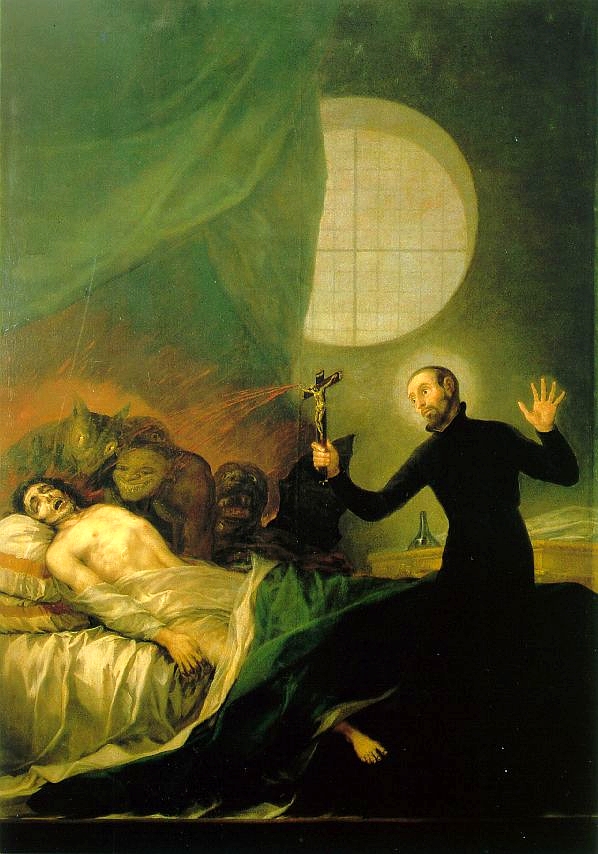
On the first day of July in 1976, in a small Bavarian town called Klingenberg am Main, a twenty-three-year-old university student named Anneliese Michel died in her own bed, in her parents' house, weighing sixty-eight pounds. Her knees were shattered from a year of kneeling and prostrating herself hundreds of times a day. Her tongue was bitten through. Her body bore the marks of restraints. The last words anyone recorded her saying were spoken to her mother: Mother, I'm afraid.
In the ten months before she died she had undergone sixty-seven rites of exorcism, conducted by two Catholic priests with the written permission of their bishop. Everything that happened in that room was recorded on tape. More than forty hours of those recordings exist. You can hear them. That is what separates this case from every campfire story about possession you have ever been told, and it is why, half a century later, no one has been able to close the file. Four people went on trial for her death — her mother, her father, and both priests — and the German courts, in the end, convicted them all of negligent homicide. But the courtroom answered a legal question, not the one that matters. The question that matters is what, exactly, was speaking on those tapes.
The Girl Before
It is important to begin with Anneliese as she actually was, because the films have made her into a symbol and symbols have no childhood. She was devout, quiet, and by every account kind. Her family was intensely Catholic even by the standards of rural Bavaria in the 1960s, a household of daily mass and Marian devotion. Her mother carried a private grief: an illegitimate daughter born before her marriage, a girl named Martha who died at the age of eight, and a shame that the family confessed and re-confessed for years. Anneliese grew up breathing an atmosphere in which sin was a real substance and penance was a real currency.
In 1968, at sixteen, she suffered what was diagnosed as a seizure. Then another. Neurologists at the Psychiatric Clinic in Würzburg diagnosed temporal lobe epilepsy, and she was put on anticonvulsants. But alongside the seizures came the other things. She began to see faces — grimacing, distorted faces — laid over the faces of the people she was praying near. She heard voices telling her she was damned, that she would rot in hell. She could not walk past a crucifix or a holy image without a violent revulsion rising in her. Devotional objects burned her. Holy water scalded.
Here is the detail that mattered enormously to her and that the doctors could not accommodate: the voices did not tell her she was ill. They told her she was condemned. This was not a symptom she could take a tablet for. It was a verdict.
For five years she was treated with medication and got worse. She dropped out, returned, tried to study at the University of Würzburg. She made a pilgrimage to San Damiano in Italy and was unable to look upon the images; a companion later said she avoided the ground where saints had walked. By 1973 she was telling her family that pills would not help her, because the thing in her was not in her brain.
The Six Who Gave Their Names
Her family began petitioning the Church. The Church, to its considerable credit, resisted for a long time. Priest after priest told them to keep her under medical care. The Roman Rite of exorcism is not handed out on request; canon law requires the bishop's permission and the exclusion, as far as possible, of natural explanations. It took two years of pleading.
Finally a priest named Ernst Alt examined her and became convinced. He wrote to the Bishop of Würzburg, Josef Stangl, that the girl did not look epileptic to him and that he had seen no seizures. In September 1975 the bishop granted permission and assigned Father Arnold Renz to perform the Rituale Romanum, assisted by Alt.
What the tapes contain is the reason this case will not die.
The voice that answered the rite was not Anneliese's voice. Multiple voices, in fact, quarreling with each other, cutting each other off, speaking over one another out of a single throat. They spoke in a snarling low register that observers said no woman of her weight and lung capacity should have been able to sustain for hours. And when the priests commanded them, in the ancient formula, to identify themselves — the demand for the name is the oldest instrument in the exorcist's kit, older than Rome, older than the Gospels, going back to the primal conviction that to name a spirit is to master it — they answered.
They gave six names. Lucifer. Cain. Judas Iscariot. Nero. Adolf Hitler. And a disgraced sixteenth-century priest from a nearby village named Valentin Fleischmann. The damned, in other words, and a local damned soul among them.
Consider that list for a moment, because it is either the most revealing thing about the case or the most damning. It is a catalogue of the reprobate assembled precisely as a devout Bavarian Catholic girl of 1975 would assemble one: the fallen archangel, the first murderer, the betrayer of Christ, the persecuting emperor, the recent monstrous evil of her own nation, and a fallen priest from down the road. It is a perfect inventory of her culture's damnation, drawn from her catechism and her history lessons. A skeptic sees that and says: there is the whole case, the mind performing its own theology.
And yet. The voices argued theology with the priests. They knew the rite. They responded to Latin. And they said something the skeptical reading struggles with — they told her, and the priests, that she was suffering not for herself but as an expiation for others: for wayward priests, for the youth of Germany, for sinners. She came to believe this utterly. She stopped resisting. She began to see her agony as a vocation.
That is the hinge on which she died. Because a girl who believes her starvation is a redemptive offering will not eat.
The Death and the Trial
Through the winter and spring she deteriorated. She prostrated herself in front of the family altar hundreds of times a day until the cartilage in her knees ruptured. She ate almost nothing. She contracted pneumonia. On June 30 she asked Father Renz for absolution. She died the next morning of malnutrition and dehydration.
The prosecution was brutal and, in strictly legal terms, unanswerable: a young woman had starved to death over months in a house full of people who watched, and no one called a doctor at the end. The defense played the tapes in open court. It did not save them. All four were convicted, given six-month suspended sentences and probation. The court's finding was that whatever anyone believed, she should have been force-fed.
Read the medical file and the tragedy is obvious. Temporal lobe epilepsy can produce exactly the phenomenology reported: religious hyperreligiosity, hallucinated voices and faces, dread, altered personality. Add profound depression, a family soaked in guilt, and two priests who confirmed the girl's own worst diagnosis of herself, and you have a machine for killing a person by agreement.
But the medical file does not explain everything on the tapes, and the honest researcher must say so. It does not explain why witnesses of no religious sympathy left that room shaken. It does not explain the reported knowledge of things she should not have known. And it does not explain the strangest coda: the family's later claim that a nun had received a message that Anneliese's body would be found incorrupt. When the coffin was exhumed in February 1978 the body was in the ordinary state of a body nineteen months in the ground.
An Esoteric Reading
Set aside the courtroom for a moment and read what happened in Klingenberg in the older language, the one the priests themselves were actually speaking.
Every serious tradition of the West holds that the human soul is not a sealed vessel. It is porous. It has doors. The mystic and the madman go through the same door, and the whole labor of the old spiritual disciplines was to teach a soul how to stand at that threshold without being torn apart. What the ancients understood, and what modern comfort has forgotten, is that the door swings both ways. To open oneself to the divine is also to open oneself, and the guardians at the threshold — the fearsome shapes that reared up in front of the desert fathers, the demons that came to Anthony in his tomb, the terrors that visited every hermit who ever fasted alone in the wilderness — are a standard feature of that road, not an aberration on it. Anneliese Michel walked the exact path of the desert ascetics: the fasting, the prostrations, the visions of grimacing faces, the voices of accusation, the conviction of vicarious suffering. She simply walked it alone, at nineteen, in a farmhouse, with no master to guide her and everyone around her confirming that the shapes were real.
The alchemists called the black stage of the Work the nigredo — the putrefaction, the dissolution, the necessary descent in which the old self rots away in the vessel before anything can be reborn from it. It is the most dangerous stage precisely because it looks identical to simple destruction. The whole art lies in knowing when to keep the heat on and when the vessel is about to crack. Anneliese entered a genuine nigredo. And every person around her — her parents, her priests, and finally she herself — read the blackness as holy and kept the fire burning under a vessel that was already breaking.
That, in the end, is the esoteric verdict, and it is harsher than any court's. The demons on those tapes may have been six damned spirits speaking through a borrowed throat, or six faces her own suffering wore, and I do not think anyone will ever be able to say which. But the fatal error was not in believing her. The fatal error was believing that a soul in the black stage is meant to be admired rather than tended. The old rite says depart — it does not say let her offer herself up. Somewhere between September and July, the exorcism stopped being a command to a spirit and became a sacrifice of a girl. Six voices told her she was suffering for the sins of others, and everyone who loved her agreed, and she starved to death in a room full of people praying.
The tapes still exist, hissing in an archive in Germany. Anneliese lies in the cemetery at Klingenberg, and pilgrims still leave flowers there, because a great many people have concluded that she was not a patient but a victim soul. Perhaps they are right. Perhaps the whole terrible thing was epilepsy and guilt and a family's love turned into a weapon. What is certain is that something spoke in that room for ten months, and whether it came from below or from within, it wanted her dead, and it got what it wanted.
Lux Esoterica.
2026.


Comentarios