Jack the Ripper: The Phantom of Whitechapel Who Was Never Named
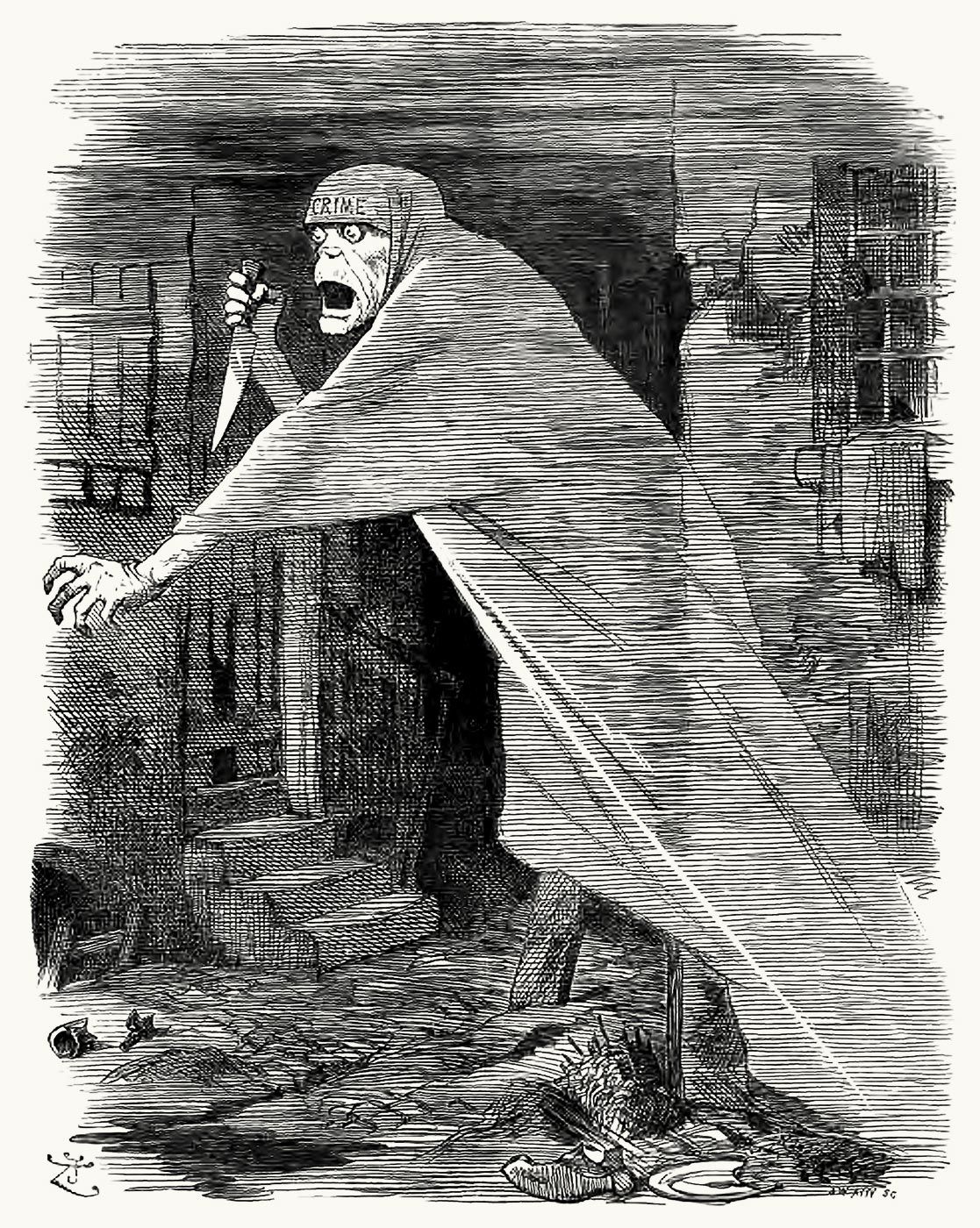
In the autumn of 1888, a killer stalked the fog-bound streets of Whitechapel, the poorest and most desperate quarter of the vast city of London, and in a few terrible weeks he committed a series of murders so brutal, so strange, and so utterly unsolved that his shadow has never lifted from the imagination of the world. He was never caught. He was never named. He was never even seen clearly. He struck in the darkness, in the narrow courts and alleys of the slums, and then he melted back into the teeming anonymity of the great city and was gone. The newspapers gave him a name, taken from a taunting letter that may or may not have been his own, and that name has echoed down the years ever since: Jack the Ripper. More than a century and a third later, despite the labors of countless investigators, historians, and obsessives, no one knows who he was, and the identity of the most infamous murderer in history remains a perfect and permanent blank.
Terror in the Autumn
The murders occurred in the East End of London, a district of appalling poverty, overcrowding, and misery, where tens of thousands of people lived crammed into filthy lodging houses and the streets teemed with the destitute. The victims were among the most vulnerable people in that vast sea of suffering — impoverished women, several of them driven to the streets to survive, who lived hand to mouth on the very edge of existence. Over the course of the autumn of 1888, a small number of these women were killed in a manner that horrified even a city hardened to violence and death. The killings were savage, and they escalated in ferocity, marked by a particular and disturbing signature that suggested the murderer possessed a chilling and deliberate purpose, and perhaps some grim familiarity with the human body.
The precise number of the killer's victims has been debated ever since; a core group of murders is generally attributed to the same hand, while others in the same period and place may or may not have belonged to him. But it was the concentrated horror of that autumn, the sense of a single monstrous figure preying upon the women of Whitechapel night after night, that gripped the city with a terror bordering on panic. As the darkness fell each evening, fear settled over the East End. Vigilance committees were formed. The police flooded the district. The whole of London, and soon much of the world, followed the unfolding horror through the sensational reports of the newspapers, which had entered an age of mass readership and seized upon the story with an appetite that fed the legend even as it spread the fear.
The Faceless Killer
What made the case so maddening, then and now, was the killer's utter facelessness. Despite the murders taking place in one of the most densely populated places on earth, despite the swarming police presence and the desperate vigilance of the terrified population, the murderer moved through the district unseen and unidentified. He struck in the deepest hours of the night, in places of shadow, and left behind almost nothing that could point to him — no reliable description, no witness who had truly seen him at his work, no clear trail leading back to a name. He seemed to possess an uncanny ability to appear, to kill, and to vanish, passing through the crowded slum like a ghost, present in his terrible effects and absent in his person.
Into this vacuum poured a flood of letters. During the height of the terror, the police and the press received numerous communications purporting to come from the killer himself, taunting the authorities, boasting of the crimes, and promising more. It was one of these letters, signed with the jaunty and horrible name "Jack the Ripper," that gave the murderer the title by which the world would forever know him. Another, sent to the head of a local vigilance committee and accompanied by a portion of human remains, was signed "From Hell." Whether any of these letters was genuinely written by the murderer, or whether they were all the inventions of hoaxers and sensation-seekers, has never been established. But they added to the case a voice — a mocking, theatrical, seemingly gleeful voice rising out of the darkness — and that voice, real or false, helped to transform an anonymous killer into a figure of almost mythic dread, a personality without a person, a name without a face.
The Endless Roll of Suspects
In the long aftermath, the search for the true identity of Jack the Ripper has never ceased, and it has produced one of the most crowded galleries of suspects in the history of crime. Investigators at the time had their own theories and their own favored candidates, and in the generations since, researchers, authors, and enthusiasts have proposed a vast and ever-growing cast of possible Rippers. The accused have ranged across the whole spectrum of Victorian society — humble local men of the district, immigrants and outcasts, tradesmen and laborers; and, at the other extreme, figures of wealth and standing, professional men, physicians, artists, and even, in the wildest theories, persons connected to the highest levels of society, swept up in fantastic conspiracies involving royalty, secret societies, and cover-ups reaching to the pinnacle of the state.
Each generation has produced its own confident solution, its own book or theory naming the "real" killer at last, drawing on old documents, new methods, or fresh interpretations of the surviving evidence. Some of these cases have been ingenious; a few have marshaled genuinely intriguing circumstantial arguments; and now and then a claim has been made that some modern technique had finally settled the matter. But none has ever won general acceptance, and every proposed solution has been contested and, in the end, left unproven. The evidence from that distant autumn is too fragmentary, too degraded by time, too tangled with rumor and sensationalism, to yield a certain answer. The parade of suspects continues, and the true Ripper remains exactly where he was in 1888 — hidden, unidentified, beyond the reach of justice and of knowledge alike. The most famous murderer who ever lived is, and may forever be, no one at all.
An Esoteric Reading
To the contemplative, the enduring and almost supernatural power of Jack the Ripper over the imagination arises precisely from his facelessness, and it is there that the deeper meaning of the phenomenon lies. A murderer who is caught, named, tried, and hanged becomes a man — pitiable, comprehensible, reduced to the sad and squalid dimensions of an actual human criminal. But a murderer who is never identified does not remain a man at all; he becomes a symbol, a mask without a wearer, a pure embodiment of the terror he inspired. Jack the Ripper is so potent a figure not despite the fact that we do not know him but because of it. He has become, in the mind of the world, less a person than a principle — the very image of evil that moves unseen among us, that strikes from the darkness and withdraws into it, that wears no face because it is not any single face but the shadow that the traditions say lies hidden beneath the ordinary surface of the world. The failure to name him has raised him out of history and into myth.
Consider the name itself, and the setting in which he moved. He was clothed by the age in imagery drawn straight from the deepest wells of the human dread of the demonic: the letter signed "From Hell," the figure of the phantom stalking the fog, the killer who comes in the night unseen. The Victorian imagination, and the popular imagination ever since, could not help but render him in the language of the infernal, and the mystic understands why. When a genuine and unexplained evil appears in the world — an evil that cannot be accounted for, cannot be caught, cannot be reduced to a known and manageable human cause — the soul reaches instinctively for the older category of the demonic, the sense of a darkness that is more than merely human. Jack the Ripper became, in the collective mind, a kind of visitation, a manifestation of the shadow-side of the great city itself, rising out of the poverty and misery and neglect of the slums like a spirit conjured from the suffering of the place. The famous cartoon of the age depicted him as a ghostly phantom of crime drifting through Whitechapel, and this was truer to the myth than any portrait of a man could have been.
And here the tradition offers its severe and searching reflection. The mystics have always taught that evil, when it goes unnamed and unconfronted, does not disappear but grows in power, taking on a life larger than any individual, feeding upon the darkness that surrounds it. The killer of Whitechapel emerged from a place of terrible neglect and human abandonment, from a quarter of the city that the comfortable world had chosen not to see, and the cartoon that named him "the nemesis of neglect" spoke a deeper truth than it knew: that the faceless horror was in some sense the offspring of a collective failure, the shadow cast by a whole society's refusal to look upon its own wretched and forgotten. The mystic reads in Jack the Ripper a parable of the unredeemed shadow — the evil that we do not face, do not name, do not integrate, and that therefore returns to haunt us as an autonomous and monstrous power, striking from the very darkness we have refused to illuminate. He was never caught because, in a sense, he was never truly a single man to be caught; he was the darkness of an age given a name and a knife. And the lesson the tradition would draw is that the phantoms which stalk us are born in the places we will not look, that the evil left unnamed becomes a legend that outlives every generation, and that the only true exorcism of such a shadow is the light we are willing to turn, at last, upon the neglected and abandoned depths — of the city, and of the soul — from which it rose.
Related Esoteric Inquiries:
- The Black Dahlia: The Murder That Haunted Los Angeles and Was Never Solved
- The Sodder Children: The Five Who Vanished in the Fire That Left No Bones
- D. B. Cooper: The Man Who Leapt Into the Storm and Disappeared Forever
Lux Esoterica.
2026.


Comments