Rongorongo: The Lost Writing of Easter Island That No Living Soul Can Read
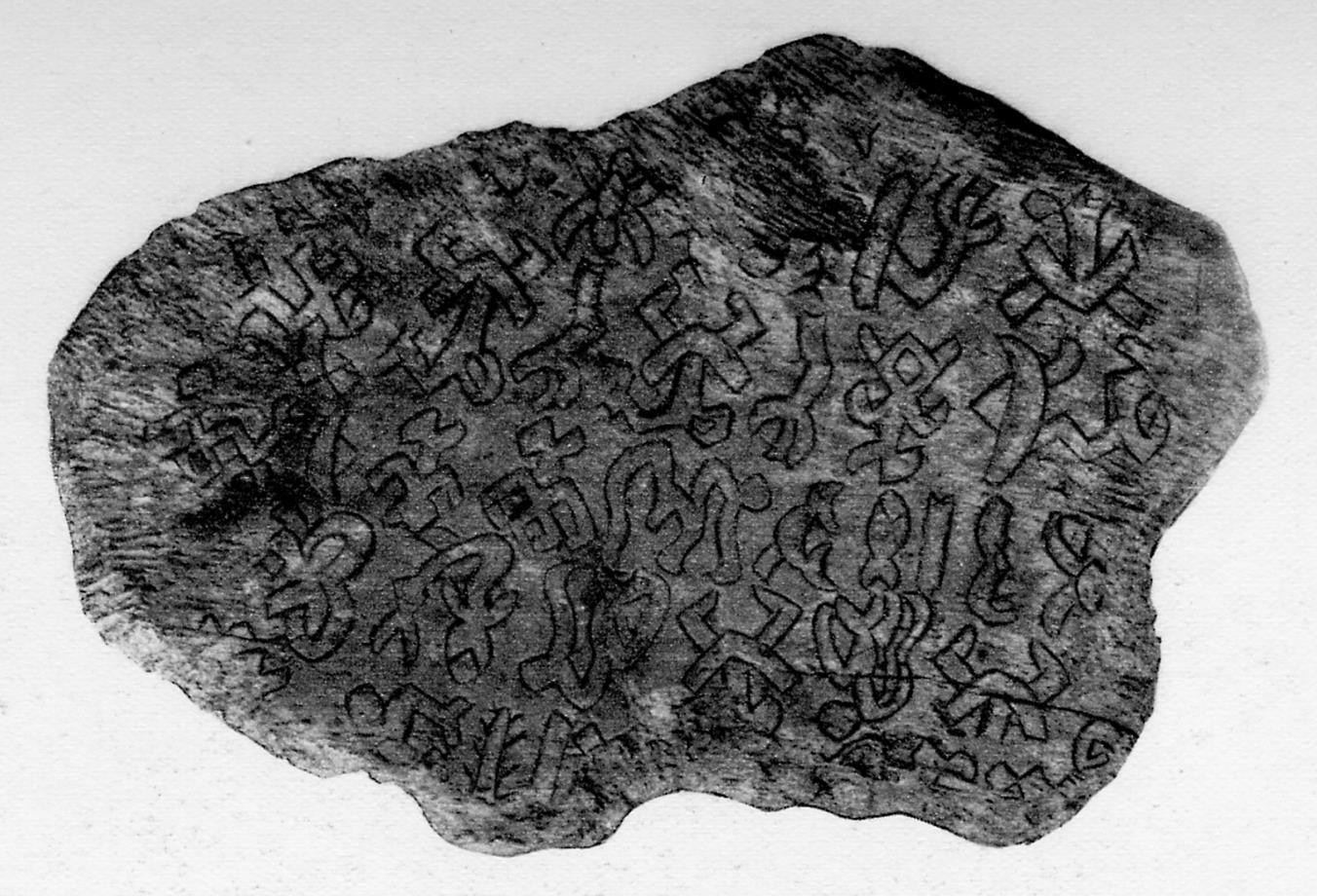
On the loneliest inhabited island on earth — a speck of volcanic rock in the vast emptiness of the South Pacific, thousands of miles from the nearest mainland — a people carved a system of writing so mysterious that no one alive can read a word of it. The island is Rapa Nui, which the outside world came to call Easter Island, famous for its great stone heads gazing out over the sea. But among its deepest riddles is a set of wooden tablets and objects covered in tiny, intricate glyphs: rows of birds, fish, plants, human and part-human figures, and abstract signs, carved with astonishing care into the hard wood. This script is called rongorongo, and it is one of the very few independently invented writing systems in the whole history of humankind. It is also, tragically, undeciphered. The knowledge of how to read it died with the people who made it, and despite more than a century and a half of effort, the tablets keep their meaning locked away, whispering in a voice no one can any longer understand.
Signs Carved in Wood
The rongorongo texts survive on only a small number of objects — a couple of dozen at most — scattered now among the museums of the world. They are carved for the most part on tablets of wood, some of it driftwood precious on a nearly treeless island, along with a chieftain's staff, a bird-shaped ornament, and other pieces. The glyphs themselves are small, often no more than a fraction of an inch high, and were incised with remarkable precision, some believe using shark teeth or sharpened stone. They are packed in long unbroken lines, and the writing runs in an unusual and telling pattern: to read it, one must start at the bottom left corner, follow the line to the end, and then turn the entire tablet upside down to read the next line back the other way, and so on, up the face of the tablet. This method, in which alternate lines are inverted, means the reader must physically rotate the object with each line — a rhythm of turning that itself suggests the reading was a deliberate, almost ceremonial act.
The signs number in the hundreds of distinct forms, combined and repeated in ways that clearly follow rules, clearly encode something. This is no mere decoration; it has the structure of a genuine script or proto-script, a system for recording language or knowledge in visible form. And that is what makes rongorongo so extraordinary. Writing has been invented from scratch only a handful of times in all of human history — in the ancient Near East, in China, in Mesoamerica, and perhaps here, on a tiny isolated island in the Pacific, by a people who may have devised it entirely on their own. If so, rongorongo represents one of the rarest achievements of the human mind: the independent birth of the written word.
The Silence That Fell
The tragedy of rongorongo is that we came to know of it just as the ability to understand it was being destroyed. When the first outsiders began to take notice of the inscribed tablets in the nineteenth century, the culture that had produced them was already collapsing under a series of catastrophes. Raids that carried off islanders into slavery, followed by epidemics of introduced disease, devastated the population of Rapa Nui, and the toll fell with particular cruelty on the learned and the powerful — the chiefs, priests, and trained men who were said to be the ones able to read the tablets. Within a generation the island's population was reduced to a fraction of what it had been, and with the death of the knowledgeable elders, the living knowledge of how to read the glyphs was extinguished.
By the time scholars and missionaries seriously sought to learn the meaning of the script, they found no one left who could reliably read it. There were islanders who could recite chants while holding the tablets, or who offered accounts of what a text was "about," but these performances often did not match the actual glyphs sign for sign, and different readers gave different renderings of the same tablet. The chain of transmission had been broken. Whatever the tablets had once recorded — genealogies of chiefs, hymns to the gods, calendars, myths of creation, lists of the dead, or knowledge we cannot even guess at — the last minds that held the key had been carried off or laid in the ground, and the meaning went with them into silence.
A Riddle Without a Rosetta
Ever since, the decipherment of rongorongo has defeated every scholar who has attempted it, and the obstacles are formidable. The greatest is the sheer scarcity of material: with only a couple of dozen surviving texts, and a total of a few thousand glyphs among them, there is simply not enough to work with. The decipherment of other lost scripts has usually depended either on a bilingual key — a text repeated in a known language, as with the famous stone that unlocked the writing of ancient Egypt — or on a very large body of inscriptions in which patterns can be traced. Rongorongo offers neither. There is no bilingual text, no key, and far too little writing to allow the internal patterns to be teased out with confidence.
There is not even agreement on the most basic question of what kind of writing it is. Some scholars believe rongorongo is a true script that records the Rapa Nui language sound by sound or word by word; others think it may be a proto-writing, a system of memory prompts that helped a trained reciter recall chants or genealogies he already knew by heart, without spelling out language in full. A few have doubted whether it encodes language at all in the ordinary sense. One partial breakthrough has been achieved: a section of one tablet was recognized as a kind of calendar, tied to the phases of the moon, and a handful of glyphs have been plausibly linked to particular meanings. But the overwhelming majority of the text remains opaque, and no proposed full decipherment has ever won general acceptance. The tablets sit in their museum cases, their little carved birds and figures marching in their turning lines, saying something urgent and complete and utterly beyond our reach.
An Esoteric Reading
To the student of the sacred traditions, rongorongo is a profound meditation on the nature of knowledge and its loss, and its first lesson concerns the fragility of the sacred word. Here was a people who had accomplished one of the highest acts of which the human spirit is capable — the capture of thought and speech in enduring signs, the binding of the invisible word into visible form. And yet the whole edifice of that knowledge rested upon a living chain of initiated minds, the trained readers who alone held the key, and when that chain was broken the writing did not die but became something worse than dead: it survived, perfectly preserved and completely mute, a body without a soul, a script whose every stroke is intact and whose meaning has utterly fled. The mystic sees in this the oldest warning of the wisdom traditions, that sacred knowledge is not truly kept in objects but in the living understanding passed from master to disciple, and that when the initiates perish and the transmission fails, the outward forms remain only to mock us with a meaning we can see but no longer share.
Consider the manner in which the tablets were read, for it is rich with symbolic force. To follow the text one must turn the tablet over at the end of each line, inverting it again and again, reading now one way and now the other, so that the act of reading is an act of continual reversal, a turning of the world upside down and right side up in an unending rhythm. The traditions have always taught that to approach the deepest truths one must learn to reverse the ordinary orientation of the mind, to turn what is above below and what is below above, to read reality against its common grain. The rongorongo reader, rotating the sacred board with every line, enacts in his hands the very discipline the mysteries demand of the soul: that understanding comes only to the one willing to turn, and turn again, to see from the inverted as well as the upright position, until the two directions weave together into a single continuous reading of the whole.
And there is the deepest resonance of all, in the muteness that has fallen over the signs. The mystic knows that the highest knowledge is described in every tradition as ineffable, as that which is written but cannot be read by the unprepared, sealed against the profane not by hiding it away but by removing the key that would make it speak. Rongorongo has become, through history's cruelty, a literal embodiment of that condition: a text in plain sight, complete and legible to the eye, and closed absolutely to the understanding — the sacred writing whose seal is not a lock upon a box but the death of the only minds that could bring it to life. In this the tablets hold up a mirror to the whole predicament of the seeker before the mysteries of existence, which stand always before us fully written, in the stars, in the living world, in the depths of the self, complete and articulate and everywhere visible, and yet unreadable to us because we have lost, or have not yet earned, the key. The little carved birds turn in their rows and say what they have always said, exactly and without error, and we stand before them as before the great enigma itself: certain that a meaning is there, whole and waiting, and unable, for all our longing, to read a single line. Perhaps the final teaching of rongorongo is that the recovery of such a meaning can never come by force or cleverness alone, but only by becoming once more the kind of soul to whom the sacred word consents to speak.
Related Esoteric Inquiries:
- The Legend of the Easter Island Moai: The Giant Stone Heads of Rapa Nui, the Platforms of Ahu, and the Mystery of the Walking Statues
- Pacific Sacred Art: Easter Island, Maori, and the Oceanic Imagination
- Nabta Playa: The Desert Star-Circle Older Than Stonehenge
Lux Esoterica.
2026.


Comments