The Alchemy of the Oracles of Delphi: The Ethylene Trance
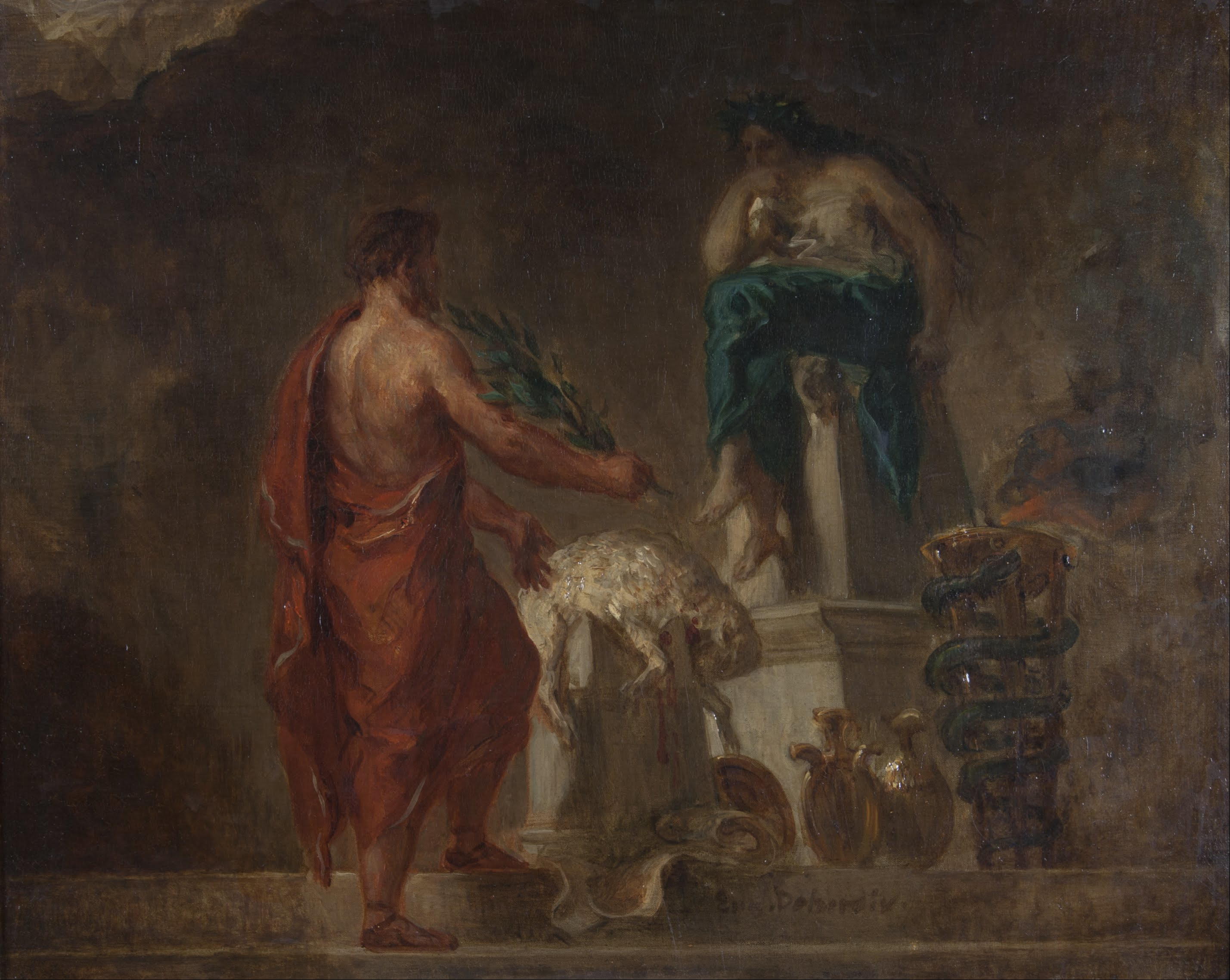
For more than a thousand years, people from all over the Greek world climbed the slopes of Mount Parnassus to consult the Oracle of Delphi. Kings, generals, cities and ordinary pilgrims came to ask the god Apollo about war, marriage, colonies and fate. The answers were spoken by a priestess called the Pythia, seated in the inner sanctuary of the temple.
Ancient writers described her entering a state of inspired trance before prophesying. In recent decades, scientists have proposed a striking explanation for that trance: gases rising from the earth beneath the temple. The idea remains debated, but it has added a fascinating chapter to the story of the most famous oracle of antiquity.
The Navel of the World
According to Greek myth, Zeus released two eagles from opposite ends of the earth, and they met at Delphi. The spot was marked by a sacred stone called the omphalos, the navel of the world. Before Apollo, the place was said to belong to an earth goddess and to a great serpent, the Python, which Apollo killed. From this serpent the priestess took her name.
The temple bore famous inscriptions, among them know thyself and nothing in excess. These sayings expressed the ethical wisdom associated with the god of light, music and order.
The Pythia
The Pythia was a local woman chosen to serve the god. On days of consultation, she purified herself in the Castalian spring, entered the innermost chamber of the temple, called the adyton, and sat on a tripod. There, according to ancient accounts, she was filled with the god's inspiration and spoke his answers.
The Greek writer Plutarch, who served as a priest at Delphi around the end of the first century, described a sweet-smelling vapor that sometimes filled the chamber. He suggested that this pneuma, or breath, played a role in her inspiration, though he also believed its strength had changed over time.
Famous Prophecies
Many oracles from Delphi became legendary. When King Croesus of Lydia asked whether he should attack the Persians, he was told that if he did, he would destroy a great empire. He attacked, and the empire he destroyed was his own. Before the Persian invasion of Greece, the Athenians were told to trust in wooden walls, which many interpreted as their fleet.
These answers were often ambiguous, open to more than one interpretation. Their ambiguity has fascinated readers for centuries.
The Geological Discovery
For a long time, many scholars doubted the ancient reports of vapors. Early excavations found no obvious chasm under the temple. Then, around the turn of the twenty-first century, a team that included the geologist Jelle de Boer and the archaeologist John Hale studied the site again.
They identified two geological faults crossing beneath the temple. In the bituminous limestone of the area, movement along these faults could release light gases into spring water. In samples from a nearby spring, they reported traces of gases including ethylene, a sweet-smelling substance that, in certain doses, was once used as an anesthetic and can produce mild euphoria and a dreamlike state.
Debate and Doubt
The ethylene hypothesis attracted wide attention, but it also faced criticism. Some researchers argued that the concentrations of gas found were far too low to produce a trance, and that other explanations, including ritual, expectation and religious devotion, could account for the Pythia's state.
Today, the question remains open. The geological faults are real, and ancient accounts of vapors exist, but whether gases truly shaped the oracle's prophecies has not been settled.
Trance and the Sacred
From a broader point of view, the story of Delphi touches a universal theme. Many cultures have used ways of altering consciousness in religious practice: chanting, fasting, dancing, drumming, breathing techniques and, in some cases, sacred plants. The Vedic hymns of India praise a drink called soma, and many traditions speak of states in which the ordinary sense of self falls away.
These practices were usually surrounded by careful ritual, preparation and community. They were not seen as mere intoxication, but as ways of opening to the divine.
The End of the Oracle
The oracle declined over the centuries, and by the late fourth century it had fallen silent, as the Roman Empire turned toward Christianity. A late tradition preserves a final, melancholy oracle declaring that Apollo no longer had a home and that the speaking spring was dry.
Closing
The Oracle of Delphi shaped Greek history and imagination for over a millennium. Its priestess, seated above the earth's hidden faults, spoke words that kings and cities obeyed. Whether her inspiration came from Apollo, from rising vapors, from deep devotion or from all of these together, her story continues to invite wonder. And the ancient words carved at Delphi, know thyself, remain an oracle for every seeker.
Related Esoteric Inquiries
- The Alchemy of the Spear of Destiny: The Holy Lance of Longinus
- The Alchemy of the Dead Sea Scrolls: The Essene Brotherhood
- The Alchemy of the Chintamani Stone: The Tibetan Wish-Fulfilling Jewel
Lux Esoterica.
2026.


Comments