The Ao Ao: The Devourer That Only One Tree Can Stop
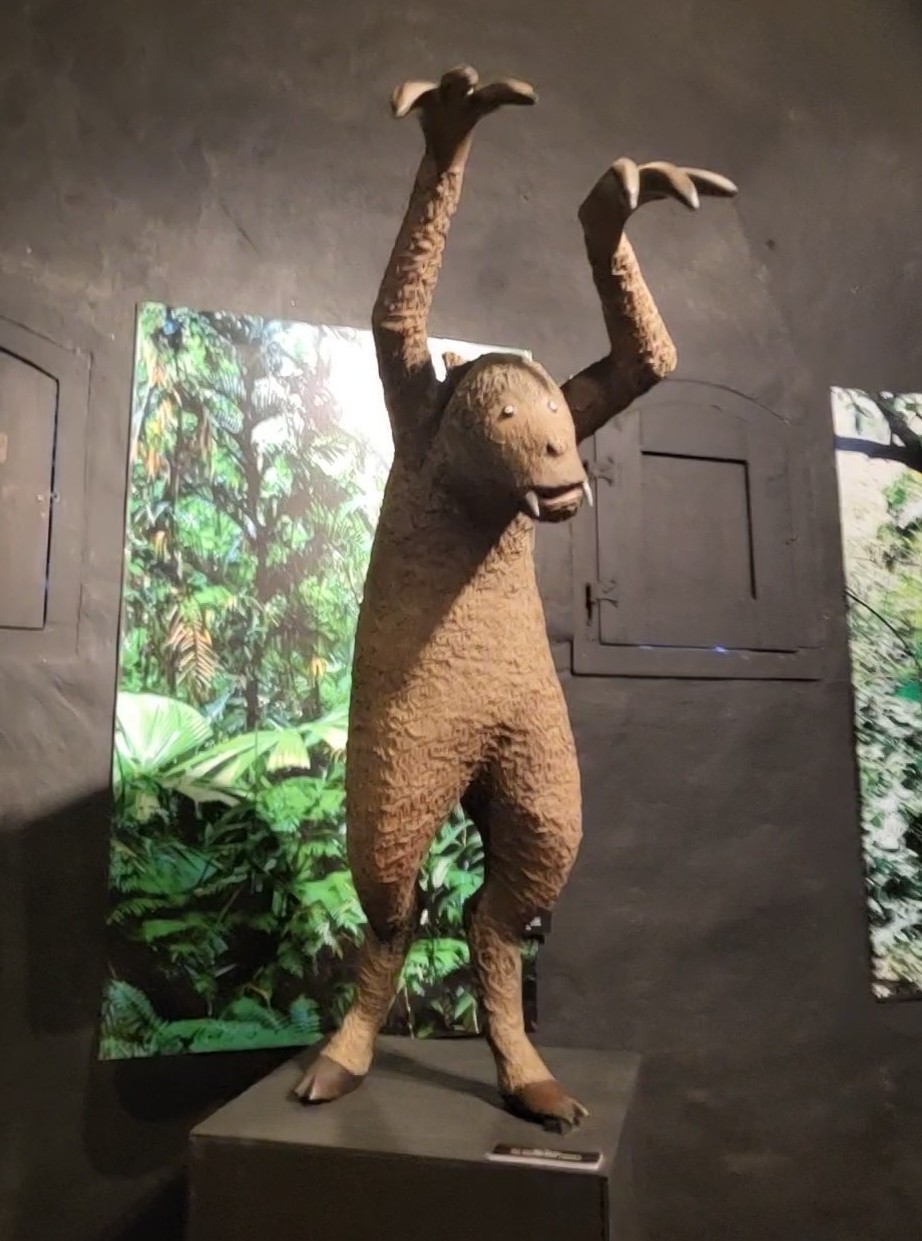
You hear it before you understand it, and you understand it too late: a cry coming through the Paraguayan hills, rhythmic, tireless, closer each time — ao... ao... ao... — the sound that gave the monster its name, because the Guaraní, who name things honestly, named this one after the only thing it ever says. The Ao Ao is coming. It does not matter, the old tellings insist, how much of a head start you have; the Ao Ao does not sprint and does not tire. It follows — through thorn-scrub and marsh, across rivers, up the stony cerros — for hours, for days, its cry keeping its own patient time behind you, until your legs are done. And when, in the extremity of terror, you climb — as everything hunted eventually climbs — the Ao Ao arrives at the foot of your tree, considers it briefly, and begins to dig. Around and around, with claws made for exactly this, it excavates the roots of your refuge until the tree groans and tips and delivers you down to the fangs. Every tree in the wide country falls to it. Every tree but one.
For the deepest law of this monster — the clause every Paraguayan child learns with the legend — is its single, absolute limit: the pindó palm. Reach a pindó — the tall, smooth-trunked palm of the region, the tree the old faith held sacred, blessed in the deep time by the divine — and climb it, and you are saved. Not safer: saved. The Ao Ao at the foot of a pindó loses all its power in a stroke; it cannot dig there, cannot gnaw, cannot wait you out. It circles, and howls its own name in frustration — ao! ao! — and then it turns and goes to find someone whose tree is ordinary. No telling anywhere in Paraguay records a person taken from a pindó. The whole vast terror of the legend funnels down to a single botanical question, asked at the worst moment of a life: do you know which tree is which?
The Fifth Brother
The Ao Ao is family — the most relentless member of the most cursed family in American myth. It is one of the seven monstrous sons of Tau and Kerana, the brood born under the great curse: brother to Teju Jagua, the gentle treasure-hoarding lizard of the caves, and to the golden Jasy Jateré, the eternal child of the siesta — and within that terrible fraternity the Ao Ao holds the office none of the others wanted: it is the appetite. The tellings describe a beast like an enormous sheep — woolly, heavy-shouldered, absurd almost, until one sees the boar's tusks and the digging claws — and some give it a moving flock of offspring identical to itself, so that the cry in the hills might be one pursuer or forty. Where its eldest brother guards and its golden brother plays, the Ao Ao consumes: it is the devourer of the family, the one whose whole mythological function is to chase and to eat, and the old Guaraní made it, fittingly, the special terror of the wilderness traveler — the embodiment of everything in the wild country that follows the lone walker and does not lose interest.
And yet even this brother is not mere horror. In layers of the tradition the Ao Ao is named a guardian — lord of the hills and cerros, protector of the wild high places against those who enter them wrongly — and its victims, in many tellings, are not the reverent traveler but the trespasser, the taker, the one who came to the hills for what was not his. The appetite, in other words, has a jurisdiction. Like its whole family, the Ao Ao is a curse with a job: the frontier of the wild, patrolled by hunger, passable by those who know the one sacred tree.
The tellings preserve, too, the sound-lore of the pursuit, which is its own small doctrine of dread. The cry is steady — that is what makes it unbearable. A hunting animal's voice rises with excitement, falls with lost scent; the Ao Ao's never varies, and the hunted learn to read distance in it the way sailors read fog-horns: the interval never shortens because the beast hurries, only because the ground between has quietly diminished. Some tellers add that in the last hour of a chase the cry stops — and that the silence is the true alarm, for it means the beast no longer needs to keep its own time. And the museum-keepers of Paraguayan myth note the black comedy the people themselves always saw in the creature: a devourer shaped like a sheep — the mildest silhouette in the pasture, wool over tusks — as though the tradition wished to teach, in passing, that the appetites which run us down seldom look like wolves at first sight. They look like something one could keep.
The Tree That Cannot Fall
Why the pindó? Here the legend opens into the oldest stratum of Guaraní belief. The pindó palm was no ordinary timber: it was the tree of blessing, the tree under which the culture's divine figures rested, the tree associated with the paradise-quest that runs through Guaraní religion — the long search for Yvy marã'e'ỹ, the Land Without Evil. Its fruit fed the people in famine; its fibers clothed them; its crown marked water. When the missionaries came, the palm slid easily into the new faith's processions — palms have credentials in that scripture too — and the pindó's immunity gathered both authorities into one trunk: the tree the old gods blessed and the new God borrowed. To the child running with the cry behind it, none of the theology mattered. What mattered was the rule, drilled by every grandmother: know the pindó. Know where they stand. Run toward the palm, not the thicket. Salvation, in Ao Ao country, was a matter of botanical literacy — of having learned, before the emergency, which of the world's ten thousand trees is the one with roots the devourer cannot touch.
An Esoteric Reading
Read with the inner eye, the Ao Ao is the truest portrait in the American mythologies of the pursuing appetite — the hunger that hunts us: compulsion, addiction, the devouring anxiety, the creditor-shaped dread that follows a life across every terrain at its own unhurried pace, announcing itself always — ao, ao — in the same monotonous voice, never sprinting, never resting, closing distance not by speed but by persistence, because it knows what every pursued soul learns: that the pursued get tired and the pursuit does not. And the legend's most clinical observation is what the monster does at the foot of the ordinary tree. The hunted soul climbs — into work, into a relationship, into a philosophy, into any refuge with branches — and the appetite below does not rage or leap. It digs. Quietly, methodically, it undermines: it excavates the roots of whatever we climbed, week by week, until the refuge that was going to save us tips over and delivers us down, wearier than before, to the same fangs. Everyone who has fled a compulsion into a series of collapsing shelters knows the sound of that patient digging under the floor of the newest one.
But the legend is not a tragedy; it is a map with one road on it. There exists a tree that cannot be undermined — exactly one — and its identity is the teaching. The pindó is the sacred tree: the refuge that is not merely tall but consecrated, rooted in something older and deeper than the emergency, blessed before the chase ever began. The appetite can excavate every shelter we improvise — because improvised shelters are rooted, like the appetite itself, in us, in our own exhaustible soil. It cannot touch the one refuge rooted elsewhere. Every tradition says this in its own tongue: the pursued soul is saved not by the strongest of its own constructions but by the one axis planted by something beyond it — the practice, the faith, the love with credentials older than the hunger. And the practical corollary is the grandmothers' drill, which is the whole spiritual method in one sentence: learn to recognize the pindó before you need it. In the calm years, walk your country and mark where the sacred trees stand; know their smooth trunks by touch and their crowns by starlight; because the day the cry starts behind you — and for every life there is such a day — there will be no time for botany. The runners who live, says Paraguay, are the ones who knew in advance where holiness grew. The Ao Ao circles the pindó, howls its one word, and goes; and high in the blessed crown, the saved catch their breath among the dates, and learn by heart, for their children, the shape of the leaves.
Lux Esoterica.
2026.


Comments