The Enigma of the Great Pyramid: The Piezoelectric Power Plant
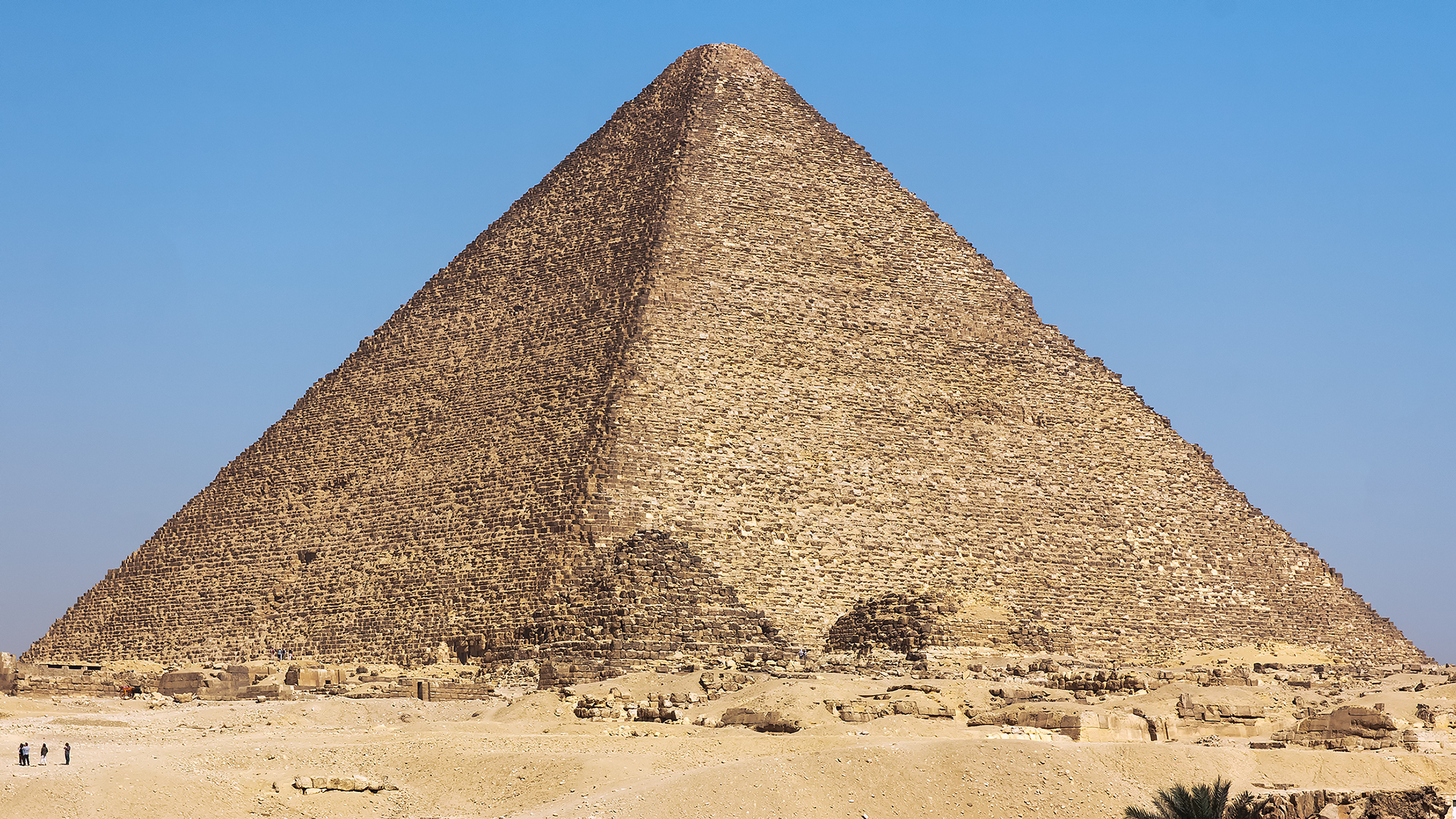
The Great Pyramid of Giza is one of the few wonders of the ancient world that still stands. It rises on the Giza plateau near Cairo, and it has fascinated travelers, writers and dreamers for thousands of years. Its perfect proportions, its huge stone blocks and its precise alignment to the cardinal directions make it a natural magnet for mystery.
Over time, many theories have grown around it, from secret chambers and lost knowledge to claims that it was a machine of some kind.
This post looks at the pyramid as a human monument and as a symbol. It also explains why some popular theories do not hold up when checked against the evidence. The mystery is real enough. It does not need invented machines to be remarkable.
A Tomb for a King
The main body of evidence says that the Great Pyramid was built as a royal tomb for the pharaoh Khufu, who ruled Egypt around 2560 BCE. Workers who built it lived in nearby settlements, and archaeologists have uncovered their bakeries, their tools and the cemeteries of the laborers.
The sarcophagus in the King's Chamber, made of granite, was empty when first explored. The king's body was never found, which is one reason some people believe the pyramid had another purpose. Still, the design, the chambers and the surrounding tombs point strongly toward a burial monument.
Ancient Egyptians placed great importance on the afterlife, and royal tombs were built to protect the body and the spirit of the ruler. The pyramid was one of the most ambitious expressions of that belief.
The Air Shafts and Their Purpose
The narrow shafts that run from the King's and Queen's Chambers toward the outer face of the pyramid are often called air shafts. Their exact function is still discussed by scholars. Many researchers think they helped ventilate the chambers, while others think they had a symbolic role, perhaps linked to the stars or to the passage of the king's spirit. Either way, there is no evidence that they carried chemicals, gases or energy.
The shafts are a good example of how a simple feature can invite many explanations. When the evidence is incomplete, people fill the gaps with imagination, and that imagination can be beautiful even when it is not correct.
The Power Plant Theory
In the late twentieth century, the engineer Christopher Dunn proposed that the Great Pyramid had been a kind of power plant, using vibrations and special materials to produce energy. Later writers developed the idea further, adding claims about quartz, acoustic resonance and chemical reactions. These claims are popular online, but they do not match what is known about the stones, the building methods or the chambers.
For example, the granite and limestone used in the pyramid are not known to produce electricity under ordinary pressure in the way the theory suggests. The Great Pyramid was built mainly from limestone, with granite used in certain chambers. Its casing was made of fine white limestone from Tura. The engineering proof for a working power plant has never been produced, and no experiment has shown the effect claimed.
The Workers Who Left Their Names
One of the most touching discoveries in the pyramid is not a secret machine but a message from the workers. In the relieving chambers above the King's Chamber, crews left painted marks and inscriptions with the names of work gangs.
Among them is a phrase often translated as "Friends of Khufu," which shows pride in the work and a link to the king. These marks reveal that the pyramid was built by people who were proud of their labor and who wanted their teams to be remembered.
This discovery shifts the focus. The mystery of the pyramid lies not only in lost technology, but also in the human effort that moved millions of stone blocks with ropes, ramps, sledges and organized teams.
The Pyramid as a Symbol
Even when we know the facts, the pyramid remains a powerful symbol. The triangle rising to a point suggests the movement of the spirit toward the light. The square base speaks of the earth, and the four sides face the cardinal directions. Many esoteric writers see in the pyramid a model of the soul's ascent, from the solid ground of the body to the peak of understanding.
This symbolic reading is valuable as long as it is clearly marked as a reading. The pyramid can inspire meditation on patience, effort and the human wish to outlast death.
Caution and Curiosity
Mystery is a gift when it leads to study, and a trap when it closes the door to evidence. The best way to enjoy the Great Pyramid is to learn about its builders, to visit the site with a respectful attitude and to read the work of archaeologists and Egyptologists. Their research is slower than a viral video, but it reveals a more human and more impressive story.
Closing
The Great Pyramid does not need a hidden power plant to be extraordinary. It is a monument built by thousands of people, organized by a state and designed to carry a king into eternity. Its precision, its scale and its message of devotion are enough to amaze us.
The true enigma is not what the pyramid secretly did, but how so many hands, guided by faith and skill, raised a mountain of stone that still speaks across four and a half thousand years.
Related Esoteric Inquiries
- The Enigma of the Great Pyramid: The Resonance Machine of Giza
- The Enigma of the Fuente Magna Bowl: Sumerian Cuneiform in the Andes
- The Secret of the Yonaguni Monument: The Submerged Pyramid of Japan
Lux Esoterica.
2026.


Comments