Papus, Master Mentors, and the Martinist Tradition
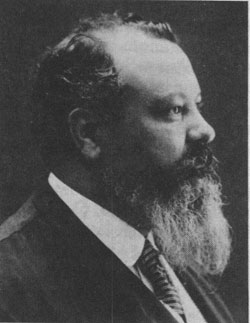
In late nineteenth-century Paris, a doctor with a sharp mind and a restless curiosity became one of the most active organizers of the French occult revival. His name was Gérard Encausse, but the world knew him as Papus. He wrote dozens of books on the tarot, astrology, Kabbalah and the esoteric sciences, edited journals and helped gather students in study groups.
He was a physician who also studied hypnosis and magnetism, and he tried to build a bridge between the medicine of his time and the older traditions of spiritual knowledge.
His life is a window into a period when science, religion and occult ideas often met in the same salons and the same journals. Understanding him helps explain how the modern esoteric movement took shape in Europe.
Two Mentors
Papus's path was shaped by two men. The first was Henry Delaage, a writer and magnetist who introduced the young doctor to the teachings of Louis-Claude de Saint-Martin, the French mystic often called the Unknown Philosopher. Shortly before his death in 1882, Delaage passed on a spiritual lineage to Papus, linked to the Martinist tradition.
The second was Nizier Anthelme Philippe, known as Maître Philippe of Lyon, a healer and spiritual teacher who lived from 1849 to 1905. Many people visited him for help with illness and for guidance. According to the accounts of his students, he taught that true spiritual power comes from humility, active charity and openness to grace, rather than from clever theories or elaborate ceremonies. This lesson had a lasting effect on Papus, who came to value simple moral life alongside study.
The Martinist Order
Papus founded the Ordre Martiniste in 1891, drawing on the initiatory line he had received, which passed through Delaage and Augustin Chaboseau. The order was presented as an open path of inner illumination, sometimes called the Way of the Heart. It emphasized personal reflection, prayer and moral growth more than complicated rituals. Its members were encouraged to seek a more compassionate and conscious life.
The Martinist movement later spread to other countries and divided into several branches. Today, many groups under the name trace their history to this period, though their practices and claims vary widely. Readers should look carefully at any group's history before accepting its claims.
The Tarot of the Bohemians
In 1889, Papus published The Tarot of the Bohemians, a book that presented the tarot as a structured key to esoteric knowledge. He linked the twenty-two cards of the Major Arcana to the letters of the Hebrew alphabet, to the sephiroth of the Kabbalistic Tree of Life and to astrological symbols.
His system was highly influential. Many later tarot writers, artists and occultists were shaped by his way of arranging the cards.
It is worth noticing that these correspondences were a systematic interpretation developed in his time. They built on older ideas but were organized in a new way. Modern readers can appreciate the vision while keeping in mind that the historical origins of the tarot as a card game are different from its later esoteric uses.
Journals and Study Groups
Papus was also a tireless organizer. He founded and edited journals such as L'Initiation, which sought to present esoteric studies to a wider public. He was involved in other publications, including Le Voile d'Isis, and he helped create the Groupe Indépendant d'Études Ésotériques, a study group that brought together people from many backgrounds. His meetings and writings helped turn scattered interests into a more visible movement.
This work of gathering and teaching is one of his lasting contributions. Many seekers in later decades first encountered the esoteric traditions through the books and circles he helped build.
War and Final Years
During the First World War, Papus served as a military doctor. He worked with wounded soldiers and was exposed to illness in difficult conditions. He died in 1916, and accounts suggest that tuberculosis contributed to his death. His loss was felt by his followers, and his legacy continued in the groups and books that bore his influence.
His final years show the seriousness of his commitment. He did not only write about healing and service; he practiced medicine at a time of great suffering.
Lessons from His Life
Papus's life offers several lessons for the modern seeker. He showed that study and practice can work together, and that a serious seeker needs both books and a living teacher. He also showed the danger of forgetting the moral side of the path. His mentor's emphasis on humility and charity reminds us that spiritual knowledge should make us more compassionate, not more proud.
Readers can also see the limits of his time. Many ideas he presented about history, science and ancient knowledge are not supported by modern research. Honoring his contribution means reading him critically and with historical awareness.
Closing
Papus stands at the crossroads of medicine, mysticism and the printed page. He gathered students, organized groups, wrote widely about the tarot and Kabbalah and tried to present the esoteric path as a serious discipline. His story reminds us that the modern esoteric movement grew from people who combined curiosity, learning and a desire to serve.
Whether we follow his systems or simply study his life, he offers a portrait of a seeker who believed that knowledge should be lived.
Related Esoteric Inquiries
- Warning! Its Not The End.. Master Sri Akarshana's Predictions for 2020 2...
- The Transylvanian Prince? Unraveling the Origins of Europe's Greatest Mystery
- The Death Of An Immortal: The Final Days Of Saint Germain In Germany
Lux Esoterica.
2026.


Comments