Sylphs: The Air Elementals, Dancers of Wind and Divine Inspiration
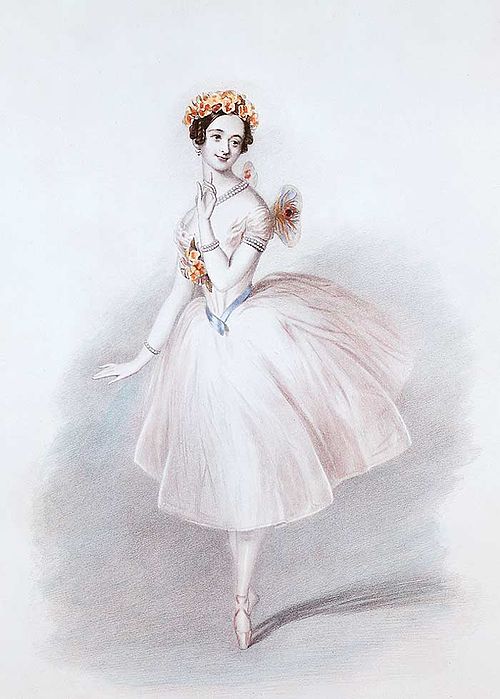
Marie Taglioni in La Sylphide (1832) — the Romantic ballet that crystallized the sylph's image as a luminous, ethereal being of flight, longing, and impossible beauty.
They move in the breath of wind through autumn leaves. They ride the currents of inspiration that carry the poet's hand across the page. They spiral in updrafts above mountain peaks where the air grows thin and thought expands beyond its ordinary limits. Sylphs — the air elementals of the Western esoteric tradition — are among the most beautiful and elusive of all the spirit beings catalogued by Renaissance and alchemical thought, invisible companions to every gust of wind, every creative impulse, every moment when the mind rises above the weight of earth.
Their story moves through alchemy and Rosicrucianism, appears in one of the finest comic poems in the English language, and reaches its most vivid popular expression in the Romantic ballet. But beneath these cultural forms lies a consistent and coherent esoteric teaching: that the air element is alive, that thought itself has spiritual substance, and that the invisible medium through which birds fly and prayers ascend is inhabited by beings as real and purposeful as any creature of the visible world.
Paracelsus and the Elemental Spirits of Air
The systematic classification of sylphs as air elementals comes from Paracelsus (1493–1541), the Swiss-German physician and alchemist whose Philosophia Magna and related treatises described four classes of elemental spirits corresponding to the four classical elements. Each class was perfectly adapted to its medium, moving through it as naturally as fish move through water:
- Gnomes inhabit the earth
- Undines inhabit water
- Sylvestres or Sylphs inhabit air
- Salamanders inhabit fire
Paracelsus called the air elementals Sylvestres (from Latin silva, forest) or sometimes Sylphs — a name whose etymology remains debated. Some trace it to Greek silphe, a kind of beetle or insect, possibly connected to the lightness and quick movement of these beings. Others see it as an invention of Paracelsus himself, a new Latin coinage for a new conceptual category.
What was distinctive about sylphs in Paracelsus's system was their association with intellect and inspiration. Air, in the ancient elemental hierarchy, was traditionally linked to the mind — to quick thought, communication, and the movement of ideas. The sylphs, as spirits of air, were thus beings of pure thought-energy, moving at the speed of wind, carrying messages and inspirations, intermediate between the physical and the purely spiritual. They were closer to angels in their refinement than the heavy, earthy gnomes, but still creatures of nature rather than purely divine beings.
Paracelsus described them as living for around 300 years and reproducing similarly to humans, though in a form invisible to ordinary sight. They were said to be naturally drawn to human beings of refined intellect — philosophers, poets, and those engaged in the pursuit of wisdom. Where gnomes guarded hidden treasure in the earth, sylphs guarded the invisible treasure of thought itself.
Sylphs in the Rosicrucian Tradition
The Rosicrucian movement of the early 17th century, with its fusion of alchemy, mystical Christianity, and natural philosophy, inherited and elaborated Paracelsus's elemental doctrine. The Rosicrucian texts — particularly the Fama Fraternitatis (1614) and Confessio Fraternitatis (1615) — described the fraternity as having mastered the elemental spirits, able to command gnomes, undines, sylphs, and salamanders in service of their alchemical and spiritual work.

An illustration for The Rape of the Lock — sylphs hover above Belinda, the poem's heroine, as her invisible guardians and spiritual companions.
In Rosicrucian cosmology, the elemental spirits were understood as aspects of the World Soul — Anima Mundi — the living intelligence that permeated and animated all of nature. To work with sylphs was to work with the air aspect of this universal soul, tapping into the currents of thought and inspiration that moved through the atmosphere of the planet as surely as weather moves through the physical air.
This tradition held that the breath itself was a vehicle for sylph contact. Conscious, slow, deep breathing was not merely a physiological act but a spiritual one — a way of drawing the intelligence of the air into oneself, of making contact with the elemental beings who inhabited that medium. The practice of breath awareness in meditation, seen through this lens, becomes a way of communing with the air elementals.
Alexander Pope and The Rape of the Lock
The most famous literary appearance of sylphs in the English language comes from an unexpected source: Alexander Pope's mock-heroic poem The Rape of the Lock (1712, expanded 1714), a comic masterpiece that satirizes the trivialities of aristocratic society by treating them with the gravity of Homeric epic.

Alexander Pope by Michael Dahl — the poet who gave sylphs their most famous literary role, as guardians of a fashionable lady's beauty and honor.
Pope's innovation was inspired by a letter from John Arbuthnot suggesting he use the Rosicrucian doctrine of elemental spirits as the supernatural machinery of his poem, in place of Homer's Olympian gods. Pope seized on the idea brilliantly. In the poem, the heroine Belinda is attended by a vast retinue of sylphs who form her invisible honor guard. Their leader, Ariel, reveals the elemental cosmology to Belinda in a dream:
"Know, then, unnumbered Spirits round thee fly,
The light Militia of the lower Sky:
These, though unseen, are ever on the Wing,
Hang o'er the Box, and hover round the Ring.
Think what an equipage thou hast in Air,
And view with scorn two Pages and a Chair."
Pope's sylphs are the souls of coquettes — vain women who, having spent their lives in flirtation and social performance, ascend after death into the air element that suits their lightness. They are drawn back to attend upon women like themselves, protecting them from anything that might tarnish their beauty or reputation. It is a satirical vision, but Pope treats his sylphs with genuine affection — they are charming, earnest, and ultimately powerless when Belinda's destiny asserts itself.
The poem made sylphs famous in European culture. For generations afterward, the word sylph carried associations of feminine delicacy, ethereal beauty, and the kind of grace that seems hardly to belong to the physical world. A sylph-like figure became a compliment meaning someone of exceptional lightness and elegance — a usage that persists today.
Sylphs, Greek Wind Spirits, and the Classical Tradition
Pope's sylphs draw on the Rosicrucian tradition, but they also echo a much older framework: the Greek tradition of wind spirits. The Anemoi were the four wind gods of Greek mythology — Boreas (north), Zephyrus (west), Notus (south), and Eurus (east) — divine beings who embodied the different characters of the winds.

Hyacinthus and Zephyrus — the gentle west wind god of Greek myth, whose breath carries warmth, spring, and the seeds of new life. The sylph is his descendant in the Western esoteric imagination.
Zephyrus, the west wind, was particularly associated with gentle inspiration, spring breezes, and the breath that scatters seeds and carries flowers. His breath was said to fertilize the earth — not physically but spiritually, carrying the animating force of renewal. In the famous myth, it was Zephyrus's jealous breath that redirected the discus thrown by Apollo, killing the beautiful youth Hyacinthus — a story about the dangerous power of wind and desire, of forces that move through the air beyond our control.
The sylph is Zephyrus's descendant in the esoteric imagination: a being of the air who carries creative force, who touches human life with inspiration and beauty, but who also moves by its own will and cannot be held.
Sylphs in Romantic Ballet and the Artistic Imagination
The word sylph found its most enduring popular expression in Romantic ballet. La Sylphide (1832), choreographed by Filippo Taglioni for his daughter Marie Taglioni, told the story of a Scottish farmer who falls in love with a sylph — an air spirit who cannot be possessed, who belongs to the invisible world, and who dies when a mortal attempts to bind her to the earth with a magic scarf.
The ballet crystallized the Romantic image of the sylph: ethereally beautiful, weightless, belonging to a world just beyond human reach. Marie Taglioni's dancing seemed to defy gravity; she was the first ballerina to dance en pointe in a full-length ballet, her body appearing to float above the stage. The sylph, in her embodiment, became a figure for all that the Romantics most desired and could not possess — the ideal, the infinite, the spirit that the material world cannot contain.
This image of the sylph resonated deeply because it expressed something real in human experience: the feeling that inspiration arrives from elsewhere, that the creative impulse comes from outside the self, that the most alive moments of thought and beauty seem to descend from some other dimension of being. The sylph was the Romantic name for the Muse.
Sylphs in Theosophical and Modern Thought
The Theosophical tradition, following Paracelsus and the Rosicrucians, described sylphs as etheric air beings visible to clairvoyant perception. Geoffrey Hodson described them as swift, shimmering forms of light-energy — sometimes appearing as delicate, winged humanoid shapes, sometimes as pure currents of luminous air-force. They were among the most active of the elementals, constantly in motion, never still, their consciousness flickering and rapid.
Rudolf Steiner gave them a specific cosmic function: sylphs, he said, were responsible for carrying cosmic light into the atmosphere, mediating between the upper spiritual world and the breathing life of the planet. They worked with the element of warmth, with the process of photosynthesis, and with the growth of plants insofar as it depended on light and air. Without sylphs, Steiner suggested, there would be no communication between the cosmic and the earthly, no way for the intelligence of the stars to reach the soil.
Working with Sylph Energy
In contemporary elemental practice, invoking sylph energy means working with the qualities of the air element: clarity of thought, communication, creative inspiration, swift movement, and the freedom of mind unbound by fixed positions.
Practices associated with sylphs include:
- Breathwork — conscious breathing as a way of drawing air-elemental energy into the body and mind
- Writing and creative work — calling on sylph energy as the Muse, the inspiration that arrives from beyond the rational mind
- Study and intellectual inquiry — the sylph governs all matters of the mind: learning, communication, the swift movement between ideas
- Wind meditation — sitting in a breeze with eyes closed and attending to the movement of air as a living, intelligent presence
- Feathers and incense — traditional elemental symbols of air used on altars and in ritual
The traditional elemental direction for air is East — the direction of sunrise, of new beginnings, of the breath that initiates the day. East-facing sacred spaces and dawn practices are natural sylph territory.
The Teaching of the Sylph
The sylph's deepest teaching is one of non-attachment and the freedom of the creative spirit. Air cannot be grasped; wind cannot be owned. The Romantic ballets understood this instinctively: the mortal who tries to possess the sylph destroys her. The inspiration that arrives on the breath of wind must be received freely, not clutched.
This applies to creative work, to spiritual experience, and to love itself. The most alive things — the flash of genuine insight, the moment of true contact with another being, the touch of the numinous — arrive like wind: unexpectedly, briefly, and on their own terms. The practice the sylph teaches is not how to capture the wind but how to become porous enough to let it move through you.
In the end, the sylph is a teacher of receptivity. Not passive receptivity — the sylph is the most active of elementals — but the dynamic openness that makes genuine inspiration possible: the cleared mind, the unclenched hand, the breath let fully out before the next one arrives.
— Lux Esoterica
Related Esoteric Inquiries:
- Undines: The Water Elementals, Keepers of Feeling and the Deep Soul
- Gnomes: The Earth Elementals, Guardians of Hidden Treasure
- Salamanders: The Fire Elementals, Keepers of the Sacred Flame
Lux Esoterica.
2026.


Comments