The Book of the Dead: Egyptian Papyri of the Soul's Journey
The ancient Egyptian text known today as the Book of the Dead (its Egyptian name was Reu nu pert em hru — "The Book of Coming Forth by Day") was not a book in the modern sense. It was a collection of magical spells, prayers, and illustrated guides, compiled over more than a millennium (from approximately 1550 to 50 BCE), copied on papyrus scrolls and placed in the tomb with the deceased, intended to guide the soul through the dangers of the Duat (the underworld) to the Hall of Two Truths, where the heart would be weighed against the feather of Ma'at. The illustrated papyri that survive — particularly the Papyrus of Ani, now in the British Museum — represent some of the most sophisticated and most beautiful religious art ever produced: images of the soul's journey through death, annotated with the precise words that needed to be spoken at each gate, to each guardian, before each divine council. They are practical manuals for what ancient Egyptians believed was the most important journey a human being would ever take.

The Weighing of the Heart, Papyrus of Hunefer (c. 1275 BCE) — the central image of the Book of the Dead; Anubis leads the deceased to the scales where his heart is weighed against the feather of Ma'at; Thoth records the result; the hybrid beast Ammit waits to devour a heart found too heavy with wrongdoing

The Declaration of Innocence, Papyrus of Ani (c. 1250 BCE) — Spell 125, the 'Negative Confession,' in which the deceased addresses 42 divine assessors, declaring innocence of 42 specific sins; 'I have not stolen. I have not killed. I have not told lies. I have not destroyed the offerings of the gods.' The ethics of the heart made visible

The Judgment of the Dead in the Presence of Osiris — the god of the dead enthroned on his white throne, attended by the forty-two divine assessors of the Hall of Two Truths; the deceased stands before the full council of the divine, in the most consequential moment of the Egyptian afterlife narrative

Pyramid Texts, Pyramid of Teti, Saqqara (c. 2345 BCE) — the oldest surviving religious texts in the world, forerunners of the Coffin Texts and the Book of the Dead; carved on the internal walls of the pyramid, they were never meant to be seen by human eyes — they functioned as a permanent magical program activating the royal afterlife

Book of the Dead Spell 17 — one of the oldest and most important spells, describing the sun god Ra sailing through the underworld in his barque; each spell addresses a specific challenge the deceased will face: a guardian to pass, a gate to open, a test to survive; the Book is a complete manual for the journey

Book of the Dead, Spells 79-80 — the spells of transformation, in which the deceased takes the form of specific sacred animals (the falcon, the lotus, the swallow, the serpent) to navigate different zones of the underworld; the soul's journey required shape-shifting, not merely passage

Book of the Dead, Spells 144-145 — the gates of the underworld; the deceased must know the names of the 21 gates and their guardians, and speak each name correctly to pass; the spells function as passwords, and the knowledge they encode was considered so essential that it was placed in the tomb rather than preserved among the living
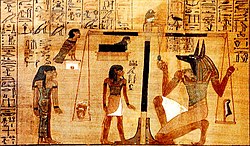
The Weighing of the Heart — detail from a Book of the Dead papyrus showing the ibis-headed Thoth recording the verdict; Thoth, the god of writing and wisdom, ensures the impartiality of the cosmic record; in Egyptian theology, the written word (hieroglyph) and divine reality were the same thing
The complete Hall of Two Truths scene, Papyrus of Hunefer — reading the full sequence left to right: Anubis leads Hunefer in, Anubis weighs the heart, Thoth records, the soul is declared pure, Horus presents the justified dead to Osiris enthroned; the entire theology of Egyptian ethics and afterlife compressed into a single horizontal register


Comentarios