The Sky-Walkers of the Pampa: Decoding the Nazca Geoglyphs
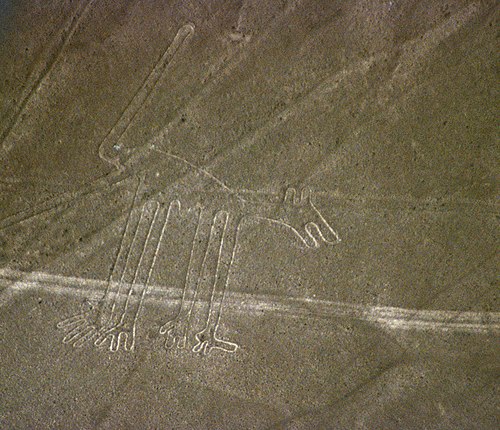
A celestial geoglyph etched into the arid pampa of Peru, representing the intersection of earth and spirit.
In the arid, wind-swept pampas of southern Peru, the earth itself serves as a colossal parchment for one of humanity’s most enigmatic spiritual legacies. The Nazca Lines—gigantic geoglyphs etched into the dark, iron-rich desert floor—have long confounded archaeologists and astronomers alike. Yet, to view them through a purely materialistic lens is to miss the profound esoteric current that flows beneath the Jumana Pampa. These are not merely drawings; they are a sophisticated form of "land-liturgy," a series of sacred pathways designed for the Sky-Walkers, those initiates who sought to synchronize the rhythms of the Andean soil with the celestial motions of the cosmos.
The Pampa as a Celestial Mirror
The primary mystery of Nazca lies in its perspective. These glyphs, some stretching over several hundred feet, are only fully discernible from a significant altitude. This has led to countless speculative theories, but from a mystical standpoint, the answer is more grounded in Andean theology. The Nazca people did not create these lines for human eyes; they were intended for the Apu—the mountain spirits—and the celestial deities who looked down from the Milky Way, known in the Andes as the Mayu, or the Great River of the Sky.
The Nazca geoglyphs represent a massive attempt at as above, so below. By carving the shapes of the Hummingbird, the Monkey, and the Spider into the earth, the Nazca were anchoring the power of these totemic beings into their territory. Each figure was more than a representation; it was a "node" in a vast energy grid. When the sun aligned with certain trapezoidal clearings during the solstices, the desert was believed to "activate," becoming a temporary bridge between the mundane world and the Hanan Pacha, the upper world of the gods.
The Ritual Labyrinths: Walking the Spirit Line
Recent esoteric research suggests that the lines were never meant to be seen so much as walked. Unlike the straight "ley lines" found in other cultures, many of the Nazca glyphs are composed of a single, continuous line that never intersects itself. This indicates they were used as ritual labyrinths. To walk the line of the Spider or the Condor was to participate in a "kinetic prayer," a meditative movement that required intense focus and physical endurance in the punishing desert heat.
As the initiate navigated the twists and turns of the geoglyph, they were essentially tracing a sacred geometry that resonated with their own internal energy centers. This "sacred walking" was a method of trance induction, allowing the practitioner to shed their ego and merge with the spirit of the animal they were tracing. The silence of the pampa, combined with the rhythmic motion of the walk, created a sensory deprivation environment where the boundary between the self and the landscape dissolved. The walker became the line, and the line became the pathway to the divine.
The Memory of Water: A Subterranean Spirituality
One of the most critical aspects of the Nazca worldview was their relationship with water. In an environment that receives less than an inch of rain per year, water was the ultimate spiritual currency. The Nazca were master engineers, creating the Puquios—a system of spiral-shaped subterranean aqueducts that still function today. These Puquios are more than just functional infrastructure; they are an extension of the geoglyph system.
Esoterically, the Nazca believed that water possessed "memory"—it was the blood of the earth, carrying the prayers of the ancestors from the high Andes down to the parched coast. Many of the straight lines on the pampa have been found to align with the paths of underground aquifers. By placing ritual centers and geoglyphs at the intersections of these hidden water paths, the Nazca were essentially "acupuncture-ing" the earth, ensuring the continued flow of both physical and spiritual vitality. The spiral form of the Puquios mirrored the spiral glyphs on the pampa, symbolizing the eternal cycle of life, death, and return.
The Geometry of the Soul
The trapezoids and triangles that dominate the Nazca landscape are perhaps the most misunderstood elements of the site. Far from being "landing strips," these are sacred clearings designed for mass ritual gatherings. They were spaces where the community could assemble to perform dances and offerings that mirrored the movement of the stars. The precise geometry of these clearings indicates a deep understanding of harmonic proportions, similar to the principles used in the construction of Gothic cathedrals or Egyptian temples.
These geometric shapes were intended to act as "resonance chambers." When large groups of people gathered on these trapezoids to chant and play flutes, the shape of the clearing would amplify the collective vibration, sending a powerful energetic signal into the atmosphere. This was a form of communal alchemy, where the disparate energies of the people were unified into a single, coherent force directed toward the heavens. The Nazca were not just observers of the cosmos; they were active participants in its maintenance.
The Shamanic Flight: Beyond the Physical Veil
The Nazca culture was deeply rooted in shamanic practice, often facilitated by the use of sacred plants such as the San Pedro cactus. This context provides the most likely explanation for the high-altitude perspective of the geoglyphs. The "Sky-Walkers" were those who could achieve the state of "spirit flight," where their consciousness ascended above the physical body, allowing them to view the desert from the heavens.
The lines served as anchors for these astral journeys. Just as a navigator uses stars to find their way at sea, the Nazca shamans used the geoglyphs to navigate the complex topography of the spirit world. The lines were not just on the ground; they were reflections of the celestial currents that the shaman had to navigate to reach the presence of the gods. In this sense, the pampa was a colossal launching pad for the soul, a place where the gravity of the mundane world could be momentarily overcome.
Ceramic Resonance: The Microcosm of the Pot
While the geoglyphs are the most famous expression of Nazca spirituality, their ceramic art offers an equally profound glimpse into their esoteric system. Nazca pottery is renowned for its vibrant polychrome designs, which often mirror the motifs found on the pampa. However, these vessels were more than just containers; they were ritual objects designed to hold the "essence" of sacred substances.
The Nazca potters used a complex slip-painting technique that required multiple firings. Each layer of color was associated with a specific spiritual frequency. A vessel decorated with the image of a shamanic priest or a mythical feline was believed to be "alive." When used in ceremonies, these pots acted as conduits for the specific energy they represented. The act of drinking from a vessel adorned with the Hummingbird, for instance, was a way for the participant to ingest the light-energy associated with that celestial messenger. This was a form of internal alchemy, complementing the external alchemy of the geoglyphs.
The Convergence of Generations: A Timeless Legacy
The construction of the Nazca Lines was not a single event, but a continuous process that spanned over five hundred years. This indicates a remarkable level of cultural and spiritual continuity. Each generation of Nazca people added to the "script" of the pampa, refining the geometric patterns and maintaining the sacred pathways. This was a form of ancestral conversation, where the living collaborated with the spirits of the past to ensure the future of the community.
This long-term commitment to a single spiritual project is almost inconceivable in our modern, fast-paced society. It suggests a culture that lived in "deep time," where the success of the group was measured not by immediate results, but by its alignment with the eternal cycles of the cosmos. The Nazca understood that they were part of something much larger than themselves, and their work on the pampa was their contribution to the ongoing symphony of the universe.
The Legacy of the Jumana Pampa
To stand at the edge of the desert is to stand at the edge of the known world. The lines do not offer easy answers; they offer an invitation to wonder. They remind us that the most significant truths are often written in the most ephemeral of places—in the sand, in the wind, and in the quiet movements of the soul. The Nazca legacy is a call to reconnect with the earth as a sacred partner, to find the geometry in our own spirits, and to walk our paths with the intentionality of those who know the gods are watching.
The silence of the Jumana Pampa is not an empty silence, but a pregnant one. It is filled with the resonance of a thousand years of ritual, the memory of water, and the enduring power of the symbol. As the sun sets over the Andes, casting long shadows across the geoglyphs, the lines seem to shimmer with a light of their own. They are the footprints of a culture that refused to be bound by the horizon, a people who saw the entire world as a temple of the sun and the stars. They remind us that even in the most desolate of environments, the human spirit can find a way to map the infinite.
The desert is not a wasteland; it is a mirror. What we see in the lines of Nazca is ultimately a reflection of our own capacity to reach for the infinite and to etch our aspirations into the very skin of the earth.
— Lux Esoterica*
Related Esoteric Inquiries:
- The Nazca Lines: Sacred Geoglyphs Drawn for the Gods
- The Mystery of the Nazca Lines in the Peruvian Desert
- The Alchemy of the Sajama Lines: The Bolivian Nazca
Lux Esoterica.
2026.


Comments