Hercules' Seventh Labor: The Cretan Bull
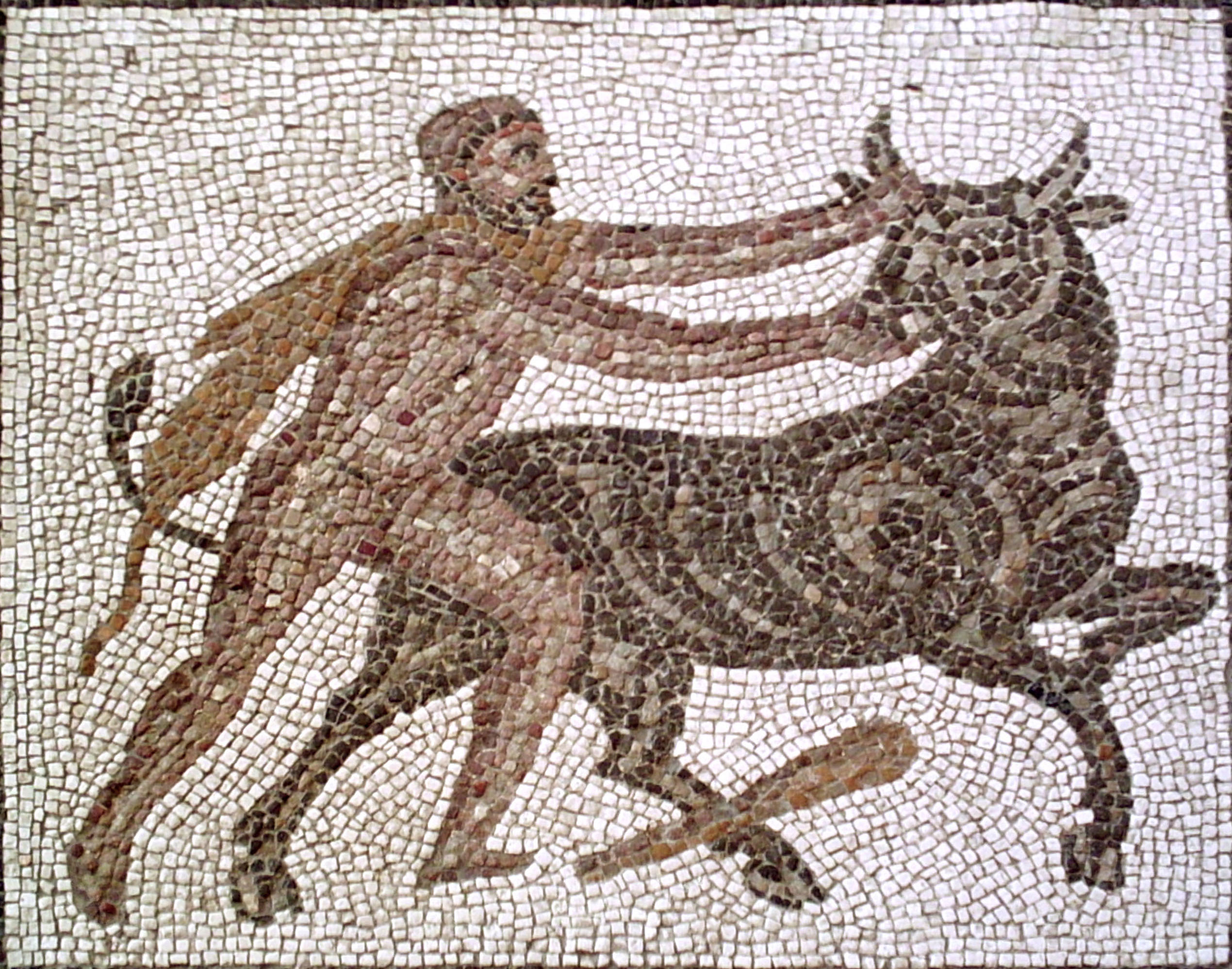
For his seventh labor, Hercules left the Greek mainland and sailed to the island of Crete. There, a magnificent white bull was running wild, trampling fields and terrorizing the people. King Eurystheus ordered the hero to capture it and bring it back alive.
This bull was no ordinary animal. Its story is bound up with one of the most famous myths of Crete, the tale of King Minos, his queen Pasiphaë and the Minotaur. For esoteric readers, the Cretan Bull represents the immense creative force of life, and the danger of trying to keep that force for oneself.
The Gift of Poseidon
According to the myth, Minos asked the sea god Poseidon for a sign that he was the rightful king of Crete. Poseidon sent a splendid white bull out of the sea, on the condition that Minos would sacrifice it in his honor. But the bull was so beautiful that Minos kept it and sacrificed another animal instead.
Poseidon punished this betrayal. He caused Minos's wife, Pasiphaë, to fall in love with the bull, and from that union was born the Minotaur, a creature half man and half bull, later imprisoned in the Labyrinth built by Daedalus. The bull itself became wild and ravaged the island.
The Labor
Hercules came to Crete and, with the permission of Minos, set out to capture the bull. In most versions, he did not kill it. He wrestled it with his bare hands, subdued it and carried it, or rode it, across the sea back to the Peloponnese.
Eurystheus wanted to sacrifice the bull to the goddess Hera, but she refused the offering, since it would have honored Hercules. The bull was released and wandered to the plain of Marathon, near Athens, where it caused more harm until the hero Theseus finally captured and sacrificed it.
The Bull in Ancient Crete
The bull was a sacred animal in Minoan Crete. Frescoes from the palace of Knossos show young men and women leaping over charging bulls in a daring ritual or sport. Bull horns appear in Minoan art and architecture as sacred symbols.
In many ancient cultures, the bull represented strength, fertility and the power of nature. In astrology, it is the sign of Taurus, linked with the earth and abundance.
The Force That Must Be Offered
In symbolic readings, the Cretan Bull stands for the great generative power of life: creative energy, desire and vitality rising from the depths, as the bull rose from the sea. This force is a gift. It can inspire art, love, work and spiritual growth.
The myth teaches that this power was meant to be offered, not hoarded. When Minos kept the bull out of greed and pride, the gift turned against him. Energy that is used only for selfish ends can become destructive, leading to obsession, chaos and suffering.
Mastery Without Destruction
Hercules does not kill the bull. He masters it. This is an important detail. The aim is not to destroy our vital energies, but to guide them. A life without passion and drive would be empty; a life ruled by them would be chaotic.
To ride the bull across the sea is to stay steady while carrying a great power through the uncertain waters of emotion. It speaks of discipline, balance and respect for the strength we carry.
The Shadow of Greed
Minos's mistake is a very human one. We receive talents, opportunities and energy, and we are tempted to use them only for ourselves, forgetting what we promised or what we owe. The myth suggests that this kind of hoarding has consequences, sometimes far beyond what we expect.
The story of the Minotaur, hidden in the Labyrinth, can be read as an image of what grows in secret when we betray our deeper commitments.
A Practice for Today
The seventh labor invites reflection:
- What strong energy or talent do I carry?
- Am I using it only for myself, or also in service of something greater?
- Where does my passion feel out of control, and how can I guide it?
- What promise have I made that I need to honor?
Closing
The Cretan Bull is a symbol of life's great creative power, a gift from the depths that must be offered rather than hoarded. Minos kept it and brought disaster upon his house; Hercules mastered it without destroying it and carried it across the sea.
For the seeker, the lesson is clear: honor the force that moves within you, guide it with steady hands and let it serve a purpose larger than yourself.
Related Esoteric Inquiries
- Hercules' Twelfth Labor: Cerberus and the Underworld
- Hercules' Eleventh Labor: The Apples of the Hesperides
- Hercules' Tenth Labor: The Cattle of Geryon
Lux Esoterica.
2026.


Comments