The 9 Pythagorean Numbers: A Scholarly Index of Sacred Arithmetic
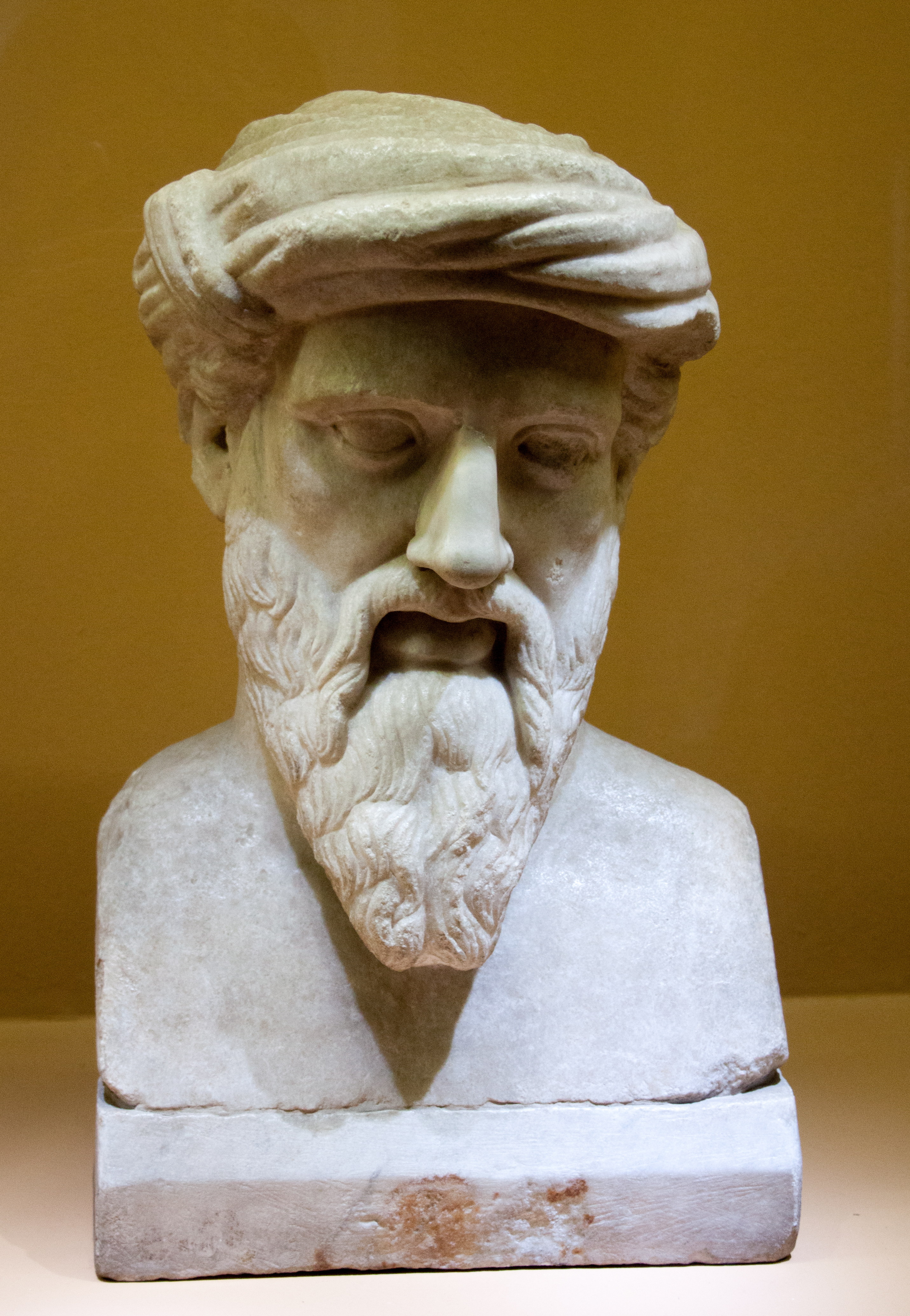
To the modern secular intellect, numbers are frequently reduced to mere counting devices—sterile, pragmatic instruments of quantitative measurement, commerce, and computational analysis. Yet to Pythagoras of Samos and the initiated disciples who gathered within his semi-monastic brotherhood at Croton during the sixth century BCE, number was revered as the supreme ontological ground of existence: "All things are numbers," proclaimed the Pythagorean fragment, asserting that numerical ratios constitute the living spiritual skeleton of reality itself. In this sacred arithmetic, the integers from One through Nine do not merely quantify objects; they embody primordial archetypes, qualitative dynamics, and cosmic stages of divine manifestation.
The Ontological Foundation of Sacred Arithmetic
The philosophical shift introduced by Pythagoras transformed human comprehension of reality. Before the Pythagorean synthesis, mythological traditions personified cosmic forces through anthropomorphic deities who warred, copulated, and ruled through arbitrary emotional caprice. Pythagoras pierced through this sensory illusion, discerning that beneath the storm of changing phenomena lies an immutable mathematical order (*Cosmos*—a word Pythagoras himself coined to signify an orderly, harmonious, and beautiful universe).
In the Pythagorean doctrine, number is the mediator between the transcendent, unmanifest World of Ideas and the tangible, sensory realm of material nature. Arithmetic (*Arithmos*) was studied not as an accounting trade, but as the supreme philosophical contemplation: the purification (*Katharsis*) of the immortal soul through the recognition of divine harmony. Numbers were categorized according to their innate metaphysical qualities: masculine (odd, bounded, active, luminous) and feminine (even, unbounded, receptive, dark). Through the dynamic tension and harmonious union of these opposing currents, the multifaceted tapestry of creation is sustained.
The Tetraktys: The Arithmetic Blueprint of the Cosmos
At the beating heart of the Pythagorean sanctuary stood the most revered symbol of antiquity: the **Tetraktys** (*Tetractys*). Composed of ten points arranged in four descending tiers of equilateral triangles (1 + 2 + 3 + 4 = 10), this sacred glyph was regarded as so holy that the initiates swore their most binding oaths by the master who revealed it: "By him that gave to our soul the Tetractys, which hath the fountain and root of ever-springing nature."
The Tetraktys encompasses the entirety of dimensional geometry and musical harmony. The first tier (the Monad, 1) represents the dimensionless point. The second tier (the Dyad, 2) generates the linear dimension between two points, establishing direction and length. The third tier (the Triad, 3) spans the two-dimensional surface through the triangle, bringing forth area. The fourth tier (the Tetrad, 4) produces the three-dimensional volume through the tetrahedron, anchoring physical spatial reality. Furthermore, the numerical ratios embedded within the numbers 1, 2, 3, and 4 generate the fundamental intervals of classical acoustics: 2:1 (the Diapason, or musical Octave), 3:2 (the Diapente, or Perfect Fifth), and 4:3 (the Diatessaron, or Perfect Fourth).
To examine the profound acoustics, mystical oaths, and geometric derivations of this master glyph, explore our dedicated inquiry into The Pythagorean Tetractys: The Arithmetic Blueprint of Reality.
1. The Monad (1): The Ineffable Origin and Divine Unity
The Monad represents the unbegotten fountainhead of all existence. It is not technically considered an integer within classical Pythagorean mathematics, but rather the parent and generative womb (*Matrix*) of all numbers. Being indivisible, it cannot be divided into fractions; when multiplied by itself, it remains unaltered, mirroring the immutability of the supreme Divine Mind.
Metaphysically, the Monad is symbolized by the central point within the circle—the dimensionless solar center from which all circumference emanates and to which all radii inevitably return. In hermetic philosophy, the Monad corresponds to the primordial *Kether* of the Kabbalistic tree, the Neoplatonic *One* (*To Hen*) of Plotinus, and the alchemical *Ouroboros*. It represents pristine consciousness, absolute sovereignty, and the undivided unity of the cosmos before the dawn of differentiation.
2. The Dyad (2): The Principle of Polarity and Cosmic Cleavage
If the Monad is unity, the Dyad is the principle of distinction, polarity, and divergence. The ancient Pythagoreans called the Dyad *Audacity*, for it is the first number that dared to separate itself from the pristine tranquility of the One, stepping into the perilous realm of otherness and division.
The Dyad is the mother of all dualities: light and darkness, active and passive, masculine and feminine, spirit and matter, past and future. It corresponds to the line drawn between two distinct points—a bridge that unites, yet simultaneously a cleavage that divides. Without the Dyad, no perception could ever take place, for consciousness requires a subject and an object to behold. However, the Dyad alone remains restless, unstable, and dualistic; it yearns for reconciliation, seeking a third term that may dissolve its agonizing tension into a higher harmony.
3. The Triad (3): Reconciliation and the First Spatial Form
The Triad represents the first true, fully completed odd number. By introducing a reconciling middle term between the thesis and antithesis of the Dyad, the Triad overcomes polarity and institutes enduring balance. It is the archetype of beginning, middle, and end; past, present, and future; youth, maturity, and decay.
Geometrically, the Triad is the first number capable of enclosing two-dimensional space through the equilateral triangle. It is the geometric signature of the surface, establishing the foundational plane upon which all physical forms are constructed. In esoteric theology, the Triad manifests across all high traditions: the Egyptian Trinity of Osiris, Isis, and Horus; the Hindu Trimurti of Brahma, Vishnu, and Shiva; and the alchemical Tria Prima of Paracelsus (*Sulfur*, *Mercurius*, and *Sal*). The Triad is wisdom, balance, and creative fecundity.
4. The Tetrad (4): Tangible Manifestation and the Physical Elements
With the Tetrad, consciousness descends fully into the realm of tactile, three-dimensional physical matter. While the Triad defines the flat plane, the Tetrad requires four points to construct the tetrahedron—the first volumetric body capable of enclosing physical space and resisting external deformation.
The Tetrad governs the solid world of concrete manifestation: the four cardinal directions (North, South, East, West), the four seasonal cycles (Spring, Summer, Autumn, Winter), the four bodily humors, and the four classical elements (Fire, Air, Water, Earth). In moral philosophy, the Pythagoreans aligned the Tetrad with Justice, for the number four is the product of equals (2 × 2), embodying fair distribution and immutable stability. It corresponds to the square, the stone foundation, and the physical vehicle through which spiritual entities acquire earthly experience.
5. The Pentad (5): Regeneration, Life, and the Golden Proportion
The Pentad was venerated by the Pythagorean brotherhood under the exalted name of the **Pentagram** (*Pentalpha*), which served as the secret greeting seal and talisman of health (*Hygeia*) inscribed on the hands of the initiated. Formed by the sacred marriage (*Hieros Gamos*) of the first feminine number (2) and the first masculine number (3), the Pentad represents life, generative vitality, and human self-awareness.
The geometry of the Pentad is intrinsically bound to the Divine Proportion—the Golden Ratio (Phi ≈ 1.618). Every line segment within the regular pentagram divides every intersecting segment in precise golden measure. In organic nature, the Pentad governs the architecture of biological life: the five fingers of the human hand, the five senses, the five appendages of the human form (head, arms, legs), and the fivefold floral symmetries of flowering plants. It is the symbol of the Microcosm—the conscious human soul standing at the center of the elemental universe.
6. The Hexad (6): Matrimonial Perfection and Universal Equilibrium
The Pythagoreans designated the number six as the *Kosmos* and the first **Perfect Number** (*Numerus Perfectus*). In classical mathematics, a perfect number is defined as an integer that equals the exact sum of its proper divisors: 1 + 2 + 3 = 6, while simultaneously being their product: 1 × 2 × 3 = 6. No smaller number in the infinite expanse of mathematics possesses this sublime equilibrium.
Geometrically represented by the Hexagram (the interlocking triangles of the Seal of Solomon), the Hexad symbolizes the complete reconciliation of opposite worlds: the upward-pointing triangle of celestial fire descending to meet the downward-pointing triangle of terrestrial water. It governs the hexagonal crystalline lattice of the honeycomb, the crystalline symmetry of the snowflake, and the six directions of spatial orientation (Above, Below, Front, Back, Right, Left). The Hexad is the archetype of perfected cosmic architecture, domestic balance, and harmonious love.
7. The Heptad (7): The Virgin Key of Planetary and Spiritual Law
The Heptad was regarded with awe as the *Virgin Number* (*Minerva*), because within the foundational Decad (1 to 10), seven is neither produced by any number through multiplication, nor does it produce any other number within that sacred decade (unlike 2 which produces 4, 6, 8, 10, or 3 which produces 6, 9). It stands untouched, virginal, solitary, and sovereign.
The Heptad is the cosmic regulator of cyclical time, spiritual evolution, and planetary octave: the seven classical planets of the ancient world (Sun, Moon, Mercury, Venus, Mars, Jupiter, Saturn), the seven musical tones of the diatonic scale, the seven days of the creative week, and the seven energy centers (*Chakras*) of the human body. It is the sacred bridge between the spiritual trinity and the elemental quaternary (3 + 4 = 7), representing the spiritualization of matter and the divine pilgrimage of the soul through the planetary spheres.
8. The Ogdoad (8): Solitude, Periodic Rhythm, and Octaval Resonance
The Ogdoad, geometrically expressed through the double square or the regular octagon, is the first cube of a number (2 × 2 × 2 = 8). It embodies volumetric solidity and three-dimensional dimensional grounding carried to its absolute cubic power.
In mystical acoustics and esoteric symbology, eight is the number of the **Octave**—the cosmic return to unity on a higher vibratory plane. When a musical string is halved, the pitch sounds an octave above, completing the journey of seven distinct tones and beginning anew on the eighth note. In the Hermetic and Gnostic cosmologies of Alexandria, the Ogdoad represents the Eighth Sphere—the realm of the fixed stars beyond the turbulent planetary orbits of the seven archons, where the liberated soul re-enters the realm of pure divine light.
9. The Ennead (9): The Horizon of Manifestation and Digital Return
The Ennead represents the absolute boundary, horizon, and culmination of the single-digit numerical universe. Beyond nine, no new basic digits can ever be discovered; all subsequent numbers are mere combinations and cyclical iterations of the digits 0 through 9.
The mathematical behavior of the Ennead is astonishing: when nine is multiplied by any whole integer, the digital sum of the product’s digits (*Theosophic Reduction*) always collapses back into nine (e.g., 9 × 7 = 63, 6 + 3 = 9; 9 × 14 = 126, 1 + 2 + 6 = 9). For this reason, the Pythagoreans called nine the *Ocean* and the *Horizon*, for like an impassable shore, it bounds all numbers within its expansive horizon. It signifies the end of a cycle, completion, spiritual threshold, and the inevitable return of all manifestation back into the sovereign unity of the Decad (10 = 1 + 0 = 1).
The Music of the Spheres and Classical Correspondences
The supreme fruit of Pythagorean arithmetic is the sublime doctrine of **Musica Universalis**—the *Music of the Spheres*. Pythagoras observed that when the planets orbit through the etheric void, their velocities, orbital radii, and celestial masses produce harmonious harmonic intervals proportional to sacred arithmetic ratios. While the physical ear, dulled by the noise of terrestrial embodiment, cannot detect these celestial tones, the philosophical mind (*Nous*) attuned through mathematics can hear this cosmic symphony with crystal clarity.
In the Renaissance, this doctrine was revitalized by scholars such as Marsilio Ficino and Francesco Giorgi, who demonstrated that the human body and psyche are built according to the same arithmetic chords that govern the celestial spheres. To understand the Pythagorean science of numbers is to awaken from the illusion of chaos, recognizing that every heartbeat, every breath, and every cosmic cycle is a melodic phrase within an infinite, mathematically perfect divine hymn.
Hermetic Directory of Sacred Numerical Philosophy
To deepen your exploration of ancient mathematics, harmonic cosmology, and esoteric metaphysics, consult the following related scholarly monographs from our permanent collection:
- The Master Glyph: The Pythagorean Tetractys: The Arithmetic Blueprint of Reality
- The Acoustic Science: Pythagorean Mysticism: The Sacred Science of Numbers and the Music of the Cosmos
- Cosmological Astronomy: The Pythagorean Philolaus: The Central Fire, the Counter-Earth, and the Numerical Harmony of the Cosmos
- Renaissance Harmonics: The De Harmonia Mundi of Francesco Giorgi: Christian Kabbalah, Pythagorean Harmonies, and the Architecture of the Renaissance Cosmos
- The Wandering Sage: Apollonius of Tyana: The Pythagorean Shadow of the First Century
- Sacred Geometry Compendium: The 5 Platonic Solids: A Scholarly Index of Sacred Geometry
Lux Esoterica.
2026.


Comments